
Can You Put Bath Salts in Your Hot Tub?
Many hot tub owners worry about keeping their water clean and inviting. It’s a common challenge, especially when trying to relax after a long day. You’re not alone in wondering if certain products, like bath salts, are safe to use.
You shouldn’t put bath salts in your hot tub because they can cause serious damage to its components, like pumps and heaters, through corrosion or scale buildup.
Bath salts also disrupt water chemistry, reducing sanitizer effectiveness and leading to cloudy water and bacterial growth.
Plus, they can clog filters, cause foaming, and void your warranty. If you want to protect your hot tub and enjoy safe relaxation, learn more about the risks and better alternatives.
Key Takeaways
Bath salts are not designed for hot tubs and can damage equipment through corrosion and scale buildup.
Adding bath salts can also mess with your water chemistry. This reduces the effectiveness of sanitizers and can lead to bacterial growth.
They can cause cloudy water, foaming, and oily residues that clog filters and impair jet functions.
Using bath salts might even void your hot tub’s warranty and lead to costly repairs.
It’s best to stick with spa-specific chemicals to keep your water balanced and protect your hot tub.
Should You Use Bath Salts or Epsom Salts in Your Hot Tub?
Wondering whether you should add bath salts or Epsom salts to your hot tub? It’s best to avoid doing so. Epsom salts and regular bath salts are designed for standard baths, not hot tubs.
Adding them can mess up your hot tub care by changing the water chemistry and increasing TDS—total dissolved solids—that can lower sanitizer effectiveness and lead to bacterial growth.
Adding non-spa salts can disrupt water balance and promote bacterial growth in your hot tub.
These salts can also damage your hot tub components, like pumps and heaters, through corrosion or scale buildup. Using non-spa-specific salts or bath products might even void your manufacturer’s warranty or cause system clogging and foaming.
To enjoy your hot tub safely, stick to spa-approved mineral treatments or aromatherapy products specifically made for hot tub use.
How Do Bath Salts Differ From Hot Tub Chemicals and Why It Matters
Bath salts and hot tub chemicals serve very different purposes, and understanding these differences is essential for safe and effective spa maintenance. Bath salts are mainly minerals like magnesium sulfate or sodium chloride, designed for skin absorption during baths.
Hot tub chemicals, however, are formulated to maintain water chemistry, including pH, alkalinity, and sanitation levels, which are vital for safe use. Using bath salts in your hot tub can increase TDS (total dissolved solids), leading to cloudy water and scale buildup that can damage circulation and filtration systems.
Unlike hot tub chemicals, bath salts lack disinfectants or pH adjusters, so they don’t support sanitation. Mixing the two can disrupt water chemistry, impair sanitation, and even void manufacturer warranties. That’s why bath salts are unsuitable for hot tub maintenance.
Are Bath Salts Safe for Your Hot Tub?
While bath salts are generally safe for regular baths, adding them to your hot tub isn’t a good idea. The high mineral content and chemicals can cause corrosion of metal parts like pumps, heaters, and gaskets, leading to costly repairs.
They also mess with the water chemistry, making it harder to keep the water balanced and reducing how well sanitizers work. This can lead to cloudy water and more scale buildup, which makes maintenance tougher.
Most hot tub manufacturers specifically warn against using bath salts because they can void your warranty and damage your system. To keep your hot tub running smoothly, stick to the chemicals designed for hot tubs.
Using bath salts in your hot tub can cause system damage and ongoing maintenance headaches.
What Are the Risks of Using Bath Salts in a Hot Tub?
Using bath salts in your hot tub can cause serious damage and safety issues. They can corrode key components like pumps, heaters, and jets, which leads to costly repairs.
The sulfate buildup damages metal parts, increasing the risk of hot tub damage and voiding your warranty. Bath salts also change the water chemistry by raising TDS levels and causing chemical imbalance.
This imbalance makes sanitizers less effective and can result in cloudy water. Plus, oily residues clog filters and encourage biofilm growth, which hampers circulation and makes maintenance more difficult.
Here’s a quick overview:
| Risk | Effect | Consequence |
|---|---|---|
| Corrosion | Damages pumps, heaters, jets | Costly repairs |
| Filter clogging | Reduces water flow, shortens filter lifespan | Maintenance issues |
| Chemical imbalance | Affects sanitizer, causes cloudy water | Safety concerns, voided warranty |
How Bath Salts Can Damage Hot Tub Components and Water Chemistry
Introducing bath salts into your hot tub can cause serious damage. The salts, especially Epsom salts, create sulfate buildup that can corrode essential metal parts like gaskets, heaters, and pumps.
This buildup speeds up metal corrosion, which can lead to costly repairs or even system failure. Bath salts also cause scale to form inside plumbing and on surfaces, blocking water flow and damaging the tub over time.
The oily residue left by bath salts clogs filters, reducing water clarity and making maintenance harder. Plus, salts mess with your water chemistry by changing pH and alkalinity levels, making it tough to keep everything balanced.
Too many salts increase TDS, weaken sanitizer effectiveness, and can encourage bacterial growth. All of this puts your hot tub’s condition at risk and can lead to more frequent repairs.
What Happens If You Add Bath Salts to Your Hot Tub?
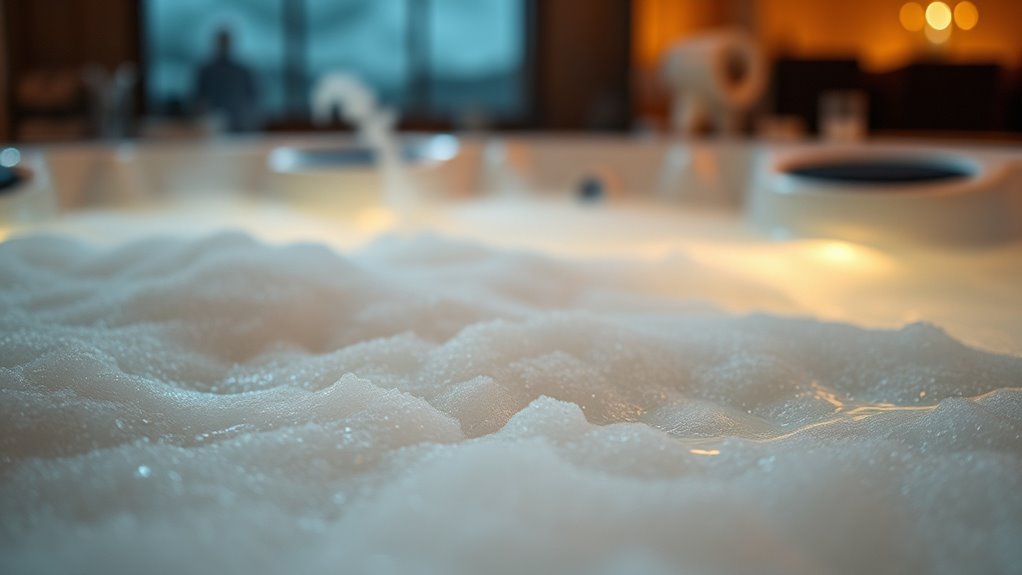
What happens if you add bath salts to your hot tub? You risk causing foaming, which can clog filters and jets, disrupting your relaxing experience. Bath salts notably change water chemistry, affecting pH levels and making sanitizers less effective.
They also leave oily residues that can impair your filtration system, making it harder to keep the water clean. Plus, bath salts can promote the growth of biofilm, leading to unsanitary conditions inside your hot tub.
You might also notice increased scale buildup and corrosion of metal parts. Using bath salts can lead to foaming, disrupted water chemistry, and damage to your hot tub’s components.
To protect your hot tub’s integrity, it’s best to avoid adding bath salts altogether.
How to Remove Bath Salts If You’ve Already Used Them
If you’ve already added bath salts to your hot tub, it’s important to act quickly to minimize damage and restore water quality. First, drain the hot tub completely by turning off the power and opening the drain valve to remove all water and dissolved salts.
Use a garden hose or sump pump for thorough removal, making sure no residual salt remains. Next, clean the filters thoroughly or replace them if they’re clogged to prevent damage to the system.
Use a garden hose or sump pump to remove all residual salts and keep your hot tub system in top condition.
Scrub the interior surfaces with a non-abrasive cleaner and rinse well. Then, refill the hot tub with fresh water, reinstall the filters, and carefully balance the water chemistry.
Proper maintenance will help extend your hot tub’s life and ensure safe, relaxing use.
What Are Better Alternatives for Relaxation in Your Hot Tub?
Instead of relying on bath salts, you can enhance your hot tub experience with spa-specific aromatherapy products. Try calming essential oil blends or mineral infusions designed to promote relaxation without harming your equipment. These help elevate relaxation while keeping your water chemistry balanced and protecting filters or jets.
You might also consider aromatherapy crystals or elixirs that soften spa water and support relaxation. Herbal spa products infused with botanicals offer therapeutic benefits, too. Hydrotherapy jets relax muscles naturally with warm water, adding to your comfort.
Use natural essential oils that are safe for hot tubs. They won’t clog filters or affect pH levels, so you can enjoy a soothing soak without worry. Always choose products labeled safe for hot tubs to prevent damage or voiding your warranty.
Frequently Asked Questions
What Bath Salts Can I Use in My Hot Tub?
You should only use bath salts specifically formulated for hot tubs. Look for spa or hot tub-specific salts, as regular bath salts can damage your equipment and disrupt water chemistry.
Always check product labels to guarantee compatibility, and avoid generic or regular salts. These specialized salts are designed to dissolve safely, prevent foaming, and avoid clogging filters.
This way, you can enjoy relaxation without risking damage or voiding your warranty.
Will a Hot Tub Help a Sciatic Nerve?
A hot tub can help soothe your sciatic nerve by relaxing tense muscles and increasing blood flow, easing inflammation and pressure.
As you soak in the warm water, you’ll feel muscles unwind and tension melt away, providing relief from pain.
Just remember to keep sessions moderate, stay hydrated, and check with your healthcare provider if your symptoms are severe.
With gentle use, your hot tub can become a comforting retreat for sciatic nerve relief.
Does Epsom Salt Help With Cortisol?
Yes, Epsom salt can help with cortisol levels. When you soak in Epsom salt, the magnesium is absorbed through your skin, promoting relaxation and reducing stress.
This process can activate your parasympathetic nervous system, which helps lower cortisol production. Regular baths may help decrease stress hormones, improve your mood, and support overall relaxation.
Is Hot Tub Bad for Folliculitis?
Hot tubs are like petri dishes for bacteria, so they can make folliculitis worse. If you have this skin condition, soaking in warm water might irritate your hair follicles and encourage bacterial growth.
Regular cleaning and avoiding long periods in the hot tub are important. Sharing it or not disinfecting it properly also increases the risks.
It’s best to talk to your doctor before using a hot tub when dealing with folliculitis, so you don’t make your skin condition worse.
Conclusion
Using bath salts in your hot tub might seem relaxing, but it can cause more harm than good. Imagine soaking away stress, only to find your jets clogged or the water cloudy afterward—that’s a common problem.
For safe, soothing experiences, stick to hot tub-approved products. In a real case, a homeowner learned the hard way that bath salts can damage the heater, leading to costly repairs.
Choose safer options to keep your hot tub in top shape. Remember, putting bath salts in your hot tub isn’t recommended, and it can cause damage over time.