8 Best Salts for Melting Ice Effectively
Dealing with icy walkways and driveways during winter can be a real headache. If you’re tired of slipping hazards and constant snow removal, you’re not alone. Many people struggle to find the most effective way to melt ice safely and efficiently.
For effective ice melting, you’ll want to contemplate salts like calcium chloride, which works down to -25°F, and magnesium chloride, effective to -13°F. Potassium chloride is eco-friendly and works to about -10°F. Blended de-icers combine these for broader temperature coverage.
Also, choose safer options like CMA or urea-based melts for sensitive areas, and always follow application tips. Keep exploring to find the best salt options for your winter needs.
Key Takeaways
- Calcium chloride is super effective down to -25°F because it releases heat as it dissolves. This makes it a go-to choice for really cold weather.
- Magnesium chloride works well to about -13°F. Plus, it’s gentler on your pavement and plants, so it’s a better option if you’re worried about damage.
- Potassium chloride is eco-friendly and effective up to -10°F. It’s a good pick if you want something safe for the environment, especially in sensitive areas.
- Blended de-icers combine calcium and magnesium chlorides. This gives you a wider temperature range to handle different winter conditions.
- Urea-based melts are pet-safe and environmentally friendly. However, they’re less effective below 20°F, so they work best in milder cold.
How Do Salt De-Icers Work to Melt Ice?
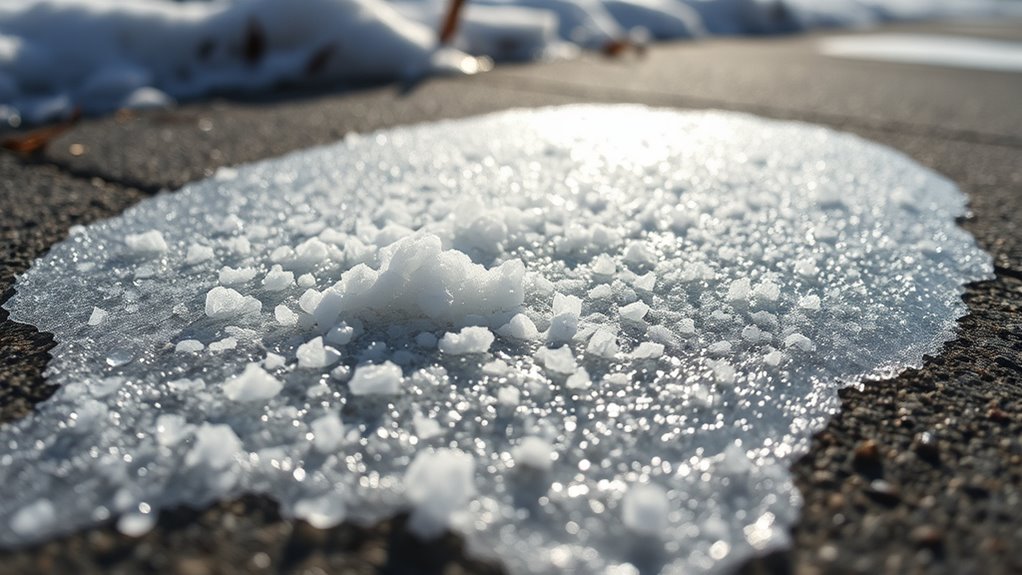
Salt de-icers work by lowering the freezing point of water, which causes ice to melt even when temperatures are below 32°F. This process, known as freezing point depression, happens when salt dissolves into a thin layer of water on the ice surface, creating a brine solution.
The chemical makeup of salts like calcium chloride makes them especially effective because they release heat through an exothermic reaction as they dissolve, speeding up the melting process. Calcium chloride works down to -25°F, while sodium chloride is only effective down to about 15°F.
What Are the Best Salts for Melting Ice in Extreme Cold?
When temperatures drop well below freezing, choosing the right ice melt is key to effective de-icing. Calcium chloride is the best option for melting ice in extremely cold conditions. It works down to -25°F and releases heat as it dissolves, making it highly effective even in the coldest weather.
Magnesium chloride is also a good choice. It works well at temperatures as low as -13°F and causes less damage to pavement and plants compared to sodium chloride. Potassium chloride can melt ice down to -10°F but isn’t as powerful in extreme cold. It’s also more environmentally friendly.
Blended de-icers, which combine calcium chloride and magnesium chloride, are great for covering a range of low temperatures. They help ensure reliable winter maintenance even in the harshest conditions.
Which Salt Is Safer for Surfaces and the Environment?
Choosing a de-icer that’s safer for surfaces and the environment is important for responsible winter maintenance. Magnesium chloride is a top eco-friendly option because it causes 75% less pavement damage than rock salt and is less corrosive, making it surface safe.
Calcium magnesium acetate (CMA) is another environmentally friendly choice. It biodegrades quickly and is gentle on vegetation and concrete. Urea-based ice melts, like Safe Paw, are pet-safe and have minimal environmental impact, though they’re less effective at very low temperatures.
Potassium chloride is also environmentally safe and works well down to -10°C. Sodium chloride, or rock salt, is the least safe because it’s corrosive and can harm plants, pets, and infrastructure.
How Fast Do Different Ice Melting Salts Act?
Different salts melt ice at different speeds, especially when it’s really cold outside. Calcium chloride works the fastest, melting ice in about 5 to 10 minutes.
Sodium chloride, on the other hand, can take around 20 to 30 minutes to do its job. Your choice depends on how quickly you need the ice gone and how cold it is.
Subheading 1: Melting Speed Variations
The melting speed of ice varies quite a bit depending on the type of salt used, which impacts how fast your icy surfaces clear up.
Calcium chloride is the quickest, melting ice in about 5-10 minutes and working well down to -25°F thanks to its exothermic heat. Magnesium chloride takes around 10-15 minutes and is effective to roughly -13°F.
Sodium chloride, or rock salt, starts melting at about 15°F but usually takes 20-30 minutes to see significant results. Potassium chloride melts ice a bit slower, generally in 15-20 minutes, and works down to -10°F.
Blended de-icing products combine different salts to improve melting speed, often melting within 10-15 minutes in moderate cold conditions, which boosts overall effectiveness.
Subheading 2: Cold Temperature Efficiency
When temperatures drop, the effectiveness of ice-melting salts varies a lot. Knowing which works best in extreme cold is essential.
Calcium chloride stands out for its rapid melting ability. It works within 5 to 10 minutes at temperatures as low as -25°F, making it excellent for cold weather de-icing.
Magnesium chloride also performs well, melting ice in about 10 to 15 minutes down to roughly -13°F. It offers good frost resistance.
Sodium chloride becomes less effective below 15°F, taking 20 to 30 minutes to melt ice.
Potassium chloride works down to -10°F but acts slower, usually taking 15 to 20 minutes.
Blended de-icers containing calcium or magnesium chloride improve cold temperature performance, melting ice quickly even in severe conditions.
What Factors Should You Consider When Choosing a Winter Salt?
Choosing the right winter salt involves weighing several important factors to guarantee effective and safe de-icing. First, consider the melting temperature; salts like calcium chloride work down to -25°F, making them ideal for extreme cold, while sodium chloride is effective only to around 15-20°F.
Environmental impact and safety are vital, especially regarding toxicity and corrosion risks. You should also assess surface type and age—concrete older than three years may be more vulnerable to damage from certain salts.
The speed of melting and residual longevity influence how long the ice stays clear, with faster-acting salts like calcium chloride providing quick results. Cost and availability are practical considerations, while winter conditions help determine which chloride type and application strategy best suit your needs.
Are Blended De-Icers More Effective Than Single Salts?
Blended de-icers often work better than single salts because they are effective over a wider range of temperatures and conditions.
They can also save you money and reduce environmental impact by using less costly or eco-friendly ingredients.
Considering performance and cost benefits, blends might be a smarter choice for reliable winter ice control.
Performance Across Temperatures
Are blended de-icers more effective than single salts across a range of temperatures? Yes, because salt blends like calcium chloride and magnesium chloride provide better melting performance over a wider temperature range than single salts.
Single salts such as calcium chloride work well at low temperatures down to -25°F, but their effectiveness drops at milder temps. Blended de-icers stay consistent and reliable across different winter conditions.
They offer faster melting and require less application in variable temperatures. Plus, they perform better at moderate and low temps.
Salt blends also reduce the limitations of individual salts, balancing cost and effectiveness. This makes them ideal for unpredictable winter weather, ensuring reliable ice melting across a broader temperature spectrum than single salts.
Environmental and Cost Benefits
Because they combine different salts to improve melting performance across a broader temperature range, blended de-icers often require less product to effectively melt ice. This leads to big savings by reducing the amount of salt needed.
Salt combinations like rock salt with calcium chloride boost melting efficiency and work better in cold weather, which means fewer applications are needed. Using blended salts also lowers environmental impact by reducing reliance on more corrosive or toxic options like urea or pure calcium chloride.
These blends attract less moisture, helping prevent ice from reforming on surfaces and improving safety. Overall, blended de-icers provide better de-icing results while being more eco-friendly and cost-effective, making them a smarter choice for safe, sustainable winter maintenance.
How to Apply and Store Salt for Maximum Effectiveness
To get the most out of your salt, apply it evenly using a scoop, spreader, or homemade device to guarantee maximum surface coverage. Proper application helps improve melting efficiency and reduces waste.
Spread salt before ice forms, ideally in dry or slightly above-freezing conditions, to prevent bonding and make removal easier. Reapply as needed during ongoing storms for continuous winter safety.
For storage, keep salt in a dry, sealed container or covered grit bin to prevent moisture exposure and clumping, especially with calcium and magnesium chloride. Raise stored salt on pallets or platforms to avoid ground contact that causes caking.
What Are the Best Salt Options for Pet-Friendly and Sensitive Areas?
When choosing salts for pet-friendly and sensitive areas, it’s key to pick options that cause less harm to animals, plants, and the environment. Magnesium chloride is a top pet-safe de-icer, effective down to -13°F, and has minimal toxicity to pets and vegetation.
Calcium magnesium acetate (CMA) is an eco-friendly, mild choice that works down to 20°F and is safe for pets, plants, and water sources. Urea-based deicers like Safe Paws are pet- and plant-friendly but less effective below 20°F and may lead to nutrient runoff.
Blended salts that combine magnesium chloride with other less toxic ingredients can provide a balanced solution for melting ice in sensitive areas. Always follow manufacturer instructions to ensure safety and environmental protection.
Frequently Asked Questions
What Type of Salt Melts Ice Best?
You should use calcium chloride if you want the best ice melting results. It works down to -25°F, melts ice quickly, and releases heat during its reaction.
Magnesium chloride is a good alternative for colder temperatures, effective to about -13°F and gentler on surfaces.
Rock salt is reliable above 15°F but less effective in colder conditions. Blended de-icers offer a versatile solution across a broader temperature range.
What Melts Ice Really Quickly?
If you’re looking for something that melts ice like a hot knife through butter, calcium chloride is your best bet. It acts fast, melting ice within 5 to 10 minutes, even at temperatures as low as -25°F.
You’ll see quick results because it releases heat as it dissolves, speeding up the melting process. For rapid ice removal, calcium chloride outperforms other salts by a wide margin.
What Kind of Salt Can I Use to Melt Ice on a Driveway?
You should use calcium chloride for melting ice on your driveway, especially if temperatures drop below 15°F, because it works down to -25°F and generates heat during dissolution.
If you’re looking for an eco-friendly option, magnesium chloride is effective down to -13°F and causes less pavement damage.
For milder cold, rock salt works well above 15°F, but blending salts can offer versatile melting power across various temperatures.
Is Magnesium Chloride or Sodium Chloride Better for Melting Ice?
Think of magnesium chloride as the resilient hero of winter, brave enough to face the coldest battles, melting ice down to -13°F. You’ll find it gentler on your driveway, plants, and pets, making it a safer, eco-friendly choice.
Sodium chloride, while more affordable and familiar, struggles in extreme cold, melting only at higher temperatures. For harsh winters, magnesium chloride’s strength makes it the better option.
Though sodium chloride works fine in milder conditions, magnesium chloride is the go-to for really cold days.
Conclusion
Now that you’re armed with the best salts for melting ice, you’re ready to conquer winter’s icy grip. Think of these salts as your trusted allies, each with their own magic trick to clear your path.
With the right choice, proper application, and mindful storage, you’ll transform treacherous ice into safe, walkable ground—your personal winter shield. So, gear up and let your winter battles be swift and smooth, like a warm breeze through a frozen forest.