7 Prices You Need to Know for a Salt Cell in Your Pool
Many pool owners find choosing the right salt cell to be overwhelming, especially with so many options and price points out there. You’re not alone—navigating costs and features can feel confusing. Understanding the typical prices can help you make smarter decisions and stay within your budget.
When shopping for a salt cell, expect to pay between $300 and $1,100 for OEM models and $300 to $500 for aftermarket options. Larger or high-capacity units cost more, especially with advanced features like self-cleaning or digital displays.
Replacement costs typically range from $300 to $700 every 3-7 years, depending on maintenance. Knowing these prices helps budget for repairs and future upgrades.
Keep exploring to find more tips for choosing the right salt cell for your pool.
Key Takeaways
- OEM salt cells usually cost between $700 and $1,100. This depends on the size and features you choose.
- Aftermarket salt cells tend to be more budget-friendly, ranging from $300 to $500. Keep in mind, they often come with shorter warranties.
- If you’re looking for top-of-the-line models with advanced features, prices can go over $4,000. These often offer higher capacity and automation options.
- Replacing a salt cell can cost anywhere from $300 to $1,100. The exact price depends on the brand, size, and extra functionalities.
- Don’t forget about additional expenses like installation, ongoing maintenance, and potential upgrades over the salt cell’s lifespan.
Understanding How Salt Cells Work and Why They Matter
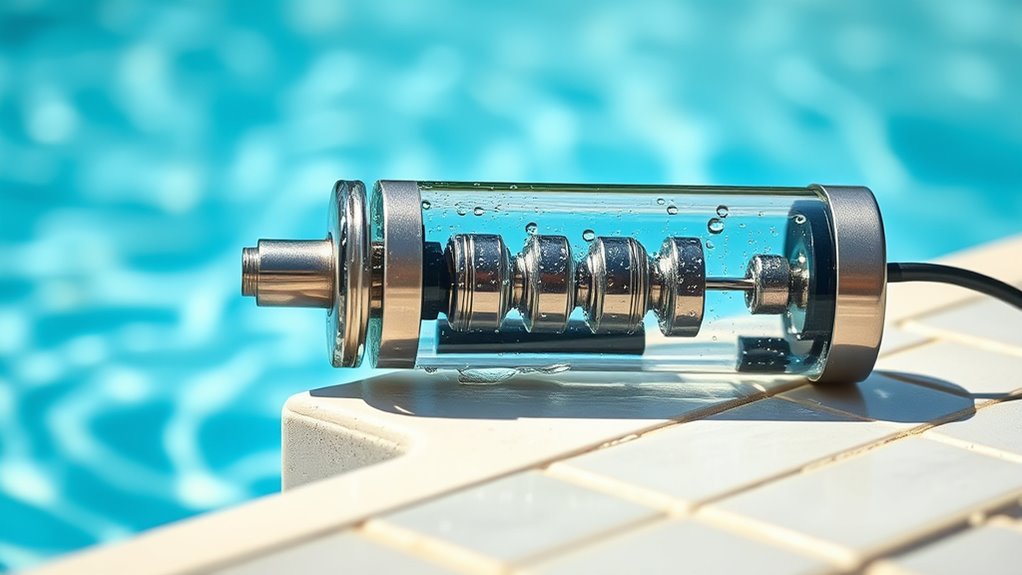
Salt cells play a crucial role in keeping your pool water clean and safe by producing chlorine through a process called electrolysis. When you have a saltwater pool, the salt cell turns salt into chlorine, ensuring continuous sanitation.
Inside the salt cell, titanium plates coated with ruthenium or iridium generate chlorine when electricity flows through them. The control board manages the salt system, adjusting chlorine output based on your pool’s needs.
To keep the salt cell working efficiently, it’s important to maintain proper salt levels, usually between 2,800 and 4,200 ppm. Regular cleaning and maintenance help prevent buildup and extend its lifespan.
If the salt cell becomes worn out or less efficient, replacing it might be necessary. Proper upkeep of your salt system ensures consistent chlorine production and a healthier pool.
What Factors Affect the Cost of a Salt Cell for Your Pool
Several key factors influence the cost of a salt cell for your pool, starting with its size and capacity. Larger, higher-output salt cells are more expensive because they handle bigger pool sizes more efficiently. Compatibility with your existing pool system and controllers can also impact the overall cost, as some models need specific setup or adapters.
Premium features like self-cleaning circuits or digital displays tend to raise the price. They offer added convenience but come at a higher cost. The brand and whether you choose an OEM or aftermarket salt cell greatly affect pricing, with OEM parts usually costing more.
Market factors such as raw material prices, supply shortages, and inflation can cause fluctuations in salt cell prices over time.
How Much Do Different Salt Cell Brands Cost?
Salt cell prices vary greatly depending on the brand and model.
Aftermarket options often cost less than OEM parts.
You can expect to pay anywhere from a few hundred dollars for basic models to over a thousand for premium brands.
Understanding these cost differences helps you choose a salt cell that fits your budget and quality expectations.
Price Range Variations
Wondering how much you might spend on a salt cell? The price range varies widely depending on brand, capacity, and features.
OEM brands typically cost between $700 and $1,100. These higher-priced models usually have larger capacity and are from trusted brands, which often come with longer warranties. They can be a cost-effective choice for long-term pool maintenance.
On the other hand, aftermarket models are more budget-friendly, usually falling between $300 and $500. But keep in mind, they might have shorter warranties and fewer features.
Mid-range options from brands like Jandy or Pentair generally range from $500 to $900. They offer a good balance of quality and affordability.
Your choice depends on your pool’s size, how efficient you want your saltwater chlorinator to be, and how much you’re willing to invest upfront for durability and performance.
Brand Value Differences
The brand of salt cell you choose really impacts its cost and overall value. OEM brands like Pentair, Jandy, and Hayward usually range from $700 to $1,100. They’re known for reliable quality, longer warranties, and better compatibility with pool systems.
On the other hand, aftermarket models can be priced as low as $300 to $600. They’re more budget-friendly but often come with a shorter lifespan and limited warranty coverage.
Premium brands, such as Autopilot’s TotalControl PPC series, can cost over $4,000. They offer advanced features and higher chlorine output, which might justify the higher price through better performance and longer lifespan.
Ultimately, the brand affects not just the initial cost but also the long-term value. This depends on quality, warranty, and how well the salt cell fits your pool’s needs.
What Features Influence Salt Cell Pricing and Performance?
Your salt cell’s chlorine output capacity and control features directly impact its price and performance. Larger cells with higher production rates tend to cost more, especially if they include advanced automation or flow sensors.
These features can make pool maintenance easier and more efficient. However, they also influence the overall value you get from your salt cell.
Chlorine Output Capacity
Chlorine output capacity is a key factor influencing both the price and performance of salt cells. It determines how effectively a system can sanitize larger pools.
A higher chlorine output means your salt chlorinator can produce more chlorine daily, making it suitable for bigger pool sizes. Salt cell capacity, influenced by the size and design of titanium plates, directly impacts chlorine production rates.
For pools over 40,000 gallons, you’ll need a cell with higher output capacity, which often comes with a higher salt cell price. Features like digital displays and self-cleaning circuitry can boost efficiency but may add to costs.
Ultimately, choosing the right chlorine output guarantees proper pool maintenance and performance, especially in saltwater pools.
Control and Automation Features
Control and automation features are key in determining both the cost and performance of salt cells. They add functionalities that boost system efficiency and give users better control.
Digital displays show real-time salinity and PPM readings, helping you keep tabs on water chemistry. Flow sensors and flow switch controls make sure water flows properly, preventing damage.
Advanced systems often let you customize chlorine output and set multiple PPM levels. This means you can tailor your pool sanitization to your needs.
Self-cleaning circuitry reduces maintenance costs and extends the lifespan of the system. Overall, these features influence both the price and performance of salt cells.
How Long Do Salt Cells Last, and What Are Replacement Costs?
Salt cells generally last between 3 to 7 years, but their lifespan depends on factors like usage, water chemistry, and maintenance. Proper cell care and monitoring water chemistry can help extend your salt cell’s lifespan and save you money in the long run.
On average, replacing a salt cell costs between $300 and $700, with premium models going up to $1,100. Many saltwater pools come with a warranty lasting 2 to 4 years, which can help offset some of these costs.
Frequent replacements or longer lifespans significantly impact your overall pool ownership costs. To keep your saltwater pool running efficiently and minimize expenses, regularly check water chemistry and follow recommended maintenance practices.
This way, your chlorine generator stays in top shape, and your salt cell lasts as long as possible.
Budgeting for Long-Term Saltwater Chlorination Expenses
Planning your long-term budget for saltwater pool maintenance involves understanding both the initial investment and ongoing expenses. A salt cell’s cost varies from $300 to over $1,000, depending on capacity and brand, and replacement costs can reach $700 or more, especially for larger models.
Proper system sizing and regular maintenance are key. These can extend your salt cell’s lifespan from 3 to 7 years, reducing the need for frequent replacements. Investing in a well-sized system helps keep chlorine levels stable and minimizes chemical costs.
Proper sizing and maintenance extend salt cell lifespan, reducing replacements and chemical costs for long-term savings.
These savings often offset higher upfront expenses over a decade. Keep in mind that rising raw material prices have increased salt cell prices by about 150% since 2016.
Budgeting for salt costs and replacement fees guarantees your saltwater chlorination system remains efficient, reliable, and cost-effective over the long term.
Where to Find the Best Deals and Expert Advice on Salt Cells
Finding the best deals and expert advice on salt cells means shopping from reputable suppliers that focus on quality and good customer support. Companies like Discount Salt Pool offer factory direct prices, expert recommendations, and warranties of up to 4 years, so you can trust you’ll get reliable saltwater pool systems.
Trusted brands such as Circupool provide competitive prices and quick shipping, usually within 1-3 days across the US. Buying from reliable retailers ensures compatibility and protection against counterfeit products.
Online stores often have discounts up to 30%, and aftermarket models can save you 30-40% compared to OEM options. Consulting industry experts with over 20 years of experience can help you pick the right size and features for your pool.
Frequently Asked Questions
How Much Does a New Salt Cell Cost?
A new salt cell typically costs between $300 and $700, depending on the brand and size.
If you go with an OEM model, expect to pay $500 to $1,100. Aftermarket options can be as low as $300.
Larger capacity cells for bigger pools tend to be more expensive, often over $700.
Features like self-cleaning or digital displays can also affect the price.
Think about what your pool needs when choosing a salt cell.
How Many Bags of Pool Salt for a 10,000 Gallon Pool?
For your 10,000-gallon pool, you’ll need about 4 to 6 bags of pool salt, depending on the bag size and your desired salinity level. Since most bags are 40 to 50 pounds, start with 4 bags and test the water regularly.
Add salt gradually, making sure it dissolves properly, and avoid over-salting. Using high-purity pool-grade salt helps keep your water clean and your pool running smoothly.
Are Generic Salt Cells Any Good?
Think of generic salt cells like off-brand shoes; they might look similar but often lack the durability and comfort of the brand. While they can be cheaper upfront, you risk reduced efficiency, more maintenance, and a shorter lifespan—sometimes just 3-4 years.
If you want peace of mind and long-lasting performance, investing in an OEM salt cell is a safer choice, even if it costs a bit more initially.
What Is the Average Life of a Pool Salt Cell?
You can expect your pool salt cell to last about 3 to 7 years on average. With proper maintenance, like regular cleaning and keeping the water chemistry balanced, it could last closer to the higher end of that range.
Investing in a higher-quality, premium model might even extend its life to 8 years or more. Just make sure to keep an eye on salt levels and pH to help your salt cell last as long as possible.
Conclusion
Now that you know the key prices and factors, you’re better equipped to make smart choices about your salt cell. Remember, saving a little now can go a long way later. Do your homework and shop around to find the best deal.
With the right salt cell, you’ll keep your pool sparkling without overspending. Staying informed and comparing options is the way to go.
Because in pool care, knowledge is power. Choosing the right salt cell means a cleaner pool and a happier wallet.