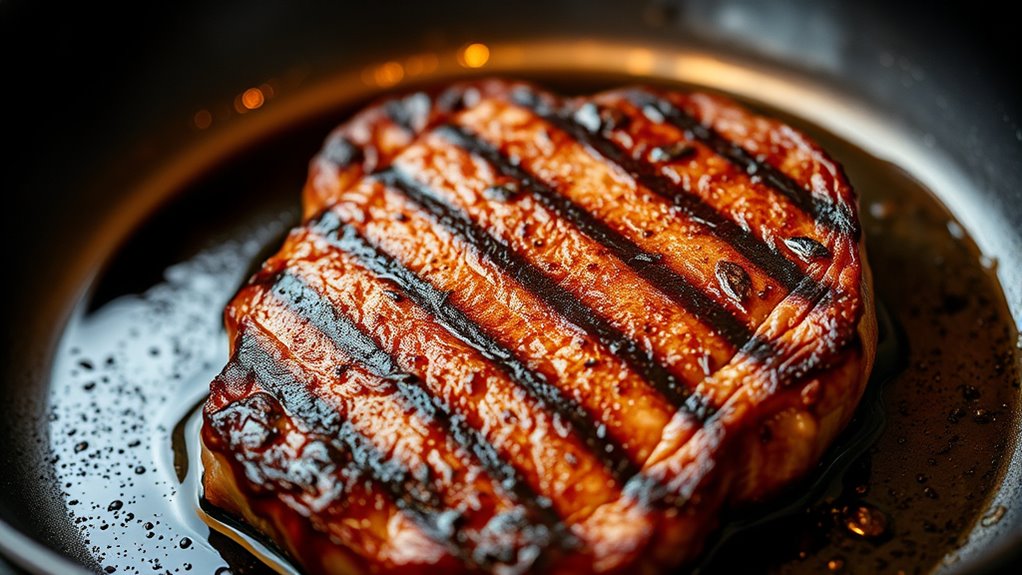
How Do You Cook Steak on a Non-Stick Pan?
Cooking a perfect steak on a non-stick pan can feel tricky, especially if you’re new to it. Many people struggle with getting that lovely sear or avoiding sticking and overcooking. Don’t worry—you’re not alone, and with a few simple tips, you’ll be flipping restaurant-quality steaks in no time.
To cook steak on a non-stick pan, start by fully thawing and drying your meat, then season it generously. Preheat the pan over medium-high heat until hot and the oil shimmers.
Place the steak carefully and avoid moving it too much, allowing a crust to form. Flip only once to develop a perfect sear.
For more detailed tips on avoiding common mistakes and caring for your pan, keep exploring.
Key Takeaways
- Preheat a high-quality non-stick or carbon steel pan over medium-high heat until the oil shimmers.
- Make sure to thoroughly dry and season your steak first. Only add oil once the pan is hot enough.
- Place the steak in the pan and try not to flip it too often. This helps develop that nice, crispy crust.
- Cook each side for about 2-4 minutes until a deep, caramelized sear forms.
- Once it’s cooked to your liking, let the steak rest before serving.
- When you’re done, clean the pan gently after it cools down. This helps keep the surface in good shape.
Can You Sear Steak in a Non-Stick Pan? Why It Works (And When It Doesn’t)
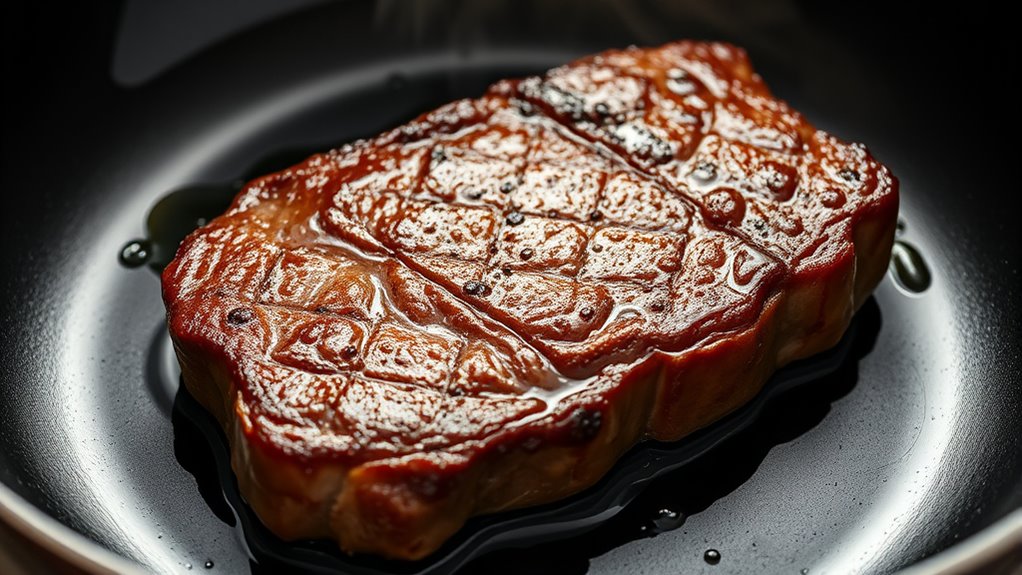
Yes, you can sear steak in a non-stick pan, especially if it’s designed to handle high temperatures. High-quality non-stick pans like ProCoat can safely withstand the heat needed to get a good sear.
Make sure the pan is thoroughly heated before adding oil and the meat. This quick, high-heat cooking works well for thin cuts like steaks, chicken breasts, or fish fillets.
However, avoid prolonged high-heat use because it can reduce the pan’s lifespan. Proper preparation, like drying the steak and not overcrowding the pan, also helps improve your results.
Keep in mind that larger or thicker cuts might not sear as well in a non-stick pan and could need different techniques or equipment.
How to Prepare Your Steak for Perfect Searing in a Non-Stick Pan
Preparing your steak properly sets the stage for a perfect sear in a non-stick pan. First, thaw the steak completely and let it sit at room temperature for 30-40 minutes. This helps ensure even heating and better searing.
Pat the steak dry with paper towels to remove surface moisture, which helps you get a crispy crust. Season your steak generously with salt and pepper on all sides, including the edges, to boost flavor and promote crust formation.
Avoid adding oil before placing the steak in the pan. Instead, rely on a preheated, high-quality pan to facilitate proper searing. Taking these steps makes sure your steak is ready for a delicious, evenly cooked sear, enhancing both flavor and texture.
Choosing the Right Pan and Technique for Searing Steak
To sear your steak effectively, choose a pan made of high-quality non-stick or carbon steel that can handle high heat.
Make sure the pan is big enough so you’re not overcrowding it, which can prevent a good sear.
Heat the pan thoroughly over medium-high before adding the meat.
Managing the heat properly and selecting the right pan material are key to getting a perfect, flavorful crust.
Pan Material Compatibility
Choosing the right pan is essential for successfully searing a steak on a non-stick surface. Not all non-stick pans are suitable for high-heat searing; you need one with good pan material compatibility.
Look for pans made with durable coatings like ProCoat that can withstand at least 450°F without damage. A high-quality non-stick pan with a thick base or carbon-steel construction is ideal because it offers better heat retention and durability.
Avoid thin, low-quality non-stick pans or stainless steel, as they may warp or degrade quickly under high temperatures. Preheat your pan over medium-high heat for about five minutes to ensure even heat distribution.
Using the right pan material guarantees safe, effective high-heat searing without compromising your non-stick surface.
Optimal Pan Size
Selecting the right pan size is key to getting a perfect sear on your steak. A good non-stick pan ensures even heat and keeps your steak from overcrowding the pan.
Choose a pan that:
- Fits your steak comfortably, with about 1-2 inches of space around it.
- Has a flat, smooth surface for consistent contact.
- Is made of high heat-tolerant material like carbon steel or quality non-stick.
- Has a thick base to retain heat and avoid hot spots.
This size helps the heat circulate properly, which promotes browning and searing. It also makes sure your steak gets that beautiful crust while cooking evenly inside.
A larger pan keeps the temperature steady, helping you achieve that perfect crispy exterior without sacrificing even cooking.
Heat Management Strategies
Ensuring your pan is hot enough is essential for a perfect sear, and this starts with choosing the right cookware. Use a high-quality non-stick or carbon-steel pan designed to withstand high heat for cooking steaks.
Preheat the pan over medium-high heat until it’s very hot. This helps develop a rich crust. Avoid overcrowding the pan, as too many steaks or ingredients can lower the heat and prevent proper searing.
Before adding the steak, dry it thoroughly and add a small amount of neutral oil to promote browning. During cooking, flip the steak every 2 minutes to maintain consistent heat and ensure an even, well-browned crust.
Managing heat effectively is key to achieving a perfect sear on your steak.
Getting a Perfect Crust: Tips for Searing in a Non-Stick Skillet
To get a perfect crust, start with a high-quality, heat-safe non-stick pan that can handle high temperatures.
Make sure your steak is thoroughly patted dry to remove excess moisture, which can prevent proper searing.
When the pan and oil are hot, you’ll be ready to achieve that desirable, crispy crust.
Use High-Quality Pan
A high-quality non-stick pan is essential for getting that perfect, golden crust on your steak. A top-tier pan, like one from the ProCoat collection, can handle high temperatures without damage, making searing easier and more consistent.
Imagine the pan warming evenly over medium-high heat, ready for action. As you add neutral oil with a high smoke point, like canola, it shimmers on the hot surface.
Your steak sizzles immediately when it hits the pan, forming a beautiful caramelized crust. The pan maintains steady heat, so your steak sears perfectly without steaming or burning.
Using a non-stick pan designed for high-temperature searing makes all the difference. It helps develop that flavorful crust without sticking or burning. Investing in a quality pan truly elevates your steak game.
Dry Meat Thoroughly
Ever wondered why your steak doesn’t get that perfect crust? It’s often because of surface moisture that stops proper searing. To get that crispy, flavorful crust, you need to dry the meat thoroughly.
Pat the steak with paper towels until it’s completely dry, removing any surface moisture that could prevent a good sear. Using a dry brine with salt 1-2 hours before cooking helps draw out excess water and improves crust formation.
Before putting the steak in the pan, gently press on it to squeeze out any remaining water droplets. Make sure your non-stick pan is clean and free of leftover grease or water.
Drying the meat well helps the Maillard reaction happen better, which gives you that beautifully seared, tasty crust when cooking in a non-stick skillet.
Step-by-Step: How to Cook Steak in a Non-Stick Pan for Perfect Results
Starting with a cold, high-quality non-stick pan is key to getting that perfect sear on your steak.
First, season your steak with salt and pepper, then place it directly in the pan without adding oil. Heat the pan over medium-high for about 5 minutes until it’s very hot.
When it’s ready, follow these steps:
- Gently place the steak into the pan, making sure it makes good contact.
- Sear for about 2-3 minutes on each side, flipping every 2 minutes.
- Keep an eye on the heat to avoid burning while still getting a good sear.
- Use a meat thermometer to check the internal temperature, removing the steak when it’s about 5°F below your desired doneness.
Finally, let the steak rest loosely covered for 5-10 minutes. This helps juices redistribute and finishes the cooking process.
Common Mistakes When Searing Steak in Non-Stick Cookware: And How to Avoid Them
Searing steak in a non-stick pan might seem straightforward, but common mistakes can ruin your effort and prevent you from getting that perfect crust. Overcrowding the pan lowers the temperature, making the steak steam instead of sear, so it doesn’t develop that nice brown crust.
Using oil at the wrong temperature or adding it before the pan is hot can cause smoking and uneven browning. Make sure to thoroughly dry the steak beforehand; moisture makes it harder to brown and creates steam.
Cooking at inconsistent heat or too high can damage the non-stick coating or stop proper searing. Also, flipping the steak too often or not giving each side enough contact time keeps you from developing that delicious crust.
Avoid these mistakes to ensure your pan helps you get a beautifully seared, caramelized steak every time.
How to Care for Your Non-Stick Pan After High-Heat Cooking
After high-heat cooking, let your non-stick pan cool completely before cleaning. This helps protect the delicate coating and keeps its non-stick properties intact.
Once cooled, gently wipe the pan with a soft sponge or cloth soaked in warm, soapy water. Avoid using abrasive scrubbers that can scratch the surface.
Never immerse a hot pan into cold water. Sudden temperature changes can warp it and damage the coating.
After cleaning, dry the pan thoroughly to prevent water spots and preserve its non-stick surface.
To keep your pan in great shape, periodically apply a light layer of oil after cleaning. This simple step helps prolong the life of the coating and ensures it performs well.
Frequently Asked Questions
How to Cook the Perfect Steak in a Non-Stick Pan?
To cook the perfect steak in a non-stick pan, start with a dry, seasoned steak at room temperature.
Preheat the pan over medium-high heat until it’s hot, then place the steak in without adding any oil.
Cook for about 5 minutes per side, flipping every 2 minutes to help it brown evenly.
Let the steak rest for at least 5 minutes before slicing so it stays juicy and flavorful.
What Is the 3 3 3 3 Rule for Steaks?
The 3 3 3 3 rule guides you to cook your steak perfectly, flipping every three minutes for a total of four intervals.
You sear the steak on high heat, which helps create an even, enticing crust while controlling internal doneness.
After cooking, you should let it rest for five minutes so the juices can settle.
This simple, strategic method helps you master the art of a juicy, flavorful steak every time.
How to Cook a Ruth’s Chris Steak?
To cook a Ruth’s Chris-style steak, start by seasoning it generously with salt and pepper. Let it sit at room temperature for 30-40 minutes to ensure even cooking.
Preheat your heavy non-stick pan over medium-high heat and add a small amount of oil. Wait until the oil shimmers before adding the steak.
Sear the steak for 2-3 minutes on each side until a deep crust forms. Then, let it rest for 5-10 minutes before serving to lock in the juices and maximize tenderness and flavor.
Is It Safe to Cook Steak on a Non-Stick Pan?
Yes, it’s safe to cook steak on a non-stick pan if it’s designed for high-heat use. Just make sure you’re using a pan with a durable coating, and follow the manufacturer’s guidelines for temperature.
Avoid overheating the pan to prevent damage to the coating and the release of fumes. When used properly, a good-quality non-stick pan can sear your steak evenly without sticking.
This way, you get a delicious meal and can do so safely. Just keep an eye on the heat and choose the right pan for the best results.
Conclusion
Now that you know how to cook steak on a non-stick pan, you’re ready to master that perfect crust, avoid common mistakes, and take good care of your cookware.
Remember, success comes from preparation, patience, and attention to detail. Focus on seasoning the right pan, controlling the heat, and letting your steak rest after cooking.
With these steps, you’ll cook with confidence, impress everyone with flavor, and enjoy every delicious bite. So go ahead, turn up the heat, and savor your perfectly cooked steak.