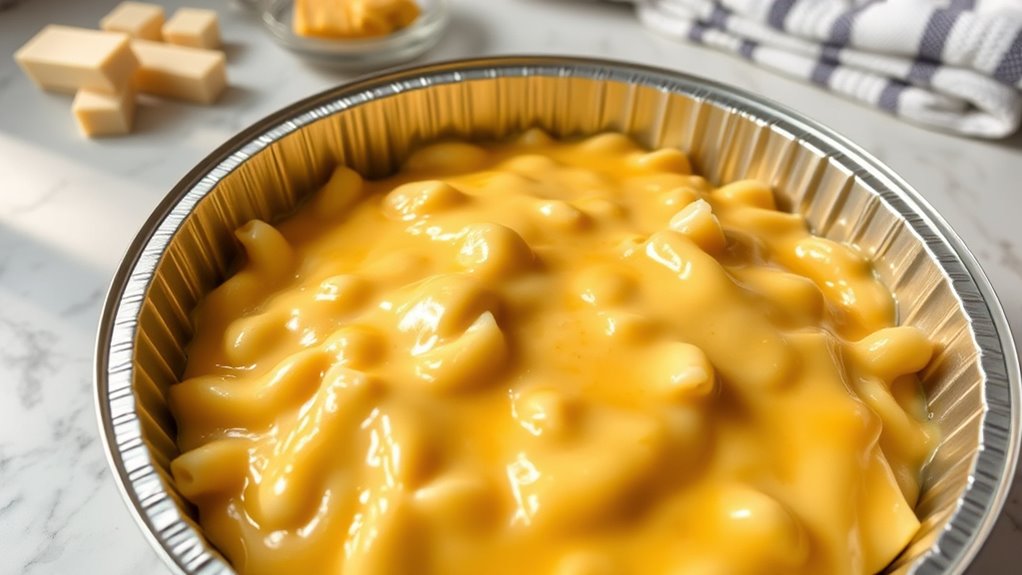
How You Can Freeze Mac and Cheese in an Aluminum Pan
Many of us love making a big batch of mac and cheese to enjoy later, but figuring out the best way to freeze it can be tricky. You’re not alone—freezing leftovers without sacrificing taste or texture is a common challenge.
To freeze mac and cheese in an aluminum pan, wait until it cools completely to prevent ice crystals. Cover it directly with plastic wrap, then wrap tightly with heavy-duty aluminum foil to prevent freezer burn. Label the package with the freezing date and store it flat for even freezing.
When you’re ready to enjoy it, properly thaw it in the fridge and reheat thoroughly. Continue exploring for more tips on preserving its quality and flavor.
Key Takeaways
- Allow the mac and cheese to cool completely before freezing. This helps prevent condensation and ice crystals from forming.
- Cover the pan with plastic wrap and heavy-duty aluminum foil. Make sure it’s airtight so the dish stays fresh.
- Label the pan with the freezing date. For the best quality, try to use it within 2 to 3 months.
- Use a deep, sturdy aluminum pan. This prevents overflow and helps the mac and cheese freeze evenly.
- When you’re ready to enjoy it, thaw in the refrigerator overnight. Be sure to reheat thoroughly before serving.
Why Use Aluminum Pans for Freezing Mac and Cheese?
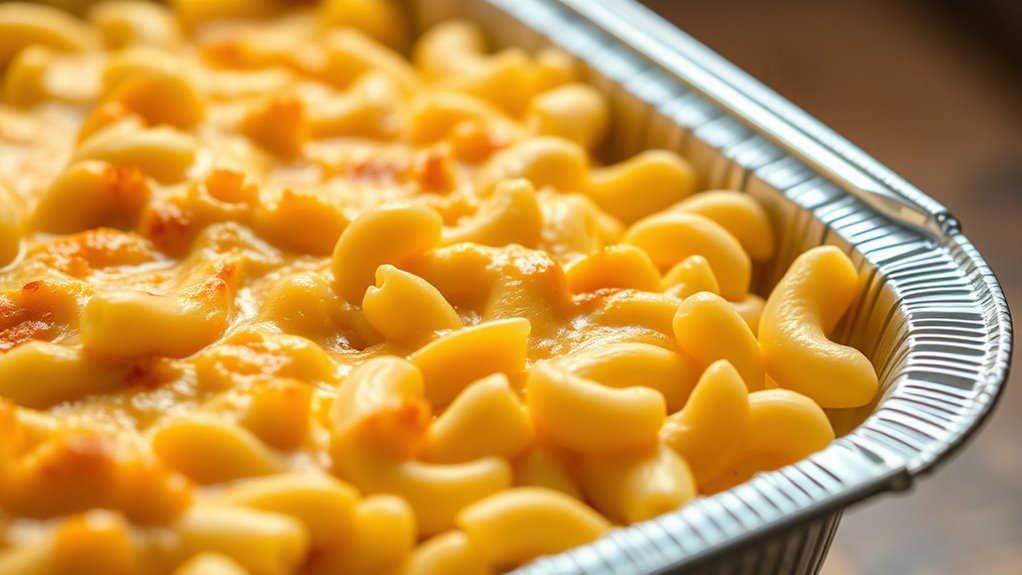
Using aluminum pans for freezing mac and cheese makes things more convenient because they’re lightweight and easy to handle.
Their disposable design means you can freeze and bake without worrying about cleanup, which simplifies your cooking routine.
Aluminum pans are oven-safe, so you can go straight from freezer to oven without transferring the dish, helping to reduce spills and mess.
Their excellent heat conduction ensures even freezing and baking, giving you consistent results every time.
Plus, aluminum resists rust and corrosion, making them durable for multiple freezing cycles.
Whether you’re storing leftovers or prepping meals ahead of time, these pans are practical and convenient.
Their lightweight and disposable qualities make freezing, baking, and cleanup hassle-free when handling mac and cheese.
Preparing Mac and Cheese for Freezing in an Aluminum Pan
Before transferring your mac and cheese to the aluminum pan for freezing, make sure it’s cooled completely at room temperature. Proper cooling prevents condensation inside the pan, which can cause ice crystals and freezer burn.
Use a deep, sturdy aluminum pan to hold the full volume of your mac and cheese without overflowing during freezing. Once cooled, place plastic wrap directly on the surface to create a barrier against moisture.
Then, cover the pan tightly with heavy-duty aluminum foil. This extra layer helps protect your dish from freezer burn and keeps flavors fresh.
If you’re preparing ahead, assemble everything in the aluminum pan and allow it to cool partially before wrapping and freezing. Be sure to label the pan with the date so you enjoy your mac and cheese within 2-3 months for the best quality.
How to Pack and Seal Your Mac and Cheese for Freezing
Once your mac and cheese has cooled completely, it’s important to pack it carefully to prevent freezer burn and keep its quality. Start by covering the aluminum pan tightly with plastic wrap, pressing directly onto the surface to eliminate air pockets.
Then, wrap the entire pan with a layer of heavy-duty aluminum foil for an extra seal and protection. Use the following table to ensure proper sealing:
| Step | Material | Purpose |
|---|---|---|
| Cover tightly | Plastic wrap | Prevent condensation |
| Wrap with foil | Aluminum foil | Protect against freezer burn |
| Label | Marker and tape | Track freezing date |
| Double wrap | Additional plastic wrap | Maximize freshness |
| Vacuum seal | Vacuum sealer | Remove excess air |
Proper packing keeps your mac and cheese fresh and delicious.
Best Way to Thaw Frozen Mac and Cheese in an Aluminum Pan
To thaw frozen mac and cheese in an aluminum pan, transfer it to the refrigerator and let it thaw overnight for even, safe defrosting.
If you’re in a hurry, use the microwave’s defrost setting. Just remember to check and stir every few minutes for even thawing.
Always make sure the dish is fully thawed before reheating to keep it creamy and to avoid uneven heating.
Thaw Slowly in Refrigerator
Thawing your mac and cheese slowly in the refrigerator is the safest and most effective way to keep its creamy texture.
Place the aluminum pan on a plate or tray to catch any drips. Keep the dish at 40°F (4°C) for 8-12 hours or overnight for even temperature distribution.
This slow thaw helps prevent the cheese sauce from separating and keeps the dish’s original consistency. Avoid thawing at room temperature to prevent bacterial growth and food safety issues.
For the best results, keep the aluminum pan unwrapped during thawing to reduce moisture loss. Following these steps ensures your frozen mac and cheese is safely and evenly thawed, ready for reheating.
Use Microwave for Quick Thaw
Using the microwave is one of the fastest ways to thaw frozen mac and cheese in an aluminum pan, making it convenient when you’re short on time. To do this safely, remove any plastic wrap or foil, as these can cause fire hazards or melt.
Place the aluminum pan in the microwave and use the defrost setting or set it to 30% power. Thaw in short intervals of 2-3 minutes, stirring occasionally to guarantee even thawing and prevent overheating.
Keep a close eye on the edges to avoid cooking or burning. Once the mac and cheese is thawed, reheat it on high for 2-4 minutes, stirring halfway through.
This quick method restores creaminess and heats your dish evenly, saving you time without sacrificing quality.
Ensure Even Heating Before Serving
Ensuring even heating before serving is essential to enjoy your mac and cheese at its best. To thaw, place the aluminum pan in the refrigerator for 8-12 hours, allowing for even temperature distribution.
If you’re in a hurry, use the microwave’s defrost setting, stirring periodically to promote uniform heat. Make sure the dish is fully thawed before reheating to prevent cold spots and uneven heating.
When reheating in the oven, cover the pan tightly with foil. This traps steam and helps heat penetrate evenly. Use a food thermometer to check that the internal temperature reaches at least 165°F (74°C).
Proper thawing, covering tightly, and ensuring even heating will make sure your mac and cheese is warmed thoroughly and tastes its best.
Reheating Tips: Restoring Creaminess and Texture
When reheating mac and cheese, stirring frequently helps evenly distribute heat and keeps the dish creamy.
Adding warm milk or cream during reheating restores moisture and smoothness, preventing dryness.
Using gentle heat and short intervals ensures the texture stays soft without overcooking or separation.
Stir During Reheating
Stirring your mac and cheese during reheating is key for evenly distributing heat and avoiding hot spots. When you stir, you help keep the creamy sauce intact and ensure it heats uniformly, which is important for restoring its original texture.
This also breaks up any ice crystals that might have formed during freezing and thawing, making the dish smoother and more enjoyable to eat. Whether you’re using a microwave or oven, stirring every 1-2 minutes in the microwave or halfway through in the oven helps reheat it evenly.
Regular stirring keeps the sauce cohesive and helps your mac and cheese stay creamy, flavorful, and satisfying. These simple techniques work whether you’re reheating from frozen or leftovers.
Add Milk for Moisture
Adding a splash of warm milk during reheating can work wonders for restoring the creamy texture of frozen mac and cheese. Milk helps reintroduce moisture, preventing the dish from becoming dry or grainy.
As you reheat, gradually stir in small amounts of milk to ensure even distribution and maintain the sauce’s smooth consistency. Using whole milk or cream provides the best moisture and richness, especially if the dish has thickened during freezing.
Common Mistakes to Avoid When Freezing in Aluminum Pans
Freezing mac and cheese in aluminum pans needs some attention to avoid common mistakes that can ruin your dish. One big mistake is not wrapping it tightly with plastic wrap or foil. This can expose the food to air and lead to freezer burn. Make sure to seal it well to keep the moisture and flavor intact.
Overfilling the pan is also a problem. It can cause spillage or uneven freezing and reheating. Leave a little space at the top so everything freezes evenly. Avoid putting warm or hot pans directly into the freezer. The rapid temperature change can warp or crack the aluminum.
Always choose sturdy, undamaged pans to prevent deformation during freezing. And don’t forget to keep your freezer at the right temperature. This helps the dish freeze quickly and stay fresh.
Additional Tips for Storing and Maintaining Quality
Proper storage techniques are key to maintaining the quality of your mac and cheese after freezing. Make sure to cool it completely before wrapping to prevent condensation and ice crystals.
Use multiple layers of plastic wrap and aluminum foil to create an airtight seal. This helps guard against freezer burn and keeps odors out.
When choosing a container, go for flat, stackable options to save space and promote even freezing. Avoid overfilling so there’s room for expansion during freezing.
- Use airtight seals to prevent freezer burn
- Label packages with the freezing date for easy tracking
- Choose proper containers that maximize space and facilitate even freezing
Frequently Asked Questions
How Long Can You Freeze Mac and Cheese in an Aluminum Pan?
You can freeze mac and cheese in an aluminum pan for up to three months.
To keep it fresh, make sure to seal the pan tightly with an airtight lid or wrap it well with plastic wrap and foil.
Avoid freezing it beyond three months, as the flavor and texture may decline.
For the best taste and quality, enjoy it within the three-month period.
How to Wrap Aluminum Pans for Freezing?
To wrap aluminum pans for freezing, start by letting the mac and cheese cool completely. Then, tightly press plastic wrap directly onto the surface to eliminate air gaps.
Cover with a layer of heavy-duty aluminum foil, sealing the edges securely. For extra protection, add another layer of plastic wrap before the foil.
Label the package with the date, and store it upright or flat to prevent shifting.
Can Diabetics Eat Mac and Cheese?
Yes, you can eat mac and cheese if you’re diabetic, but moderation and smart choices matter.
Opt for whole-grain or lower-carb pasta, use healthier ingredients like reduced-fat cheese or Greek yogurt, and control your portion sizes to prevent blood sugar spikes.
Keep track of how your body responds after eating, and enjoy mac and cheese as an occasional treat rather than a regular meal, ensuring you stay mindful of your blood sugar levels.
What Is the Best Way to Freeze Mac & Cheese?
The best way to freeze mac and cheese is to let it cool completely. Then transfer it to an airtight aluminum pan with a secure lid.
Wrap it tightly with plastic wrap and aluminum foil to prevent freezer burn. Label it with the date and store it for up to three months.
For easier reheating, consider freezing in single-serving portions. You can also undercook the pasta slightly to prevent mushiness.
Conclusion
Freezing mac and cheese in an aluminum pan is a simple and convenient way to keep it fresh for later. Just make sure to pack it tightly, seal it well, and thaw it properly.
This way, you can enjoy creamy, delicious leftovers whenever you want. Are you ready to save time and reduce waste by freezing your favorite comfort food?
With these tips, you can enjoy homemade mac and cheese anytime without sacrificing flavor or texture. Happy freezing!