What Type of Salt Is Safe for Concrete
Dealing with ice and snow on your concrete surfaces can be a real headache, especially when you’re worried about causing damage. Many people struggle with choosing the right salt that melts ice effectively without harming their concrete or rebar. You’re not alone in wanting a safe, effective solution that keeps your surfaces intact.
Safe salts for concrete include calcium magnesium acetate (CMA), potassium acetate, and other non-chloride options, as they are less aggressive and produce fewer harmful reactions like cracking and spalling. These salts melt ice effectively without causing internal damage or rebar corrosion, especially at low temperatures.
Using them properly can extend your surface’s lifespan and prevent long-term deterioration. If you want to find out more about protecting your concrete, keep exploring these safer choices.
Key Takeaways
- Calcium magnesium acetate (CMA) is a safer, eco-friendly salt that reduces damage to concrete and vegetation.
- Non-chloride options like CMA produce fewer harmful chemical reactions during freeze-thaw cycles.
- CMA helps prevent surface spalling and cracking, which extends the lifespan of concrete surfaces.
- Safer salts generate less heat and expansion, minimizing internal stress and deterioration.
- To get the best results, use proper application methods and apply when temperatures are above 20°F.
What Makes a Salt Safe for Concrete?
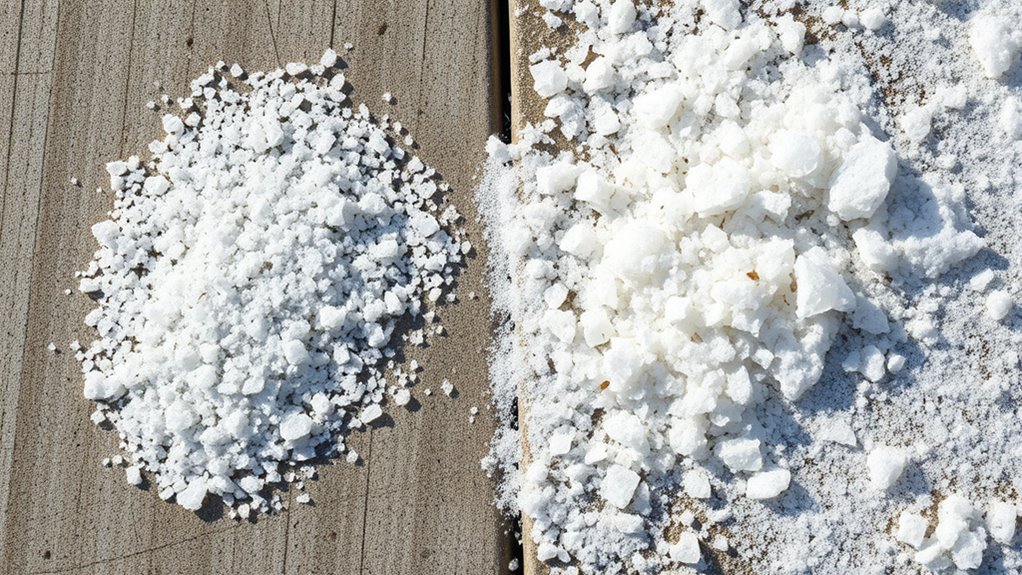
To figure out if a salt is safe for concrete, you need to consider how it reacts chemically with the material. Safer options like calcium magnesium acetate are less aggressive and cause fewer harmful reactions.
These salts tend to produce less cracking, spalling, or surface damage. They are also environmentally friendly and have a balanced composition that reduces internal penetration.
Their effectiveness during freeze-thaw cycles is important too. They generate less heat and fewer expansion forces, which helps keep the concrete intact.
The chemical reactions from less soluble salts are milder, lowering the risk of deterioration. Overall, a safe salt balances effectiveness with minimal chemical impact to protect the surface over time.
Compare Common Deicers and Their Effects on Concrete
Different deicers vary a lot in how they affect concrete, impacting both how well they work and how long they last. Salt, like sodium chloride, is cheap and melts ice down to 20°F but can cause surface scaling and cracks over time.
Calcium chloride works better at lower temperatures, down to -25°F, and it produces heat that’s less damaging to concrete. Potassium chloride is safer for plants and works down to 12°F, but it’s less effective in really cold weather.
Non-chloride de-icing salts like calcium magnesium acetate are eco-friendly and safer for concrete, especially in sensitive areas. Overusing chloride-based deicers can cause internal expansion, rebar corrosion, and long-term damage, making some salts less safe than others.
How Calcium Magnesium Acetate Protects Your Concrete Surfaces
Calcium magnesium acetate (CMA) offers a safe and effective way to protect your concrete surfaces during winter. As an eco-friendly deicer, CMA melts ice without harming your concrete or surrounding vegetation.
Its non-corrosive nature ensures your concrete surfaces won’t suffer from surface scaling or spalling, which are common issues with other deicers. CMA works effectively down to 20°F, creating an exothermic reaction that safely breaks ice bonds.
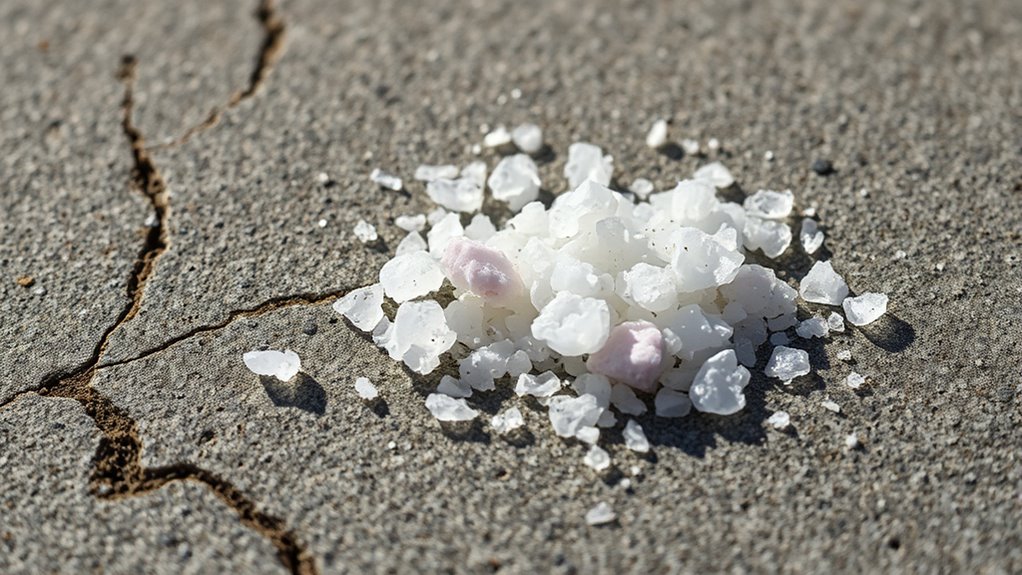
This process reduces the risk of cracks and deterioration, helping extend the lifespan of your surfaces. Tinted CMA flakes improve visibility during application, ensuring even coverage.
Why Traditional Rock Salt Can Damage Your Driveway
While calcium magnesium acetate protects your concrete during winter, traditional rock salt can cause serious damage over time.
Rock salt, or sodium chloride, seeps into porous concrete and reacts with calcium to form calcium oxychloride. This reaction causes internal expansion, leading to surface cracking and spalling.
Rock salt penetrates concrete, reacts with calcium, and causes cracks, spalling, and long-term structural damage.
Repeated use of salt speeds up freeze-thaw cycles, which makes the surface worse by creating more cracks and deterioration. Salt also lowers the water’s freezing point, letting moisture enter cracks and freeze again, causing more damage.
Plus, salt creates a corrosive environment that can rust embedded rebar, weakening the overall structure. Applying rock salt on unsealed or new concrete traps moisture, which speeds up surface scaling and long-term deterioration.
How to Apply Salt Safely to Protect Your Concrete
To protect your concrete from winter damage, it’s essential to apply salt carefully and correctly. Using salt safe for concrete involves following the manufacturer’s recommended application rates to prevent excessive salt buildup, which can cause surface scaling.
Apply salt evenly with a spreader or broom to avoid concentrated areas that may lead to cracking. Pre-treat surfaces with a concrete sealant to reduce salt penetration and improve concrete protection.
For temperatures below 20°F, opt for ice melt products like calcium magnesium acetate or potassium acetate. They’re less corrosive and safer for concrete.
After melting ice, promptly remove excess salt and snow to prevent prolonged moisture exposure, which can weaken your concrete over time. Proper salt application is key to preventing damage and maintaining your driveway’s integrity.
Choosing the Best Salt for Your Climate and Needs
When choosing salt for your concrete, think about your climate’s temperature extremes and environmental impact.
In cooler areas, you might need stronger options like calcium chloride. Eco-friendly choices like potassium acetate or CMA can help prevent damage and are safer for plants and pets.
The key is balancing effectiveness, safety, and environmental concerns based on what you need.
Climate Suitability Considerations
Choosing the right salt for your climate is key to melting ice effectively without damaging your concrete. Your regional climate plays a big role in which salt you should pick.
In colder areas, you’ll need more aggressive deicers like calcium chloride, which works down to -25°F. In milder climates where temperatures rarely drop below 20°F, sodium chloride might do the trick but can cause freeze-thaw damage if overused.
Magnesium chloride is effective around 0°F and is gentler on concrete, making it a good choice for moderate conditions. For long, harsh winters, low-corrosion salts like calcium magnesium acetate help protect your concrete better.
Choosing a salt that matches your climate’s temperature range helps prevent deterioration. This way, your concrete stays durable and intact over time.
Safety and Environmental Impact
Selecting the right salt isn’t just about temperature compatibility; it also involves considering safety and environmental impact. A safe salt, like magnesium chloride or calcium magnesium acetate, is environmentally friendly and less likely to damage concrete.
These eco-friendly de-icers are non-corrosive and have low toxicity, reducing risks to pets and plants. Potassium acetate is biodegradable, making it a safer choice for the environment compared to traditional chloride salts.
Choosing de-icers with lower toxicity and eco-friendly ingredients helps minimize harmful runoff and long-term ecological damage. Proper application for your climate’s lowest temperatures prevents overuse, further protecting the environment.
Frequently Asked Questions
Which Salt Is Least Harmful to Concrete?
Calcium magnesium acetate is the least harmful to concrete. You should choose it because it causes minimal surface deterioration and is environmentally friendly.
Unlike sodium chloride, it doesn’t cause internal expansion or surface scaling. Magnesium chloride and potassium chloride are safer options than rock salt.
However, calcium magnesium acetate remains the best choice if you want to protect your concrete surfaces while effectively melting ice.
What Does Coca-Cola Do for Concrete?
Coca-Cola can temporarily brighten and clean concrete by dissolving mineral deposits, rust, and grime thanks to its phosphoric acid.
However, it’s like pouring a tiny storm on your surface—causing erosion over time and leaving sticky residues that attract pests.
While it may seem helpful, it’s far from a reliable or safe cleaner.
Stick to specialized concrete products for long-lasting, damage-free results.
What Ice Salt Won’t Damage Concrete?
You should choose calcium magnesium acetate or potassium acetate as ice melts that won’t damage your concrete. These options are less corrosive, eco-friendly, and effective at melting ice down to low temperatures.
Avoid using sodium chloride, which can penetrate porous concrete and cause cracking over time. Applying these safer salts correctly helps protect your concrete surfaces from long-term damage while ensuring safe, effective ice melting during winter.
How to Melt Ice Without Damaging Concrete?
An ounce of prevention is worth a pound of cure. To melt ice without damaging concrete, use calcium magnesium acetate or potassium acetate, which are less corrosive.
Apply these deicers evenly and in recommended amounts. Pre-treat surfaces with a protective sealant, and avoid rock salt below 20°F.
Also, consider mixing in sand or traction agents to reduce chemical use and protect your concrete surfaces.
Conclusion
Choosing the right salt can protect your concrete and extend its lifespan. It might be tempting to grab the cheapest option, but investing in a safe, effective deicer like calcium magnesium acetate can keep your driveway intact through harsh winters.
Don’t let worries about costs make you sacrifice your concrete’s health. Think about the savings and peace of mind you’ll enjoy in the long run. When it comes to concrete, calcium magnesium acetate is a smart, safe choice for deicing.
Protect your surface now and enjoy safer, stronger concrete for years to come. Using the right salt is essential for maintaining your concrete’s durability and appearance.