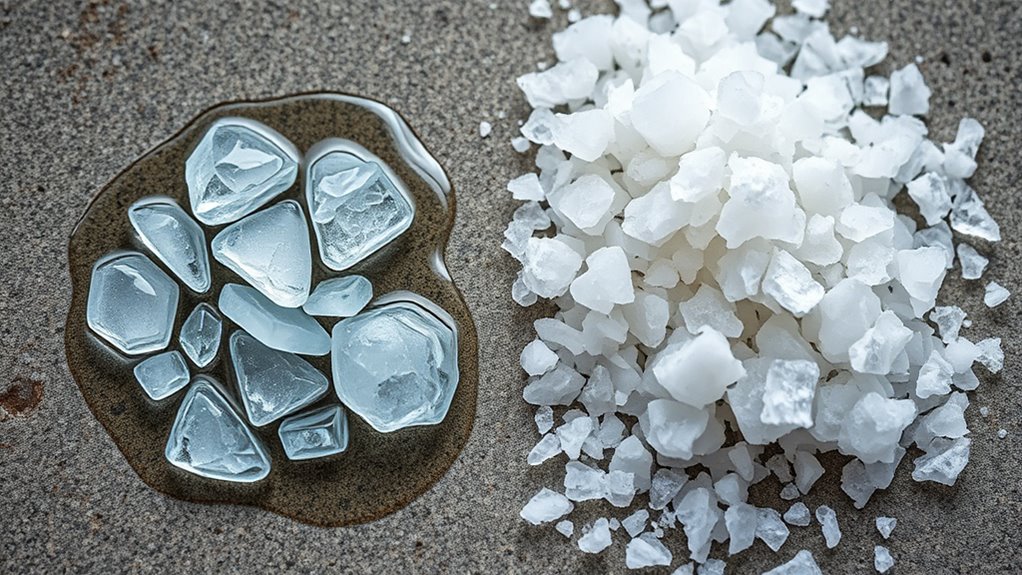
10 Key Differences Between Ice Melt and Rock Salt
Many homeowners and property managers know the challenge of keeping walkways safe during winter. You’re not alone if you’ve wondered which ice melt product is best. With so many options, it’s easy to feel overwhelmed.
Ice melt products contain calcium chloride or magnesium chloride, work at lower temperatures, and melt ice as cold as -25°F, making them more effective in extreme cold.
Rock salt, mainly sodium chloride, is cheaper but only melts above 5°F and can damage surfaces or harm plants and pets.
Safety and environmental impacts vary; ice melt is gentler but pricier. Knowing when and how to use each helps you stay safe and avoid damage.
More details can guide your choices.
Key Takeaways
- Ice melt products typically contain calcium chloride or magnesium chloride. These chemicals melt ice at lower temperatures compared to rock salt’s 5°F threshold.
- Rock salt mainly consists of sodium chloride. It’s less effective below 5°F and can cause damage to surfaces over time.
- Many ice melts include helpful additives like corrosion inhibitors and colorants. Plain rock salt usually doesn’t have these extras.
- Ice melt tends to be more expensive per bag. However, it lasts longer and works well in colder conditions.
- Rock salt is usually cheaper and is good for covering large areas. But it’s more corrosive and can be harmful to the environment compared to many ice melt options.
What’s Inside Rock Salt and Ice Melt?
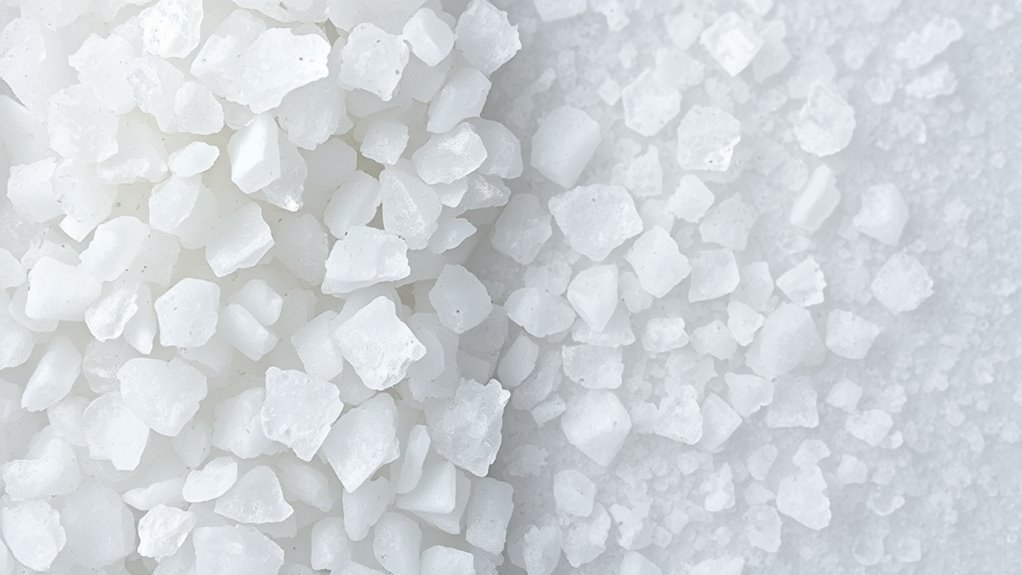
Rock salt mainly consists of sodium chloride in large crystalline chunks, similar to table salt but unrefined. Its chemical makeup is simple, mostly sodium chloride, often shaped into crystalline pellets.
In contrast, ice melt products contain a mix of ingredients like calcium chloride and magnesium chloride. These help the melting process work better at lower temperatures.
Some formulations include additives such as colorants or corrosion inhibitors to boost performance and safety. Calcium chloride, used in many ice melts, is less corrosive and effective down to -25°F.
Magnesium chloride also enhances melting capabilities. The composition of ice melt varies by brand, but most combine these chlorides with additives to improve effectiveness, especially in very cold weather.
How Do Their Melting Temperatures Compare?
Understanding how their melting temperatures compare helps you choose the right ice melt for cold conditions. Rock salt typically melts ice above 5°F (-15°C), so it’s less effective in very cold weather.
In contrast, ice melt products containing calcium chloride can melt ice at temperatures as low as -25°F (-32°C). Calcium chloride releases heat during melting, which boosts its effectiveness in cold environments.
Magnesium chloride-based melts work down to about -13°F (-25°C). Overall, ice melt products have lower melting temperatures than rock salt, making them better suited for colder conditions.
Which De-Icer Works Best in Cold Weather?
When temperatures drop below freezing, not all de-icers work equally well. Calcium chloride-based ice melt is your top pick for cold weather because it can melt ice down to -25°F. It releases heat as it reacts, helping it melt ice even in extreme cold.
In comparison, rock salt’s effectiveness falls off sharply below 15°F, so it’s not great for very cold conditions. Blended ice melts that contain calcium or magnesium chlorides are made for those freezing temperatures and often work below -10°F.
In subzero weather, pure rock salt just doesn’t cut it anymore. Calcium chloride-based products, on the other hand, perform really well. For reliable melting in freezing temperatures, calcium chloride-based ice melt outperforms rock salt, keeping your surfaces safer and clearer even in the coldest weather.
Is One More Cost-Effective for Large Areas?
When covering large areas, buying in bulk can really help cut costs, especially with rock salt, which is usually cheaper per bag.
Ice melt products tend to cost more and might not be practical for big areas unless the weather conditions require their better performance.
Bulk Purchase Savings
Buying in bulk really changes the overall cost of ice melt and rock salt, especially if you’re covering a large area. When you buy in bulk, prices tend to drop, making it more affordable to purchase in larger quantities.
This approach not only lowers your per-unit cost but also helps the product last longer, so you’re ready for multiple winter seasons. For example, a 50-pound bag of rock salt usually costs less per unit than ice melt, especially when bought in bulk.
The larger the order, the more you save thanks to economies of scale. It’s a smart way to cut costs over time and ensure you’re well-stocked for winter.
- Lower prices per bag when buying in bulk
- More savings on bigger quantities
- Longer shelf life for seasonal use
- Better cost-efficiency for large areas
Material Cost Differences
For large-area applications, the material cost difference between rock salt and ice melt can significantly impact your budget. Rock salt usually costs between $4.50 and $9.50 per 50-pound bag, making it a more affordable option for covering big areas.
Ice melt products typically range from $6 to $12 per 50-pound bag, which can add up quickly when used on large surfaces. When comparing prices, rock salt generally proves to be more cost-effective, especially if you’re working with a tight budget.
Although ice melt tends to be more expensive upfront, it might require less product to melt ice effectively. This could help offset the higher costs in the long run. Overall, rock salt offers better value for large areas, but keep in mind the potential surface damage over time when choosing your product.
Are Rock Salt and Ice Melt Safe for Pets and Plants?
You should be aware that rock salt can irritate your pets’ paws and may cause health issues if ingested.
Some ice melt products are safer for pets, but they tend to lose effectiveness after application.
Both substances can harm plants and vegetation if used excessively, so it’s good to choose pet- and plant-friendly options.
Washing your pets’ paws after walking on treated surfaces can also help protect their health.
Pet Safety Considerations
Pet safety is a crucial consideration when using ice melt or rock salt during winter. Both de-icers can irritate pets’ paws and mucous membranes if ingested or contacted frequently.
Some ice melt products are pet-safe, containing ingredients like calcium magnesium acetate. However, their protective coating diminishes after application, which increases the risk.
Excessive use of salt-based de-icers can leave chemical residues in the soil, affecting pets and the environment. To reduce health risks, always wash your pet’s paws after exposure.
Opt for pet-friendly de-icers with lower toxicity. Be aware that some products may cause skin irritation or toxicity if ingested.
Thinking about the environmental impact helps you choose safer options that protect your pets and surrounding vegetation.
Impact on Vegetation
While ice melt and rock salt are effective for clearing pathways, they can pose risks to both plants and pets. Rock salt can cause significant plant damage, leading to dehydration and increased soil toxicity, which harms vegetation over time.
Many de-icing agents contain calcium chloride or magnesium chloride, which are generally safer for vegetation and pets compared to pure sodium chloride. Excessive use of rock salt may lead to soil and water contamination, negatively impacting surrounding plant life and aquatic ecosystems.
Pet-safe ice melt options often include additives like calcium magnesium acetate, which are less irritating to paws and less harmful to plants. Choosing environmentally friendly de-icing agents helps protect vegetation, soil health, and the overall ecosystem while keeping pets safe.
How Do They Affect Surfaces, Vehicles, and Landscaping?
Rock salt is highly corrosive and can cause long-term damage to surfaces like concrete and asphalt, as well as vehicle paint. If not cleaned off quickly, it can lead to serious issues.
This damage happens because of its aggressive nature, which causes metal fixtures to corrode and vehicles to rust. It can also harm landscaping by eroding soil and damaging plants.
Both de-icing products can also impact the environment, contaminating soil and water. To reduce these problems, it’s best to apply de-icers carefully and remove any residual product promptly.
Best Practices for Applying De-Icers Safely and Effectively
To apply de-icers safely and effectively, start by removing snow and slush beforehand to reduce the amount needed. This makes the de-icing process more efficient and helps prevent excessive chemical use.
Use a calibrated spreader or a cup for even application, and be sure to follow the manufacturer’s instructions closely. This ensures you’re using the right amount and avoiding waste.
Remember to wear gloves to protect your skin, and wash your pet’s paws afterward to prevent irritation. Taking these simple steps keeps everyone safer and the environment healthier.
Proper Application Techniques
Applying de-icers correctly is key to safety and effectiveness. Start by shoveling snow and ice first to reduce the amount of de-icer needed and improve how well it works.
Use a calibrated spreader or a cup to spread a thin, even layer. Make sure you follow the manufacturer’s instructions for application rates so you don’t overdo it, which can damage surfaces or harm the environment.
Reapply as needed, especially after new snowfall or ice forms. Promptly remove melted snow and ice to keep pathways safe. Proper application techniques help get the most out of your de-icer and reduce hazards.
- Use a calibrated spreader for even distribution
- Apply after snow or ice has formed
- Follow manufacturer’s instructions precisely
- Reapply as needed for continued safety
Safety Measures and Precautions
Using proper application techniques is important, but maintaining safety while applying de-icers is just as vital. Always wear gloves to protect your skin from chemicals like sodium chloride or calcium chloride, which can cause skin irritation.
Follow the application instructions carefully to avoid surface damage and reduce environmental impact. Apply de-icers after shoveling snow to limit the amount needed and prevent overuse.
Keep pets and children away from freshly applied products, as they can cause skin and paw irritation or be toxic if ingested. Moreover, remove excess de-icer once the ice melts to prevent long-term damage to concrete, vegetation, or metal surfaces.
Practicing these safety precautions ensures effective de-icing while protecting your family, pets, and property.
When Should You Use Each Product Based on Weather Conditions?
Choosing the right product depends heavily on the current weather conditions. When temperatures are above 5°F, rock salt works well because it lowers the freezing point enough to melt ice and snow efficiently. Use rock salt on existing ice or snow, especially on surfaces where ice is already present.
When temperatures drop below 5°F, ice melt products are your best bet. They work faster and more effectively at colder temperatures. Ice melt can also be used as a preventative measure before a freeze, helping to stop ice from forming.
In extended cold snaps below 0°F, switch to ice melt for the best melting performance. Temperature really influences whether rock salt or ice melt will work best in your situation.
Which De-Icer Is Better for Long-Term Maintenance?
For long-term maintenance, ice melt products generally outperform rock salt because they last longer and stay effective over extended periods. Ice melt creates a more durable barrier against ice formation, reducing the need for frequent reapplications.
Its chemical composition helps maintain effectiveness, making it ideal for sustained winter conditions. Using ice melt minimizes surface damage and corrosion, leading to fewer repairs and replacements over time.
Rock salt, on the other hand, works quickly but isn’t as durable. It requires repeated applications to keep surfaces clear.
For long-term snow and ice control, choosing an ice melt with additives like magnesium or calcium chloride improves durability and effectiveness. This makes it the better option for ongoing winter maintenance.
How Can You Minimize Environmental and Surface Damage?
Applying de-icing products early before a storm can significantly cut down on the amount needed to keep surfaces clear, helping prevent unnecessary damage. To minimize environmental and surface harm, use the correct amount of ice melt or rock salt, and avoid over-application that can cause corrosion of concrete, metal, and plants.
Promptly removing slush and melted ice prevents re-freezing, which means you won’t need to use extra product. Choose safer options like magnesium chloride-based melts, which are more environmentally friendly and pet-safe.
Regularly cleaning and maintaining surfaces after winter helps repair any damage caused by de-icing residues and extends the life of your surfaces. Use pre-treatment strategies to reduce chemical use, and only apply de-icer when necessary.
Opt for eco-friendly, pet-safe de-icing products whenever possible. Being mindful of how much and when you apply de-icer makes a big difference in protecting the environment and your surfaces.
Frequently Asked Questions
Is It Better to Use Rock Salt or Ice Melt?
You should choose ice melt if you’re dealing with extremely cold temperatures below 5°F because it works better and faster in those conditions.
Rock salt is better for moderate cold, but it melts slower and isn’t as effective in extreme cold.
Think about safety for surfaces and the environment when making your choice. Ice melt is generally safer and more eco-friendly, especially in sensitive areas.
Will Pool Salt Do the Same Thing as Ice Melt?
Using pool salt is like trying to fix a complex puzzle with a simple piece. It might seem similar but doesn’t fit well.
Pool salt can melt ice, but it’s less effective and more corrosive than commercial ice melt. You won’t get the quick, reliable results you need.
It could also damage your surfaces. For safety and efficiency, stick with products specifically designed for ice melting.
What Is the Best Salt to Use on Your Driveway?
The best salt for your driveway depends on your needs. If you’re looking for affordability and decent performance at moderate temperatures, rock salt is a good choice above 5°F. Just keep in mind, it can damage concrete and vehicles.
For colder temperatures down to -25°F and safer surfaces, ice melt containing calcium or magnesium chloride works better. Think about your budget and local weather to pick the most effective and safe option for your driveway.
What Are the Pros and Cons of Using Rock Salt?
You might think rock salt is the cheapest and easiest way to melt ice, but it’s not without risks. It’s effective above 5°F, yet can damage your concrete, asphalt, and even your vehicle’s paint and rust parts.
Overuse harms the environment and pets’ paws. While affordable, it’s essential to weigh these cons against the benefits, especially if you want a safer, more eco-friendly option for your driveway.
Conclusion
Choosing between rock salt and ice melt depends on your specific needs and conditions. Did you know ice melt typically works down to -15°F, while rock salt’s effectiveness drops around 15°F?
By understanding their differences, you can maximize safety and efficiency. Proper application can reduce damage to surfaces and the environment.
So, assess your climate and priorities carefully. Making informed choices about ice melt versus rock salt helps you stay safe and save money during winter’s harshest days.