Best Salt for Water Softener – 7 Types to Use
Struggling with hard water and the buildup it causes? You’re not alone—many people find choosing the right salt for their water softener confusing. With so many options out there, it’s tough to know which one will work best for your home and budget.
The best salt for your water softener depends on your water hardness, budget, and environmental concerns. Evaporated salt offers high purity and efficiency but costs more, while solar salt is eco-friendly and good for hard water regions. Potassium chloride is a low-sodium alternative, though less efficient. Rock salt is cheaper but may cause system issues.
Selecting the right type and using it properly guarantees ideal softening. Keep going to find out how to make the best choice for your system.
Key Takeaways
– Evaporated salt offers the highest purity, dissolves quickly, and minimizes residue. This makes it ideal for efficient water softening.
It’s a great choice if you want a clean, hassle-free option. You won’t have to worry about buildup or blockages. Plus, it works fast to keep your system running smoothly.
– Solar salt is eco-friendly and suitable for very hard water, but it may need more frequent refills. Its efficiency is slightly lower, so you might find yourself topping up more often.
If you care about the environment, solar salt is a good pick. Just keep in mind that you’ll probably need to add more salt over time. It’s a solid option if you’re okay with a bit more maintenance.
– Potassium chloride is a low-sodium alternative that’s also environmentally friendly. However, it’s less efficient and more costly than sodium-based salts.
It’s a good choice if you’re looking to reduce sodium intake. Just remember that it might not last as long and can be pricier.
– Rock salt is less refined and can cause system issues like bridging or mush. Use it with caution and proper maintenance to avoid problems.
While it’s often less expensive, rock salt requires careful handling. Regular checks and cleaning help prevent clogging or damage.
Proper salt selection and regular system maintenance are key. They ensure optimal softening, reduce operational costs, and prevent damage to your water softener.
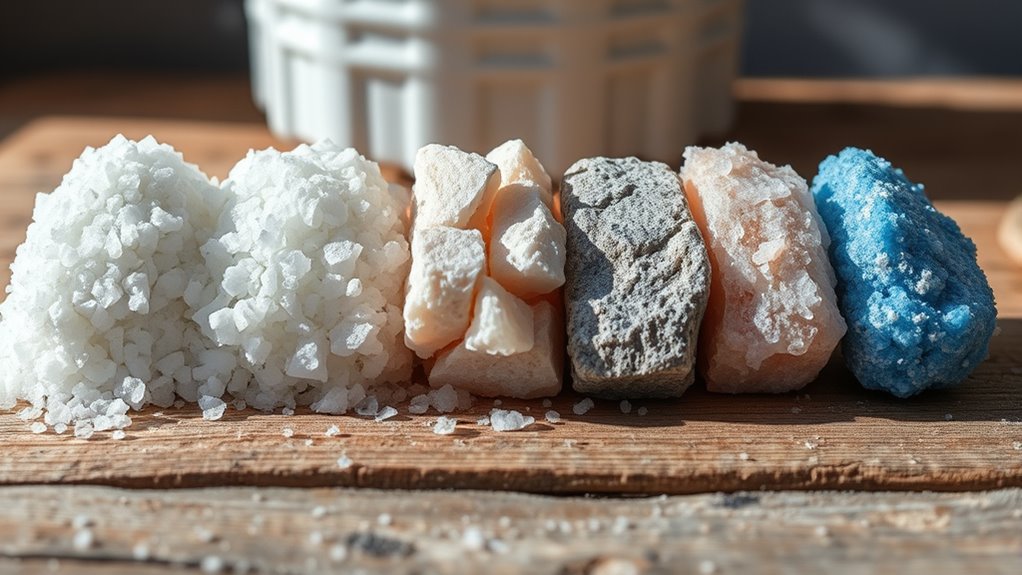
What Are the Main Types of Water Softener Salt?
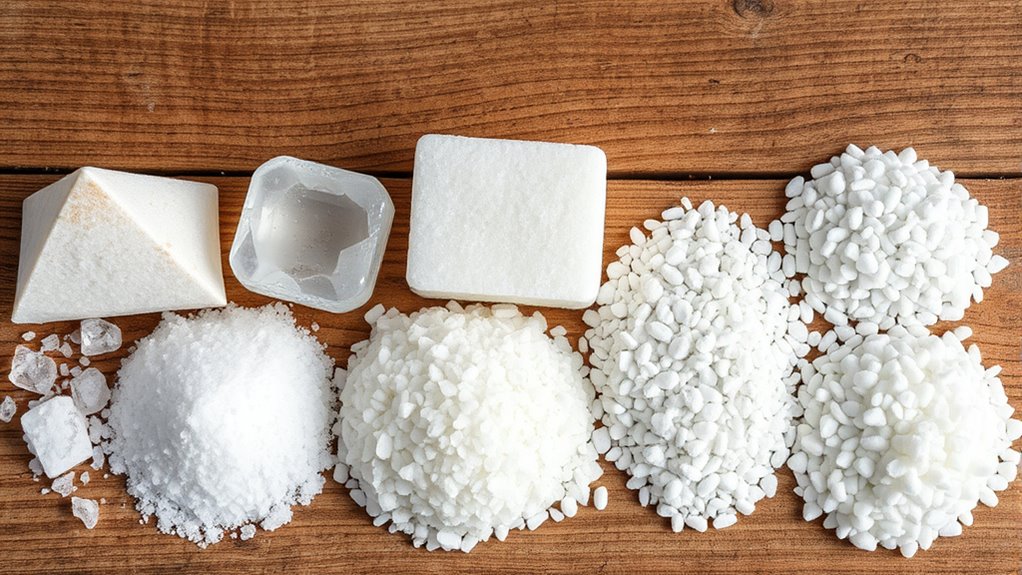
There are several main types of water softener salt to consider, each with its own pros and cons. These include evaporated salt, rock salt, solar salt, and potassium chloride.
Evaporated salt, with up to 99.9% purity, dissolves quickly. It’s great for the softening process and helps prevent salt buildup in the brine tank.
Evaporated salt dissolves quickly, enhances softening, and prevents salt buildup in the brine tank.
Solar salt is made by evaporating seawater and offers around 99.6% purity. It’s also more eco-friendly, making it a good choice for environmentally conscious users.
Rock salt is less refined and contains impurities. Because of this, it’s usually less suitable for softening systems and can clog the unit.
Potassium chloride is a low-sodium alternative, perfect for those concerned about health. However, it’s generally more expensive than other options.
Pros and Cons of Using Evaporated Salt in Your Softener
Using evaporated salt offers the benefit of high purity, which reduces residue buildup and helps your softener run smoothly. Its quick dissolving nature ensures reliable regeneration cycles, saving you time and hassle.
However, the higher cost and occasional dust from improper storage can make it less economical for some users.
High Purity Benefits
High-purity evaporated salt offers big advantages for water softener performance. With salt purity often exceeding 99.9%, evaporated salt pellets help keep your system cleaner by minimizing residue and impurities in the brine tank. This means less maintenance and fewer issues down the line.
The high purity prevents mineral buildup, which can slow down your system and cause operational problems. Because evaporated salt dissolves quickly and consistently, your water softener runs more efficiently, giving you softer water and shorter cycle times.
While it’s more expensive, the benefits of less maintenance and better system performance can save you money over time. Overall, using high-purity evaporated salt makes your water softener more reliable and ensures effective mineral removal for smoother, more efficient operation.
Dissolution Speed Factors
Evaporated salt’s quick and steady dissolution makes it a popular choice for water softeners aiming for efficient regeneration cycles. Its high purity, up to 99.9%, guarantees minimal residue and reduces salt bridging risks.
The dissolution rate is consistently high because the evaporation process improves solubility. This predictable speed boosts system reliability and shortens regeneration times.
However, the rapid dissolution can lead to faster salt consumption, meaning more frequent refills are needed. The table below highlights key factors influencing its performance:
| Feature | Advantage | Disadvantage |
|---|---|---|
| Solubility | High, ensures quick dissolution | Increased salt usage |
| Salt bridging risk | Reduced due to purity | N/A |
| Dissolution speed | Fast, supports efficient cycles | Can lead to quicker depletion |
Cost and Availability
Although evaporated salt offers excellent purity and consistent dissolution, it tends to be more expensive than options like rock or solar salt. The higher cost, usually around $0.60 to $1.00 per pound, can strain your household budget, especially if you need a lot.
Availability might also be limited in some regions, meaning you may need to order online or find specialty suppliers. This can add to the inconvenience and make it harder to get when you need it.
Cheaper options like rock or solar salt are often more accessible and cost-effective. However, they may contain more impurities and dissolve less consistently.
If you’re prioritizing purity and efficiency, consider the price and regional supply constraints of evaporated salt. For budget-conscious households or those who can easily access it, alternative salts might be a more practical choice.
When Should You Use Solar Salt Instead of Rock Salt?
You should choose solar salt over rock salt when you want better softener performance and less maintenance. Solar salt, made by natural seawater evaporation, is usually purer and has fewer mineral impurities than rock salt.
This higher purity helps your water softener work more efficiently, which means less residue buildup in the brine tank and fewer system issues. Solar salt dissolves more easily and consistently, preventing bridging and mushing that can disrupt the evaporation process.
In areas with very hard water, solar salt can help maintain better water quality by reducing mineral deposits. If you’re looking for a more eco-friendly option that boosts softener performance and reduces upkeep, solar salt is the way to go.
Is Potassium Chloride a Good Alternative to Sodium Salt?
Potassium chloride is a viable alternative to sodium salt for water softeners, especially if you’re looking for a low-sodium option.
It does a good job regenerating resin beads, but its softening efficiency is about 30% lower than sodium-based salts. So, you might need to refill it more often.
A 40-pound bag costs around $28, making it more expensive. But it offers a high purity level of about 99.9%, which helps ensure quality water treatment.
As an alternative to sodium salt, potassium chloride helps remove hard water minerals. However, because it’s less efficient, more frequent refills may be necessary.
Be aware that in environments with temperature fluctuations, it can cause issues like hardening or buildup. Placing Styrofoam beneath the tank can help prevent this.
How to Choose the Best Salt for Your Water Hardness and System
How do you choose the best salt for your water softener? It depends on your water hardness and system needs. For very hard water, high-purity evaporated salt offers better mineral removal and reduces residue buildup.
Always follow your water softener’s manufacturer recommendations. Using the wrong salt types can cause bridging, mushing, and damage to your system.
Regularly check and maintain salt levels in the brine tank. Refill before it’s completely empty to ensure proper regeneration.
Consider environmental and health factors. For example, opt for solar salt or potassium chloride if sodium intake is a concern.
Choosing a salt with fewer impurities minimizes system maintenance issues. It also keeps your water softener running efficiently, protecting your system and extending its lifespan.
Common Mistakes to Avoid When Selecting and Using Softener Salt
Choosing the wrong type of salt, overfilling the brine tank, or neglecting regular maintenance can cause system problems. These mistakes can lead to buildup, clogs, and reduced softening efficiency.
Being aware of these pitfalls helps keep your water softener running smoothly. It’s all about doing small things right to avoid bigger issues down the line.
Using Incorrect Salt Types
Are you using the right type of salt in your water softener? Using the wrong salt can cause salt bridges and salt mushing, which lead to improper regeneration and lower system efficiency.
For example, rock salt in a softener designed for evaporated or solar salt can leave residue buildup and damage the resin over time. Mixing different types of salt, like pellets and block salt, increases the risk of salt bridges and salt mushing, which impair proper function.
Relying on table salt or non-softener-specific salts introduces impurities that can clog components and damage the resin. Overfilling the tank also causes salt buildup and bridging issues, preventing proper dissolution.
Always follow the manufacturer’s recommendations to avoid long-term damage and keep your system working efficiently.
Overfilling Brine Tank
Have you ever overfilled your brine tank without realizing the potential problems it can cause? Overfilling can lead to salt bridging, which blocks proper dissolution and hampers regeneration.
When the salt level exceeds recommended limits, it’s more likely to cause salt mush and residue buildup, making maintenance tougher. An overfilled tank can also form a crust that’s hard to break apart, risking clogs and inefficient softener operation.
To avoid these issues, keep the salt level within the suggested range—about 1/4 to 1/2 full. Regularly monitoring your brine tank helps prevent softener problems and extends its lifespan.
Neglecting Regular Maintenance
Neglecting regular maintenance of your softener can lead to big issues that affect how well it works. If you don’t check and refill the salt tank regularly, your system might stop functioning properly, causing hard water problems.
Failing to clean your brine tank from time to time can cause salt bridges and residue buildup. This makes it harder for salt to dissolve and can reduce your softener’s efficiency.
Using the wrong salt or mixing different types without proper maintenance can lead to bridging, mushing, or clogging. Ignoring low salt levels or signs of system trouble speeds up wear and tear.
This can lead to costly repairs and a shorter lifespan for your softener. To keep it running smoothly, refill the salt as needed and follow your manufacturer’s guidelines.
Tips for Maintaining Your Softener and Extending Salt Effectiveness
Maintaining your water softener properly is key to making sure it works efficiently and that your salt lasts longer. Regular brine tank upkeep helps prevent salt buildup and residue, especially when using coarse solar salt.
Keep an eye on the salt level and refill before it drops below half. This helps ensure continuous softening and keeps the system running smoothly. Avoid overfilling the tank, as full tanks can develop salt bridges that block proper salt dissolution and hurt system performance.
Check and refill the salt before it drops half to keep your system running smoothly and prevent salt bridges.
Use high-quality salt consistently. This promotes uniform dissolve rates and reduces salt mush. Also, schedule regular system cleaning and inspect the brine line, injector, and drain line to prevent clogs and extend salt effectiveness.
Proper maintenance protects your system’s efficiency and helps prolong the salt’s lifespan.
Frequently Asked Questions
What Is the Best Salt to Use in a Water Softener System?
The best salt for your water softener is evaporated salt pellets because they’re highly pure and dissolve quickly, reducing residue and maintenance. Always follow the manufacturer’s recommendations for salt type to guarantee peak performance and avoid system damage.
Steer clear of lower-quality salts like rock salt, which can cause bridging or residue buildup. If you need a low-sodium option, potassium chloride works but might be less efficient and more costly.
Does It Matter What Kind of Softener Salt I Use?
Yes, it matters what kind of softener salt you use. Choosing the right salt helps your system regenerate properly, runs efficiently, and lasts longer.
Using incompatible or low-quality salt can cause residue buildup, bridging, or mushing. This can lead to more maintenance and even damage over time.
Always follow your manufacturer’s recommendations for salt type. Doing so will help keep your system performing well, maintain water quality, and protect your warranty.
Which Is Better Softener, Salt Pellets or Crystals?
You’ll likely find salt pellets better for your water softener because they dissolve more evenly and quickly, ensuring efficient regeneration. Pellets are cleaner, less dusty, and reduce the risk of system issues like bridging or uneven brine formation.
While crystals might seem cheaper upfront, pellets typically require less maintenance and last longer. This makes them a more reliable, hassle-free choice for maintaining soft water and extending your system’s lifespan.
What Are the Different Types of Softener Salt?
You’ll find several types of softener salt, each with unique benefits. Evaporated salt is the purest and dissolves quickly, so it requires less maintenance.
Rock salt is less refined and may leave residue, but it’s a budget-friendly option. Solar salt, produced by seawater evaporation, is affordable but dissolves more slowly.
Potassium chloride is a chemical-free alternative, perfect if you’re on a low-sodium diet. However, it tends to be pricier. Choose the type based on your softening needs and budget.
Conclusion
Choosing the right salt for your water softener balances practicality with personal preference. The correct type ensures your system runs smoothly and efficiently.
But remember, proper maintenance is just as important. Neglecting it can undo the benefits of your chosen salt.
Think of your softener like a finely tuned instrument. It needs care and attention to perform at its best.
In the end, great water quality isn’t just about picking the best salt. It’s about how you maintain your system.
A well-maintained water softener provides pure water, even when impurities try to sneak in.