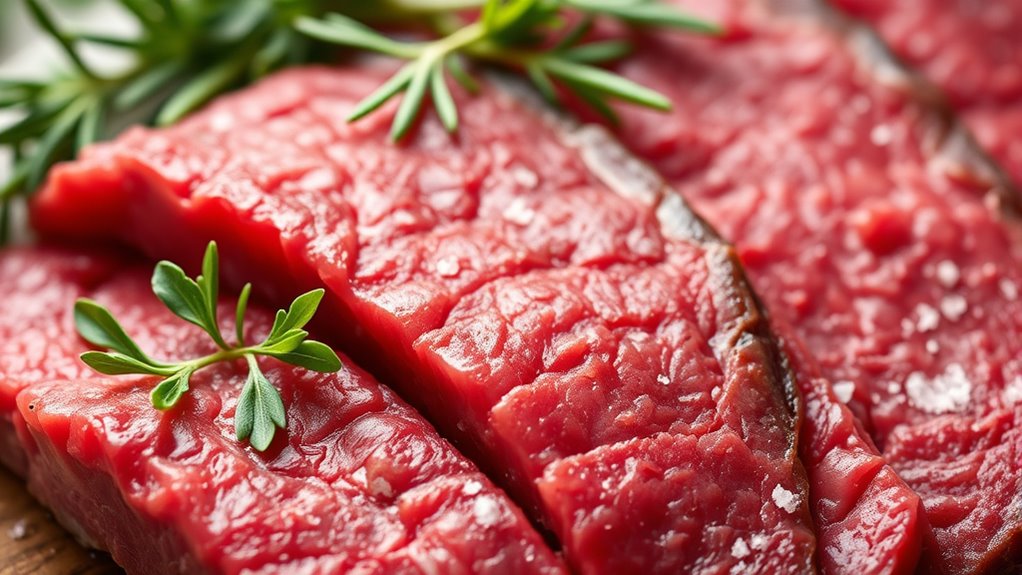
What Is a Lean Cut of Beef and How Do You Cook It?
Cooking lean cuts of beef can be tricky, especially if you’re aiming for juicy, flavorful results without the excess fat. Many people struggle with keeping these healthier options tender and delicious, but you’re not alone. With the right techniques, you can enjoy lean beef that’s both satisfying and good for you.
A lean cut of beef, like tenderloin or sirloin, has less than 10 grams of fat per serving and is a healthy choice for balancing flavor with nutrition. To cook it well, marinate to add moisture, use high heat for searing, then lower the temperature to finish, and always let it rest before slicing.
Avoid overcooking, and you’ll enjoy juicy, tender results. For tips on selecting, seasoning, and cooking lean beef, keep exploring.
Key Takeaways
- Lean beef cuts have less than 10g of fat and 95mg of cholesterol per 3.5 oz. Examples include tenderloin, top sirloin, and round.
- When shopping, look for bright red, vacuum-sealed packages labeled “lean” or “extra lean” to ensure freshness and quality.
- To keep the meat tender and prevent it from drying out, try marinating it or using moisture-retaining methods like brining.
- For cooking, start with high-heat searing to develop a nice crust. Then, finish with lower-temperature cooking to keep it tender.
- Always let the meat rest before slicing. This helps the juices redistribute and results in a juicier final dish.
- Season your beef with herbs, spices, and acids like vinegar or citrus for added flavor.
- Cook to an internal temperature of 135-145°F for perfect doneness, and enjoy your lean and delicious beef!
What Makes a Beef Cut Lean?
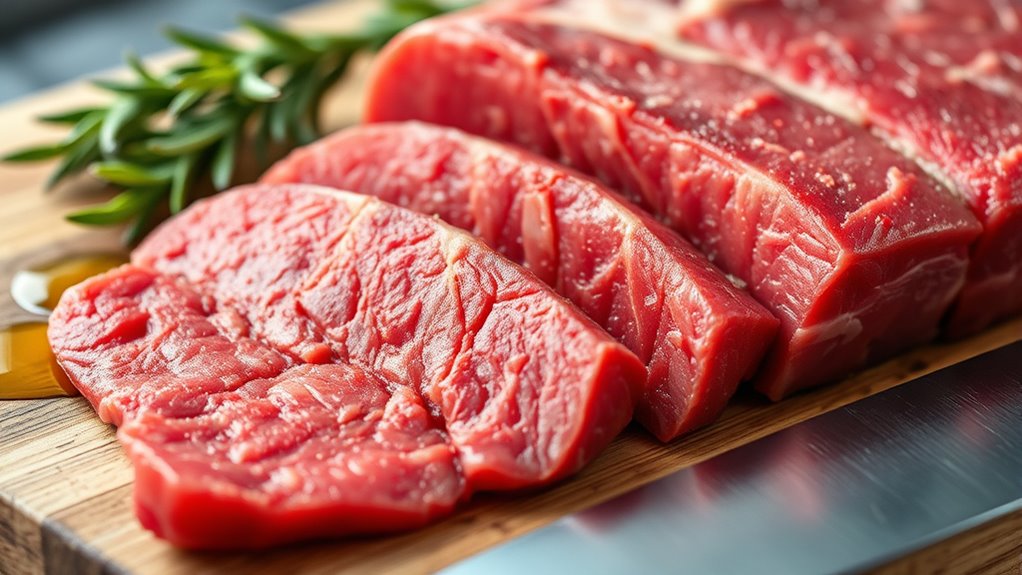
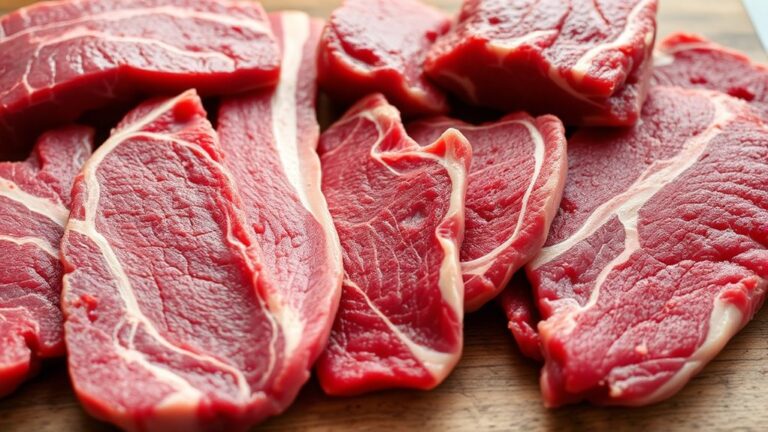
A beef cut is considered lean when it has less than 10 grams of total fat, under 4.5 grams of saturated fat, and less than 95 milligrams of cholesterol per 3.5-ounce serving. To spot lean cuts, look for those with minimal marbling and fat deposits, like tenderloin, top sirloin, and round.
These cuts are naturally lean because of their low fat content, not necessarily because they’re tender or flavorful. The USDA classifies a cut as lean based on fat and cholesterol levels, making it easier to choose healthier options.
Keep in mind, visible fat indicates a less lean cut. Many popular beef cuts meet these criteria, so you can enjoy delicious, lean meat without sacrificing taste.
Why Choose Lean Beef for Your Healthy Diet?
Choosing lean beef helps you cut down on saturated fat and cholesterol, which benefits your heart health. It provides a significant amount of your daily protein needs without excess calories or fat.
Incorporating lean cuts into your diet supports your overall health goals while still enjoying flavorful meals.
Heart-Healthy Nutrients
Because it contains less than 4.5 grams of saturated fat and 10 grams of total fat per serving, lean beef is a heart-healthy protein option. It provides essential nutrients like iron, zinc, and B vitamins that support cardiovascular health and energy metabolism.
Eating lean beef can help you reduce cholesterol intake, lowering the risk of heart disease. Its high-quality protein also supports muscle maintenance and overall health.
Lower Fat Content
Ever wonder why lean beef is a smart choice for a healthy diet? It’s because lean beef cuts have less than 10 grams of total fat and 4.5 grams of saturated fat per 3.5-ounce serving. Choosing these cuts helps you lower your overall fat intake, especially saturated fats linked to heart disease.
By opting for lean beef, you support heart health and reduce cholesterol levels. It’s a smarter option than higher-fat beef. Plus, a single serving gives you over half of your daily recommended protein.
This helps you meet nutritional needs without excess fat. Using lean cuts with proper cooking methods lets you enjoy flavorful, satisfying beef while keeping your diet balanced and healthy.
How to Choose Fresh, Lean Beef at the Store
When shopping for lean beef, look for cuts labeled “lean” or “extra lean” to ensure lower fat content.
Check the meat’s color; bright red signals freshness, while dull or brownish meat may be past its prime.
Choose cuts like eye of round, top sirloin, or tenderloin from reputable sources for the best quality.
Identifying Lean Labels
Looking for lean beef options at the store can seem overwhelming, but knowing what labels to look for makes it easier. To identify lean meat, check for USDA labels like “lean” or “extra lean.”
“Lean” beef has less than 10 grams of total fat, 4.5 grams of saturated fat, and 95 milligrams of cholesterol per 3.5 ounces. “Extra lean” has under 5 grams of total fat, 2 grams of saturated fat, and the same cholesterol limit.
Many lean cuts, such as eye of round, top sirloin, and bottom round, are already labeled or meet USDA standards. Look for minimal visible marbling, which indicates lower fat content.
Always read the nutrition label carefully to verify fat and cholesterol levels before making your purchase.
Recognizing Freshness Signs
To pick fresh, lean beef at the store, start by looking at its color. Bright, cherry-red beef is a good sign of freshness and quality.
It should have a moist surface without too much liquid or a slimy feel. If you like lean cuts, check for minimal marbling, and avoid beef with brown or gray discoloration—that’s a sign it’s aging or spoiling.
Give the beef a sniff. It should smell clean and meaty, with no sour or off smells. Also, check the packaging to make sure it’s intact, vacuum-sealed, and free from tears or leaks. This helps keep the beef fresh.
Choosing Quality Cuts
How can you guarantee you’re selecting the healthiest, leanest beef at the store? Focus on labels like “lean” or “extra lean,” which meet USDA standards of less than 10g total fat, 4.5g saturated fat, and 95mg cholesterol per 3.5 oz serving.
Choose cuts with minimal visible marbling, as less intramuscular fat indicates lean meats. Popular options like eye of round, top sirloin, and tenderloin are naturally lower in fat, making them great choices for healthy eating.
Purchase from reputable sources such as trusted grocers or family-owned markets that prioritize fresh, high-quality meat. Look for bright red color and firm texture—signs of fresh, wholesome beef perfect for cooking lean and healthy.
How to Prepare Lean Beef to Keep It Juicy
Marinating lean beef before cooking is one of the best ways to keep it juicy and flavorful. A good marinade adds moisture and boosts the meat’s natural taste.
Marinating beef enhances flavor and keeps it juicy and tender.
Using high-heat searing followed by lower-temperature cooking helps lock in juices and prevents it from drying out. Rest the cooked meat for about 10 minutes before slicing so the juices can redistribute evenly.
You can also try moisture-retaining techniques like brining or pre-salting to make the meat more tender. For even better results, consider slow-cooking methods such as braising or using a slow cooker.
These methods break down muscle fibers, making the meat tender and juicy. Overall, proper prep helps preserve moisture and flavor, making your lean cuts much more enjoyable.
Best Seasonings and Marinades for Lean Cuts
To maximize flavor in lean beef, try using acidic marinades like vinegar or citrus juice. They tenderize the meat and add a nice zest.
Add herbs and spices such as garlic, rosemary, black pepper, and paprika to create a rich, savory flavor without extra fat.
Let the meat soak for several hours to boost moisture and taste. Just avoid overly salty marinades to prevent drying out.
Flavor-Boosting Marinades
Enhancing the flavor of lean beef cuts starts with choosing the right marinade. When you marinate, acids like vinegar or citrus can tenderize the meat and boost flavor. Herbs, garlic, and spices add depth and complement the natural beef taste without extra fat.
To make the most of marinating, consider these options: Use soy sauce, Worcestershire sauce, or balsamic vinegar to boost umami and richness. Marinate for at least 30 minutes, but no more than a few hours, to allow flavors to penetrate without over-softening.
Incorporate herbs and spices that enhance flavor without overpowering the meat’s natural qualities.
Enhancing With Spices
Adding the right spices and seasonings can boost the natural flavors of lean beef cuts without adding extra fat. Spices like black pepper, paprika, and cumin enhance the meat’s flavor, offering depth without calories.
Herbs such as rosemary, thyme, and oregano add aroma and complexity when included in marinades. Incorporating garlic, ginger, or soy-based sauces infuses savory, umami notes that go well with lean cuts.
To get the most flavor, try pre-salting or brining the beef. This helps retain moisture and allows the seasonings to be absorbed better.
How to Cook Lean Beef Without Drying It Out
Cooking lean beef without drying it out requires careful techniques to keep it moist and tender. Marinating beforehand can boost flavor and help lock in moisture.
Use slow-cooking methods like braising or a slow cooker to gently cook the meat. This prevents it from overcooking and keeps it tender and juicy.
Always use a meat thermometer to check the internal temperature. This way, you avoid overcooking and drying out the beef.
After cooking, let the meat rest for about 10 minutes. Resting allows the juices to redistribute, keeping the meat moist and flavorful.
You can also try moisture-retaining techniques like brining or pre-salting. These methods help preserve the meat’s juiciness every time you cook.
Cooking Lean Beef to Your Preferred Level of Doneness
Achieving your desired level of doneness with lean beef depends on precise temperature control and timing. Since it cooks faster and dries out more easily than fattier cuts, keeping an eye on internal temperature is key.
Use a meat thermometer to monitor closely. For tender results, aim for medium-rare or medium, with an internal temperature of 135-145°F. Then, let the meat rest for 5-10 minutes to allow juices to redistribute.
Overcooking lean beef makes it tough and dry because it lacks fat to retain moisture. To keep it moist and tender, try slow-cooking methods like braising or using a slow cooker.
Proper timing and temperature are crucial for cooking lean beef. This way, you’ll ensure it stays flavorful and juicy.
Common Mistakes to Avoid When Cooking Lean Beef
Failing to avoid common mistakes can quickly turn your lean beef into a tough, dry, and less enjoyable dish. Since lean cuts have less fat and cholesterol, they need careful handling to stay tender and moist.
Overcooking is a big mistake—cooking too long or at high heat causes the meat to shrink and dry out. Rushing the process without techniques like marinating or slow cooking also hurts tenderness.
Not trimming visible fat before cooking can interfere with moisture retention. To get better results, avoid these mistakes:
- Using high heat for quick cooking
- Overcooking or not resting the meat afterward
- Neglecting to trim excess fat beforehand
Paying attention to these details helps preserve the meat’s juiciness and flavor while keeping it healthy.
Easy Recipes Using Lean Beef Cuts
Lean beef cuts like tenderloin, top sirloin, and tri-tip are versatile options that can be prepared easily and healthfully with the right techniques. Easy recipes using lean beef cuts highlight their flavor and adaptability.
For example, you can grill top sirloin for a quick, tasty meal or stir-fry flank steak with vegetables for a nutritious dinner. Marinating these cuts before cooking helps boost moisture and flavor, preventing dryness and toughness.
Using methods like grilling, broiling, or slow roasting keeps the meat tender without adding extra fat. Pair lean beef with vegetables, whole grains, and healthy seasonings to make balanced, satisfying meals.
These simple approaches make it easy to enjoy delicious, low-fat beef dishes that are both tasty and nutritious.
Tips for Making Lean Beef Juicy and Tender Every Time
To keep lean beef juicy and tender, start by marinating it in acidic solutions like vinegar or citrus juices. These help break down muscle fibers and boost moisture retention.
Marinate lean beef in vinegar or citrus to break down fibers and keep it juicy and tender.
Choosing the right cut, like Top Sirloin or New York, also makes a big difference. Use slow-cooking methods such as braising or slow roasting to further break down fibers and keep the meat moist.
Properly sear the beef over high heat to lock in juices, then finish with lower heat to prevent dryness. Rest the meat for at least 10 minutes so the juices can redistribute.
To improve tenderness, add moisture-rich ingredients like broth or diced vegetables during cooking. These simple tips help you enjoy delicious, lower-cholesterol red meat every time.
Frequently Asked Questions
How to Cook Lean Beef so It Is Tender?
To cook lean beef tender, use moist heat methods like braising or slow cooking. These methods break down connective tissues and make the meat more tender.
Marinate the meat beforehand to boost moisture and flavor. Cook it to medium or medium-rare, then let it rest for 5-10 minutes so the juices can redistribute.
Pounding or scoring the meat helps tenderize it, making sure it stays juicy and flavorful without becoming tough.
Can Heart Patients Eat Lean Ground Beef?
Yes, heart patients can enjoy lean ground beef safely. Just look for leaner options with less marbling, containing under 4.5 grams of saturated fat per serving.
To make it healthier, drain any excess fat and rinse the meat after cooking. Remember, moderation is key—balance it with other heart-healthy foods and follow your healthcare provider’s advice for personalized eating plans.
Proper portioning and preparation can help support your heart health and keep you feeling good.
What Is the 3-3-3 Rule for Steak?
The 3-3-3 rule for steak is a simple cooking guide: cook each side for 3 minutes, then let the steak rest for 3 minutes before serving.
This method helps you achieve a medium-rare doneness, especially with thicker cuts.
By following this timing, you guarantee your steak stays juicy and tender, with even cooking throughout.
Adjust the times if you prefer a different level of doneness or a thinner cut.
How to Cook a Lean Cut of Beef?
You want to cook lean beef perfectly? Start by marinating or brining it to pack in moisture and flavor.
Sear it over high heat to lock in juices, then lower the heat to finish. Don’t overdo it! Aim for medium-rare or medium, and let it rest.
Use slow-cooking, braising, or sous vide to keep it tender, juicy, and absolutely irresistible. Avoid quick, high-heat methods that turn it tough.
Conclusion
Now that you know what makes a beef cut lean and how to cook it perfectly, you’ll be able to enjoy healthy, flavorful meals without fuss. Remember, even a humble tavern in Ye Olde England would warn you to avoid overcooking, so keep an eye on your meat.
With the right techniques, your lean beef will stay juicy and tender every time. Adopting these tips means your meals will always impress, no matter the era. Enjoy your lean cuts of beef and savor every bite!