
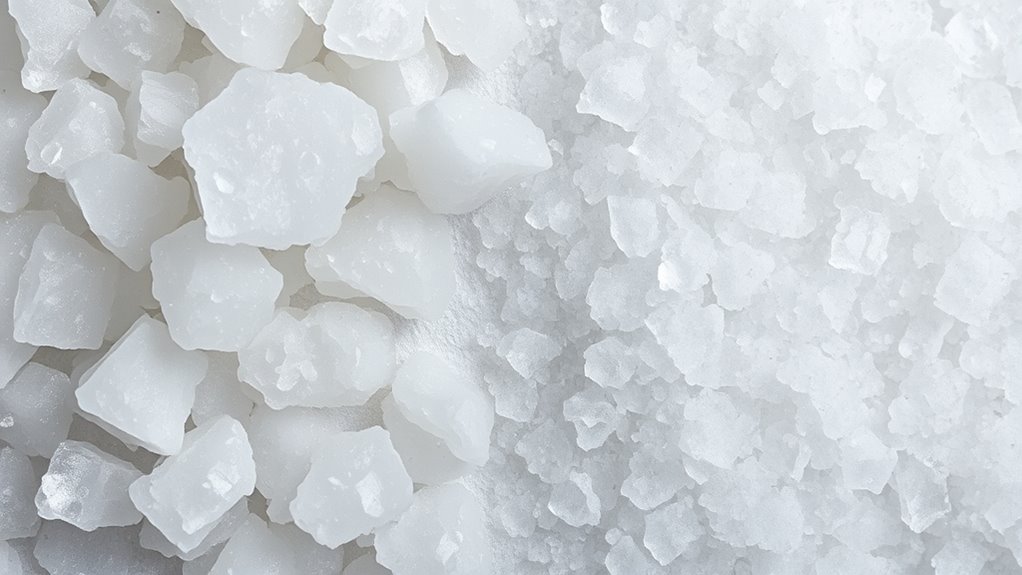
7 Main Differences Between Rock Salt and Ice Melt
Winter weather can be tough, especially when ice and snow make outdoor surfaces dangerous and hard to navigate.
Many people struggle with choosing the right ice melt products to keep their pathways safe without causing damage.
Rock salt is an affordable, traditional choice that works best above 5°F but becomes less effective in colder weather.
Ice melt blends chemicals like calcium and magnesium chlorides, which melt ice down to -25°F and release heat during reactions.
While salt can damage surfaces and the environment, eco-friendly and pet-safe options reduce harm.
How you apply and choose products influences safety and effectiveness—keep exploring to find the best options for your winter needs.
Key Takeaways
– Rock salt is mainly sodium chloride and works well above 5°F.
It’s simple and inexpensive but doesn’t perform as well in very cold weather.
Ice melt blends different chemicals to work across a wider range of temperatures.
It’s typically more costly but can handle colder conditions better.
Rock salt tends to cause more surface damage and environmental harm.
It can lead to corrosion and harm plants nearby.
On the other hand, ice melt often includes eco-friendly and pet-safe options.
Products like calcium magnesium acetate are less toxic and better for the environment.
Proper application and reapplication are important for both types.
However, ice melt usually works faster and stays effective even at lower temperatures.
What’s the Difference Between Rock Salt and Ice Melt?
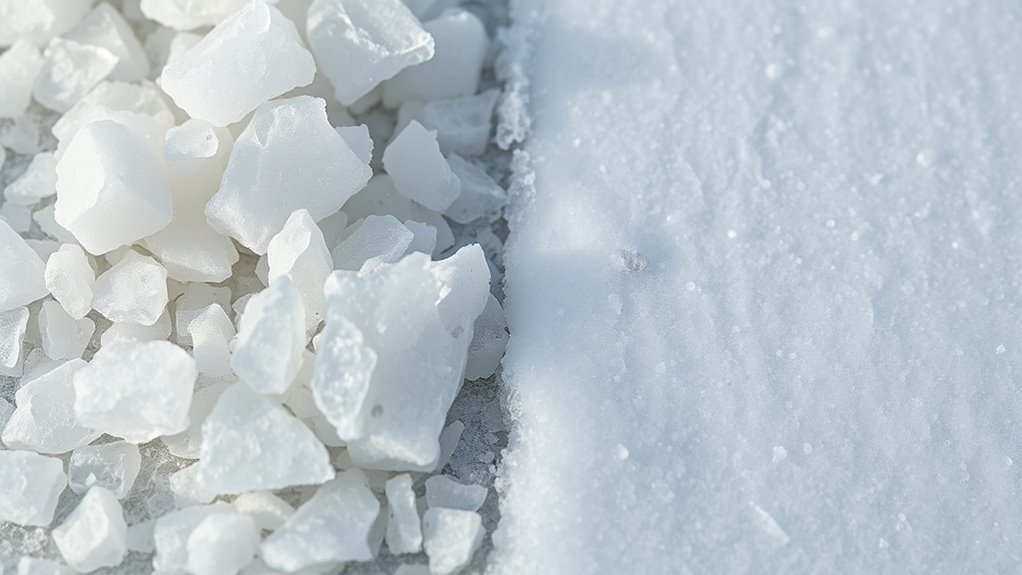
Understanding the difference between rock salt and ice melt is key to choosing the right product for winter conditions.
Rock salt, mainly sodium chloride, is effective for melting ice above 5°F but loses effectiveness in colder temperatures.
Ice melt products combine sodium chloride, calcium chloride, and magnesium chloride, making them more effective at lower temperatures—sometimes as low as -25°F.
While rock salt is cheaper and works faster at higher temperatures, ice melt is more expensive but provides better melting power in extreme cold.
Calcium chloride in ice melt releases heat during its reaction, speeding up melting.
Both options can cause surface damage and environmental harm, but ice melt tends to be safer for plants and pets when used properly.
How Do Temperature and Chemical Composition Affect Melting Performance?
Your choice of de-icer depends on temperature and chemical makeup, which directly impact how well it melts ice.
Rock salt works best around 5°F but loses efficiency in colder weather. Ice melts with calcium or magnesium chloride can handle temperatures as low as -25°F.
Understanding these factors helps you pick the right product for winter conditions.
Temperature Thresholds for Melting
Ever wonder why some ice melts faster at colder temperatures than others? It all comes down to melting temperature and chemical composition.
Rock salt, mainly sodium chloride, melts ice above about 5°F but stops working at lower temperatures. In contrast, calcium chloride can work down to -25°F because it reacts exothermically, releasing heat that helps melt ice in the cold.
Additives like magnesium chloride make things even better at very low temperatures. As it gets colder, rock salt’s melting ability drops sharply, but formulas with calcium or magnesium chlorides stay effective.
Chemical properties really determine melting thresholds, so some ice melt products are better suited for colder conditions than others.
Chemical Composition Impact
Chemical composition plays a crucial role in how well ice melts at different temperatures. Different formulas, especially those with calcium chloride or magnesium chloride, offer distinct advantages. These chlorides react exothermically, releasing heat that helps melt ice even in extreme cold.
Meanwhile, rock salt relies on dissociation to lower water’s freezing point. This process is less effective below 5°F, making it less suitable for very cold conditions.
Key points include:
- Calcium chloride and magnesium chloride cause exothermic reactions, providing extra heat.
- Their chemical makeup allows for faster melting in colder temperatures by lowering the freezing point more effectively.
- Variations in chemical ratios directly impact how well they perform at different temperatures.
- The endothermic reaction of rock salt limits its cold-weather performance compared to chloride-based products.
Performance at Cold Temperatures
The effectiveness of ice melt products varies a lot with temperature, mainly depending on their chemical makeup. Rock salt works well down to about 5°F but isn’t as effective below that because it only lowers water’s freezing point.
In comparison, ice melt containing calcium chloride can melt ice at temperatures as low as -25°F. It does this thanks to an exothermic reaction that releases heat, helping to melt the ice faster.
The chemical composition, especially calcium or magnesium chloride, allows these products to perform better in very cold temperatures.
Which De-Icer Offers the Best Value for Your Budget?
When choosing a de-icer that fits your budget, rock salt often appears as the most economical option upfront, costing about $4.50 to $9.50 per 50-pound bag. It’s a budget-friendly choice for mild winter conditions but may require more product to melt ice effectively.
Ice melt products, ranging from $6 to $12, offer better performance at lower temperatures but come with a higher price tag. To get the best value, consider the balance between initial cost, melting efficiency, and environmental impact.
- Rock salt is affordable but may cause more surface and environmental damage over time.
- Ice melt works better in colder temps but costs more upfront.
- Longer-lasting formulas can be more cost-effective in the long run.
- Your specific temperature needs influence overall value.
How Do Rock Salt and Ice Melt Impact Surfaces, Vehicles, and the Environment?
Both rock salt and ice melt can damage your surfaces and vehicles, but they do so in different ways. Rock salt is very corrosive and can cause long-term damage to concrete and metal.
Some ice melts are gentler, but using too much can still pose risks. Plus, rock salt’s environmental impact can harm plants and aquatic life.
That’s why it’s important to consider how each option affects your surroundings before choosing what to use.
Surface Damage Potential
Have you ever wondered how different ice-melting products affect your surfaces and environment? Rock salt is highly corrosive and can cause significant surface damage over time, affecting concrete, asphalt, and metal. Its damage potential includes concrete spalling, asphalt erosion, and corrosion of vehicles.
Ice melt products with calcium chloride tend to be less damaging, reducing the risk of surface deterioration. You should consider the corrosive nature of rock salt and its impact on concrete and asphalt. Excessive use accelerates erosion and surface damage.
That’s why calcium chloride-based options are gentler on surfaces. Keep in mind, though, that ice melt can also impact the environment. Runoff can contaminate soil and water, so using it wisely is important.
Limiting overuse and applying products properly can help prevent surface damage and minimize environmental harm.
Vehicle Corrosion Risks
Ever wonder how ice-melting products can affect your vehicle’s metal parts? Both rock salt and ice melt products can speed up corrosion, especially if you don’t wash your car afterward.
Rock salt is highly corrosive, leading to rust, paint damage, and surface corrosion over time. Ice melt products with calcium chloride are generally less harsh but still pose risks if overused.
To protect your vehicle, choose environmentally friendly options when possible and make sure to wash your car after applying these products. Here’s a quick comparison:
| Substance | Corrosion Risk | Notes |
|---|---|---|
| Rock Salt | High | Causes rust and paint damage |
| Calcium Chloride | Moderate | Less salt damage, still needs washing |
| Environmentally Friendly | Low | Better for rust prevention, eco-friendly |
Environmental Impact
When you apply ice melt products, their impact goes beyond just melting snow; they can significantly affect surfaces, vehicles, and the environment.
Rock salt is very corrosive and can cause damage to surfaces, concrete, asphalt, and metal over time.
Using too much salt can lead to environmental contamination, harming aquatic life and nearby plants.
Eco-friendly ice melts with safer chemical formulas help reduce these risks, protecting vegetation and minimizing erosion.
Pet-safe options are also available, which help prevent skin irritation and lessen environmental harm.
- Rock salt’s corrosive nature damages surfaces and vehicles over time.
- Chemical-based ice melts can be less harmful to the environment.
- Excess salt use harms plants and aquatic ecosystems.
- Eco-friendly choices support surface preservation and environmental health.
Are There Pet-Safe and Landscaping-Friendly De-Icers?
Choosing the right de-icer for your property can make a big difference, especially if you want to protect pets and delicate landscaping. Pet-safe de-icers like calcium magnesium acetate and potassium chloride are less irritating to paws and less toxic if ingested.
Landscaping-friendly options often use magnesium chloride or potassium-based formulas. These reduce damage to plants and lawns compared to traditional rock salt.
Many pet-safe products are also less corrosive and environmentally friendly, making them better for garden beds and vegetation. However, even pet-safe de-icers should be used sparingly and kept away from pets’ paws and mouths.
Always read labels carefully because some products marketed as pet-friendly may still pose risks if misused or overapplied.
| De-Icers | Benefits | Drawbacks |
|---|---|---|
| Calcium magnesium acetate | Less corrosive, pet-safe | More expensive |
| Potassium chloride | Landscaping-friendly, less damaging | Can still be harmful if ingested |
| Magnesium chloride | Environmentally friendly | May cause skin irritation |
How to Properly Apply Rock Salt and Ice Melt for Best Results?
To get the best results from rock salt and ice melt, start by shoveling away snow and ice before applying any de-icing products. This reduces the amount needed and makes melting more efficient.
When applying, spread the product evenly using a spreader or cup, and wear gloves to protect your skin. Keep these tips in mind:
- Use a thin, uniform layer for better melting and safety.
- Reapply as needed after initial melting to maintain traction.
- Remove slush and melted snow promptly to prevent re-freezing.
- Always follow the manufacturer’s instructions for proper application rates and safety precautions.
Proper spreading and timely reapplication help maximize de-icing effectiveness while minimizing damage to surfaces and the environment.
How to Choose the Right De-Icing Product for Your Winter Conditions?
Selecting the right de-icing product depends on your winter conditions and specific needs. If temperatures stay above 5°F, rock salt is a cost-effective choice because it lowers the freezing point enough to melt snow and ice.
For colder conditions below 15°F, ice melt containing calcium or magnesium chloride works faster and more effectively, melting ice at lower temperatures.
Consider pet-safe and environmentally friendly options if pets or vegetation are nearby. Your budget also influences your choice: rock salt is more affordable, but ice melt offers better performance in severe cold.
Match your de-icing product to your climate and surface type to ensure safety and minimize damage. Proper selection helps you stay prepared and safe through harsh winter conditions.
Frequently Asked Questions
What Works Better, Ice Melt or Rock Salt?
You’ll find ice melt works better than rock salt, especially in colder temperatures below 20°F. It melts snow and ice faster because it contains calcium or magnesium chloride, which reacts exothermically and provides quick results.
Rock salt can be effective above 5°F, but in extreme cold, ice melt remains more reliable. So, if you’re dealing with freezing conditions, ice melt is your best bet for efficient snow and ice removal.
Will Pool Salt Do the Same Thing as Ice Melt?
Pool salt won’t do the same thing as ice melt. While both have sodium chloride, pool salt is finer and doesn’t have additives that help it melt snow and ice in cold temps.
You might see some ice melt at first, but it’s not very effective in really cold weather. Plus, it can damage surfaces and plants because it’s not made for de-icing.
What Are the Pros and Cons of Using Rock Salt?
Using rock salt has its pros and cons. It’s affordable and works well down to about 5°F, making it a cost-effective choice for large areas.
However, it can damage concrete, asphalt, and plants, and cause rust on metal. Overuse can harm pets and the environment.
You should weigh these factors and consider colder temperatures or eco-friendly options if you want to minimize damage while keeping your walkways safe.
Will Rock Salt Melt Ice on a Driveway?
Did you know rock salt can melt ice on your driveway at temperatures above 5°F? Yes, it works by lowering the water’s freezing point, turning ice into water that can be easily removed.
But keep in mind, its effectiveness drops sharply below 5°F. For the best results, shovel first, then sprinkle the rock salt.
Just a heads-up: using too much over time can damage your driveway’s surface.
Conclusion
In your winter warfare, weigh wisely between rock salt and ice melt, considering cost, conditions, and concerns. By blending basic knowledge with smart selection, you’ll stay safe, save surfaces, and suppress slips.
So, stay savvy, choose the right solution, and step confidently into the snowy season. Your preparedness will pave the way for a safer, slip-free winter wonderland with the right rock salt or ice melt choice!