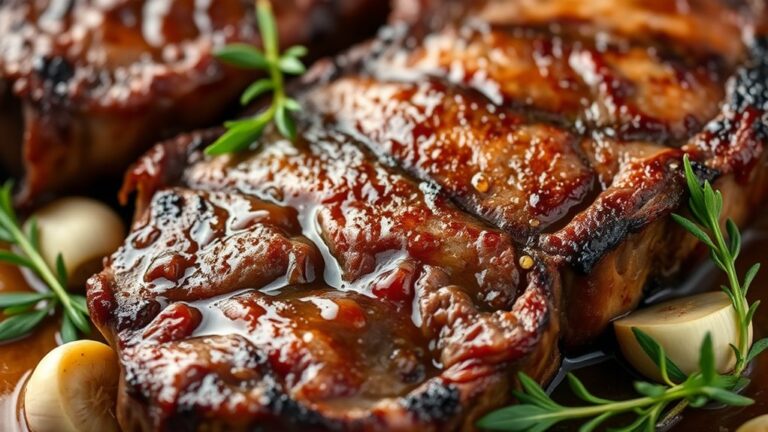
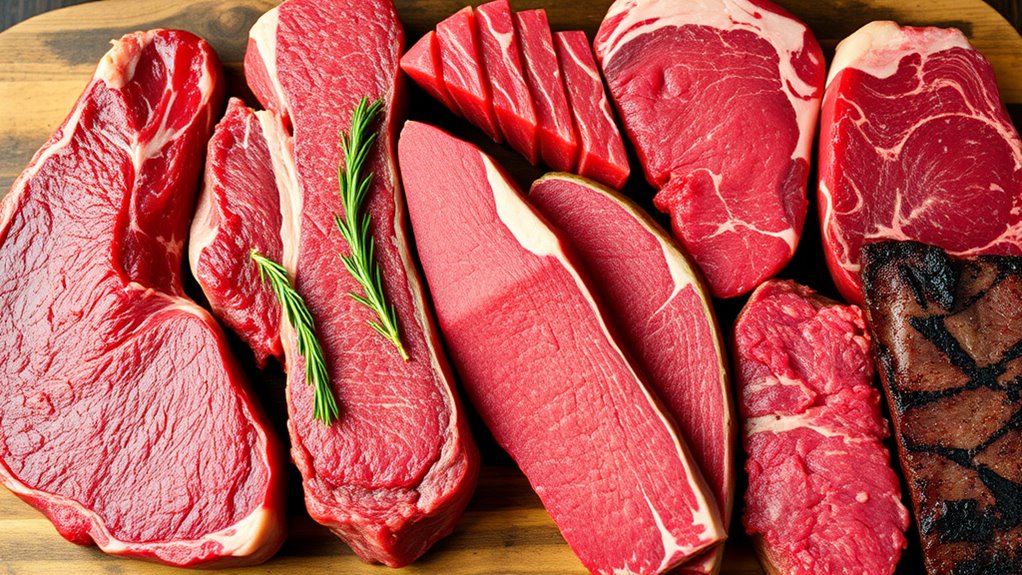
7 Best Cuts of Beef for Grilling
Are you tired of grilling steaks that turn out dry or lack flavor? You’re not alone—many people struggle to find the perfect cut that delivers juicy, tender results every time. Choosing the right beef for grilling can feel overwhelming with so many options out there.
The best cuts of beef for grilling include ribeye, T-bone, Porterhouse, flat iron, top sirloin, flank, and skirt steak. These cuts offer great flavor, tenderness, and are ideal for quick cooking on the grill.
Look for well-marbled, fresh, and properly prepared meat to guarantee juicy, flavorful results. To master your grilling skills and pick the perfect steak every time, delve into more tips and tricks ahead.
Key Takeaways
- Ribeye is prized for its rich marbling, flavor, and tenderness. It’s an excellent choice for grilling because it stays juicy and flavorful.
- T-Bone and Porterhouse steaks give you a bit of everything. They combine tenderloin and strip steak, offering a great mix of tenderness and bold flavor.
- Flat Iron steak is known for being really tender and cooks quickly. Its rich marbling makes it flavorful and perfect for a fast grill session.
- Top Sirloin is versatile, juicy, and usually more affordable. It’s a great all-around cut for grilling when you want something reliable and tasty.
- Skirt and flank steaks are packed with flavor. They’re ideal for marinating and quick, high-heat grilling to get that perfect char.
How to Choose the Best Steaks for Grilling
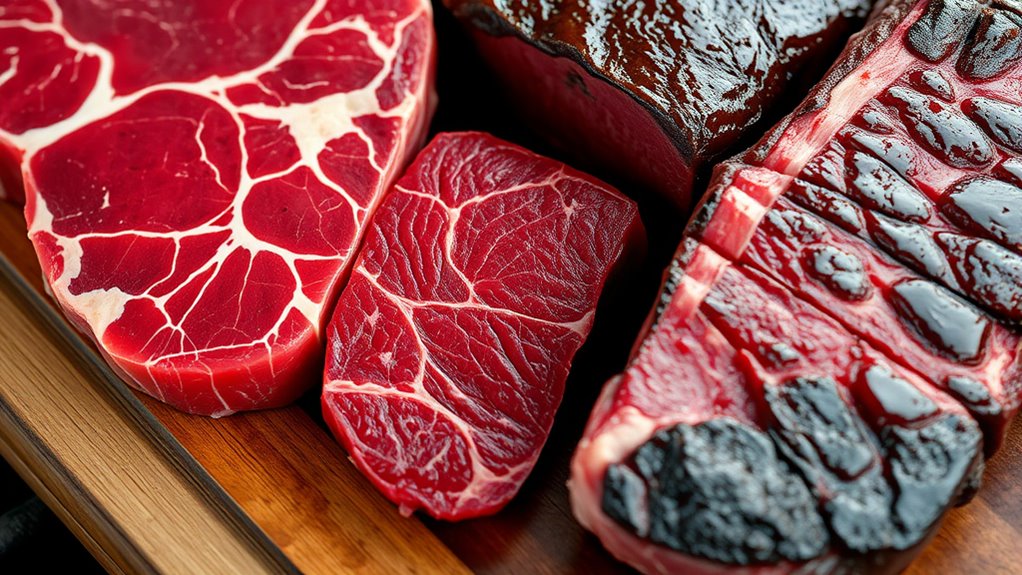
Wondering how to pick the perfect steak for grilling? Focus on tenderness and marbling, since intramuscular fat boosts flavor, juiciness, and tenderness during grilling.
Choose beef cuts with generous marbling for a richer flavor profile and better overall quality. Opt for thick cuts, at least 1 inch thick, to ensure even heat distribution and better control over doneness.
Tender cuts like ribeye, filet mignon, or flat iron are ideal for quick, high-heat grilling, maximizing flavor and tenderness. Also, look for bright-red steaks without discoloration or excess moisture, which signals freshness.
Keep in mind the purpose and flavor profile of the cut, balancing tenderness, fat content, and cost to suit your grilling style and preferences.
What Are the Top 7 Steaks for Grilling and Why They Stand Out
When selecting steaks for grilling, certain cuts really stand out because of their flavor, tenderness, and overall grilling performance. Here’s a quick look at the top 7:
| Steak | Why It Stands Out |
|---|---|
| Ribeye | Rich marbling delivers exceptional flavor and tenderness. |
| T-Bone | Combines tenderloin and strip for a flavorful bite. |
| Flat Iron | Known for tenderness and rich marbling, perfect for quick grilling. |
| Top Sirloin | Juicy, versatile, and affordable. |
| Porterhouse | Like T-Bone, offers both tenderloin and strip cuts. |
| Flank | Prized for intense flavor and marinating options. |
| Skirt | Great for slicing and packed with beef flavor. |
These steaks excel in marbling, tenderness, and flavor. They’re ideal for grilling and sure to impress.
How to Pick High-Quality Beef for Grilling at the Market
When selecting beef at the market, look for steaks with plenty of marbling to guarantee flavor and tenderness.
Make sure the cut is at least 1 to 1.5 inches thick for even cooking.
Check that the meat has a bright, vibrant color with a firm texture.
Also, choose beef that smells fresh, clean, and free of any sour or off-putting odors.
Look for Marbling
To pick the best beef for grilling, focus on the marbling—those fine streaks of intramuscular fat embedded within the muscle. Look for steaks with evenly distributed marbling, which signals high-quality meat packed with flavor.
Visible, abundant marbling melts during cooking, making the beef juicier, more tender, and flavorful. Thicker marbling patterns tend to be more forgiving if slightly overcooked, ensuring a juicy bite every time.
Avoid meats with large, uneven fat deposits or excessive surface fat, as they can cause flare-ups and uneven cooking. Check for a bright, cherry-red color and firm texture, indicators of fresh, well-marbled beef.
High-quality, marbled beef guarantees a flavorful, melt-in-your-mouth grilling experience.
Check for Thickness
Choosing steaks that are at least 1 to 1.5 inches thick guarantees they cook evenly and hold heat better on the grill. Check for consistent thickness throughout the cut to prevent uneven cooking and avoid undercooked or overcooked sections.
Thicker cuts promote even cooking, ensuring the meat’s internal temperature rises uniformly. Look for high marbling within the meat, as intramuscular fat enhances flavor, tenderness, and juiciness.
The cut’s texture should feel firm and moist, reflecting good meat quality. Avoid thin or overly lean cuts, which tend to dry out or cook too quickly.
Maintaining proper grill temperature is easier with thicker cuts, making it simpler to achieve a perfect sear while keeping the interior just right. Prioritizing thickness and cut consistency helps you select high-quality beef for grilling.
Choose Fresh, Bright Color
Choose beef with a bright, cherry-red hue, as this color signals freshness and high quality. A vibrant color shows the meat is fresh and well-handled.
When shopping, look for firm, moist meat—avoid dull, slimy, or overly wet pieces. Visible marbling is a good sign, as it enhances flavor and tenderness.
Check the edges for cleanliness, without dried or discolored areas, which indicate proper storage. Stay away from dull, brownish meat or those with gray spots, as these suggest aging or spoilage.
The right beef should feel firm and moist but not slimy. Picking meat with these qualities ensures a juicy, flavorful result.
What Are the Most Tender Steaks for Quick Grilling
When you want quick, delicious results on the grill, certain steaks stand out for their tenderness and ability to cook rapidly without losing their juiciness.
Tender cuts like filet mignon, from the tenderloin, are perfect for fast cooking because of their buttery texture.
Tender filet mignon from the tenderloin is ideal for quick, buttery, and juicy grilling.
The flat iron steak is also highly tender, well-marbled, and ideal for quick grilling at high heat.
Cuts like Zabuton and teres major from the shoulder are known for their tenderness and cook quickly, making them great for fast grilling sessions.
Steaks with higher marbling, such as ribeye or the cap of ribeye, retain juiciness even when cooked swiftly.
Thinner cuts of these tender steaks are best for quick grilling, preserving their tenderness and flavor.
Tips for Preparing and Grilling the Perfect Steak
Getting your steak just right starts with proper preparation and grilling technique. First, let the steak reach room temperature for 30-60 minutes to ensure even cooking and better tenderness.
Next, season the cut simply with salt and pepper or your favorite rub right before grilling to amplify its natural flavors.
Tips to keep in mind:
- Preheat the grill to high heat (450°F+) for a perfect sear that locks in juices.
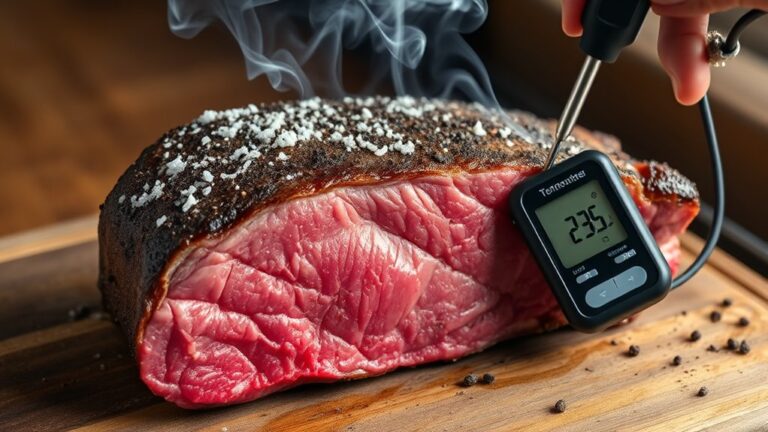
- Use a meat thermometer to monitor the internal temperature, aiming for 130-135°F for medium-rare perfection.
- Rest the steak for 5-10 minutes after grilling to allow juices to redistribute.
- Slice against the grain to maximize tenderness and enjoy every bite.
Common Mistakes to Avoid When Grilling Steaks
Avoid overcooking your steak, as it zaps the tenderness and flavor you’re after.
Make sure to rest it properly after grilling to keep those juices locked in.
Skipping these steps can turn a perfect cut into a dry, flavorless disappointment.
Overcooking Steak Risks
Overcooking steak is a common mistake that can quickly ruin an otherwise perfect grill session. When you overcook, the muscle fibers tighten, making the meat tough and dry.
Using a meat thermometer incorrectly or guessing doneness by touch often leads to overcooked steaks, especially with thinner cuts. To avoid this, monitor the steak carefully during grilling.
Remember these key points:
- Rely on a meat thermometer for accurate doneness.
- Remove the steak once it hits the target internal temperature.
- Avoid flipping too often or piercing with a fork, which causes juice loss.
- Rest the steak for at least 5-10 minutes to retain juices and tenderness.
Skipping these steps risks turning your steak into an overcooked, flavorless, and less juicy meal.
Improper Resting Techniques
Many grillers make the mistake of slicing into their steaks too soon, which allows the juices to escape and leaves the meat dry and less flavorful. Proper resting is key for juice retention because it gives the meat time to reabsorb its natural juices.
Skipping or shortening the resting period prevents the juices from redistributing, resulting in a steak that’s less tender and moist. To get the best flavor and tenderness, let your steak rest loosely covered with foil for at least five minutes after grilling.
This simple step helps keep the heat in and ensures the juices stay inside. Rushing the rest process decreases both moisture and overall quality, so be patient for a perfectly juicy, tender cut.
Final Tips for Juicy, Flavorful Grilled Steaks Every Time
To guarantee your grilled steaks stay juicy and flavorful, follow a few simple final tips that make all the difference. First, let your steak sit at room temperature for 30 minutes before grilling. This helps ensure even cooking and tender, juicy results.
Second, crank up the heat to 450°F or higher to quickly sear and lock in flavor, creating a perfect crust. Third, season simply with salt and pepper to enhance the natural beef flavor without overpowering it.
Fourth, cook your steak to the right internal temperature—130 to 135°F for medium-rare—and use a meat thermometer for accuracy. After grilling, let the steak rest for 5 to 10 minutes to allow juices to redistribute, resulting in a more flavorful, juicy bite every time.
Frequently Asked Questions
What Beef Cut Is Best for Grilling?
You should go for ribeye, T-bone, or Porterhouse steaks for grilling because they offer rich flavor, tenderness, and good marbling.
Thick cuts like sirloin and flat iron are also great choices because they cook evenly and stay juicy.
For high heat and quick cooking, skirt and flank steaks work well if you marinate them and slice against the grain.
Tenderloin is the ultimate choice if you want melt-in-your-mouth tenderness.
What Is the 3 3 3 3 Rule for Steaks?
The 3-3-3-3 rule is your secret weapon for perfectly grilled steaks.
You sear each side for 3 minutes, then let the steak rest for 3 minutes.
This simple, almost magical timing helps you hit that juicy, medium-rare point without overcooking.
Just remember, thicker steaks or hotter grills might need slight tweaks.
Follow this rule, and you’ll impress everyone with your consistent, mouthwatering results.
What Cut Is a Poor Man’s Ribeye?
The cut known as the “Poor Man’s Ribeye” is the Flat Iron steak. You’ll find it comes from the shoulder and offers similar marbling, tenderness, and flavor as a ribeye but at a much lower cost.
To get the best results, cook it properly and slice against the grain. This cut is a great budget-friendly option that doesn’t compromise on taste or juiciness.
What Are the Top 3 Most Tender Cuts of Beef?
If you’re after the most tender bites, you’ll want to seek out filet mignon, ribeye, and flat iron steak.
You’ll notice filet mignon’s buttery softness, ribeye’s rich marbling melting into each bite, and flat iron’s surprising tenderness from the shoulder.
These cuts promise melt-in-your-mouth experiences, especially when cooked to medium-rare or medium.
Conclusion
Ready to take your grilling skills to the next level with the perfect cuts? Choosing the right steaks and mastering your technique will wow everyone at your next cookout.
Remember, quality really matters, and a little prep can make all the difference. So, are you ready to turn your backyard into a steakhouse?
Fire up the grill, follow these tips, and enjoy juicy, flavorful steaks every time with the best cuts of beef for grilling!