Kosher Salt Vs Sea Salt – 7 Key Differences
Are you often confused about which salt to use in your cooking? You’re not alone—many people struggle with choosing the right type of salt for their recipes.
Kosher salt and sea salt differ mainly in how they’re made, with kosher salt mined from underground deposits and sea salt harvested from evaporated seawater.
Sea salt retains trace minerals, giving it a more complex flavor and varied textures, while kosher salt is more refined and neutral.
Their textures also vary—kosher has large flakes, and sea salt can be fine or flaky.
If you want to know more about their uses and differences, keep exploring.
Key Takeaways
- Kosher salt is mined from underground deposits, while sea salt is harvested from seawater through evaporation.
- Sea salt contains trace minerals like magnesium and calcium, which give it a more complex flavor. Kosher salt, on the other hand, is mostly pure sodium chloride.
- Kosher salt has large, flaky crystals that are perfect for koshering and seasoning. Sea salt can vary from fine to coarse grains, making it great for finishing dishes.
- The mineral content in sea salt adds a subtle earthiness to its flavor. In contrast, kosher salt offers a clean, neutral taste.
- People often prefer kosher salt for precise cooking and for religious purposes. Sea salt is typically used for finishing and enhancing the flavor of dishes.
What Is Kosher Salt and How Is It Made?
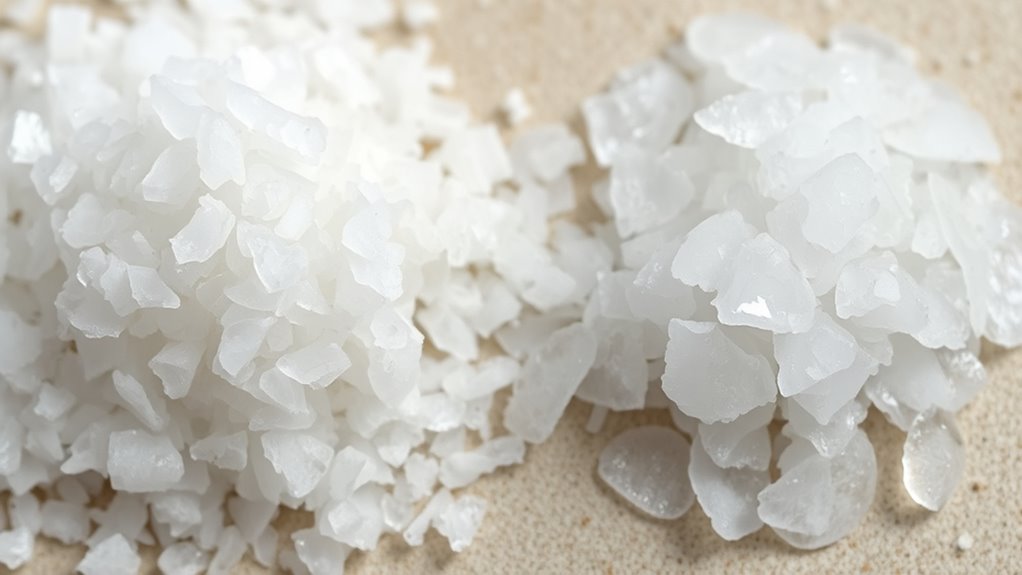
Kosher salt is mainly mined from underground salt deposits, where it’s extracted through mining processes. Unlike sea salt, which comes from evaporating seawater, kosher salt is refined to remove impurities.
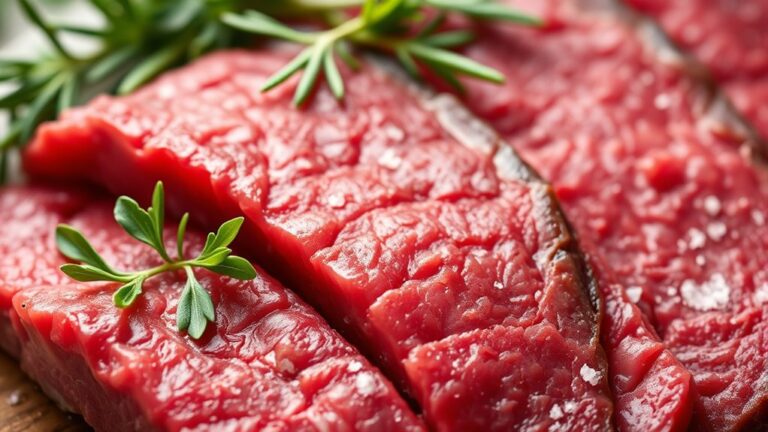
It’s known for its large, flaky, coarse crystals, making it easy to handle and control when seasoning. The term “kosher salt” comes from its traditional use in koshering meat, but it doesn’t necessarily mean it’s certified kosher.
This salt usually doesn’t have additives like iodine or anti-caking agents, giving it a pure sodium chloride flavor. Its mineral content is minimal, and its distinctive crystal size makes it perfect for seasoning and culinary use.
How Is Sea Salt Harvested and Processed?
Sea salt is harvested through a natural process that involves collecting seawater in shallow evaporation ponds. As the sun and wind work together, they cause the seawater to evaporate gradually.
Sea salt is naturally harvested from seawater in shallow ponds through evaporation by sun and wind.
This evaporation concentrates the salt, leading to crystallization, where salt crystals form and become visible. Once the seawater has evaporated enough, the salt is collected, washed lightly, and dried.
Minimal processing keeps the salt as close to its natural state as possible. It’s often just crushed or ground into the desired size. Because the salt is taken directly from seawater, it retains trace minerals like magnesium, calcium, and potassium.
These minerals, along with the unique crystallization process, give sea salt its distinctive texture and mineral content.
What Are the Textural Differences Between Kosher and Sea Salt?
The texture of salt really influences how it interacts with your food. Understanding these differences helps you pick the right type for each job.
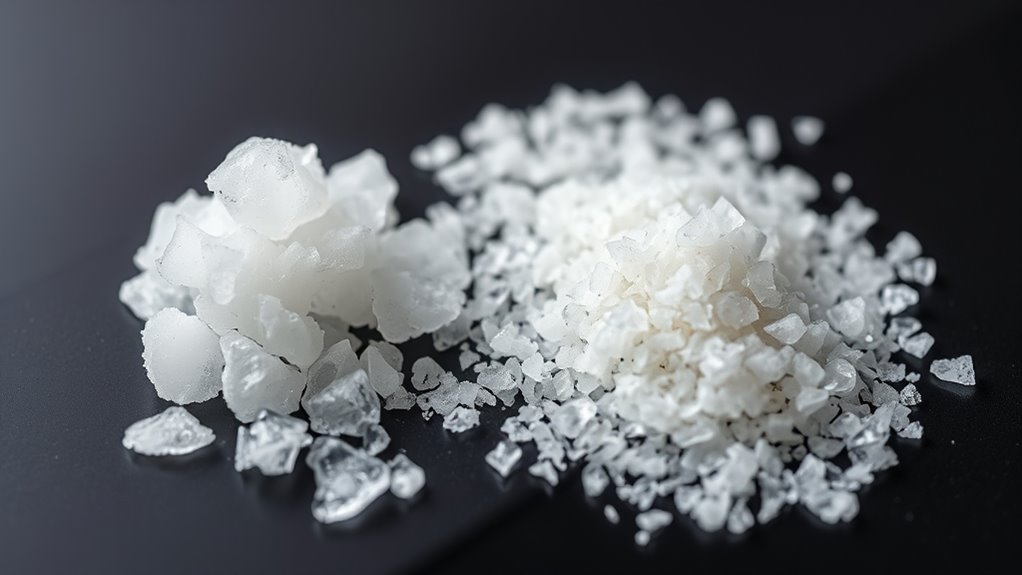
Kosher salt has large, flaky, coarse crystals that are easy to pick up and sprinkle evenly. It’s perfect for controlling seasoning and koshering meat. Its crystal size and grain texture allow for quick dissolution and precise application.
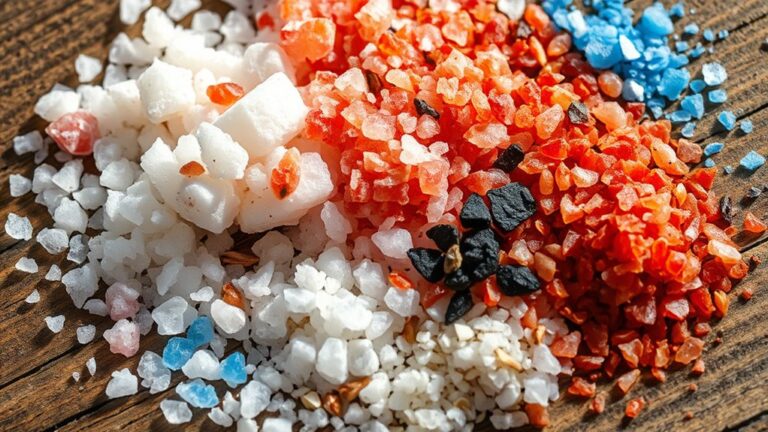
Sea salt offers a variety of textures, from fine grains to big, crunchy flakes. This makes it popular as a finishing salt, adding crunch and mineral flavor to dishes. The shape and size of the crystals affect how it dissolves and interacts during cooking, with kosher salt being more uniform and sea salt providing more textural diversity.
How Do Flavor and Mineral Content Compare?
Sea salt contains trace minerals like magnesium and calcium that can add subtle complexity to its flavor, unlike the cleaner taste of kosher salt. These mineral variations influence the taste and aroma, making sea salt slightly more nuanced.
While both are mainly sodium chloride, the impurities in sea salt often create noticeable differences when tasting or finishing dishes.
Mineral Variations Affect Flavor
Mineral variations significantly influence the flavor profiles of salts. Sea salt offers a more complex taste because of its trace minerals like magnesium, calcium, and potassium. These minerals add subtle nuances that enhance the overall flavor, making sea salt more multidimensional.
In contrast, kosher salt is almost pure sodium chloride with minimal mineral content. This means it provides a clean, straightforward saltiness without extra flavor layers.
The mineral content in sea salt can vary depending on where the seawater comes from. This results in slight flavor differences that can really complement dishes, especially when used as a finishing touch.
These mineral variations make sea salt less neutral and more layered in taste. Understanding this helps you pick the right salt based on whether you want a simple or more nuanced flavor profile.
Trace Minerals Influence Taste
Have you ever noticed how a pinch of sea salt can taste more complex than plain kosher salt? That’s because sea salt contains trace minerals like magnesium, calcium, and potassium, which subtly influence its flavor profile.
These minerals add nuanced, mineral-rich notes that can make the salt taste more layered and vibrant. In contrast, kosher salt typically has a purer sodium chloride composition, resulting in a cleaner, more straightforward salty taste.
The mineral content in sea salt creates subtle differences that become noticeable, especially in finishing dishes or small quantities. While the flavor variations are usually delicate, they can *improve* your culinary experience by adding depth and complexity that plain kosher salt might lack.
Salt Purity and Complexity
While both kosher salt and sea salt are mainly made of sodium chloride, their different mineral contents greatly affect their flavor and purity. Kosher salt is usually refined to remove impurities, giving it high purity and a clean, simple taste.
It provides a neutral seasoning that lets the natural flavors of food shine. On the other hand, sea salt contains natural minerals like magnesium, calcium, and potassium, which add complexity to its flavor profile.
These minerals give sea salt a subtle earthiness or brininess, making its taste more layered. Different types of sea salt can have unique flavors because of varying mineral content.
In contrast, kosher salt’s refining process ensures consistency in flavor. Overall, the mineral content influences flavor complexity—kosher salt offers purity, while sea salt provides a richer, more nuanced taste.
Which Salt Is Best for Cooking and Finishing Dishes?
When choosing between kosher salt and sea salt for cooking or finishing, think about their textures and how you handle them.
Kosher salt’s large flakes are perfect for seasoning during cooking because they distribute evenly.
Sea salt’s varied textures add crunch and flavor when used as a finishing touch.
Your choice depends on whether you want consistent seasoning or a subtle mineral flavor to enhance your dish.
Texture and Handling
Choosing the right salt for your cooking or finishing depends largely on its texture and handling qualities. Kosher salt has large, flaky grains that are easy to pinch and sprinkle evenly over dishes, making it ideal for dry rubbing and brining.
Its coarse crystals dissolve slowly, giving you control over seasoning during cooking. Sea salt varies in grain size from fine to coarse, offering versatility for different culinary uses.
Fine sea salt dissolves quickly, perfect for recipes requiring rapid seasoning or incorporating into liquids. Coarser sea salt improves finishing touches and presentation thanks to its textured crystals.
The handling qualities of each salt influence how you use them—kosher salt for control and ease, sea salt for flexibility and presentation. Your choice depends on the desired texture and handling needs for your dish.
Flavor Impact
Kosher salt offers a clean, mild flavor that improves dishes without overwhelming the other ingredients. It’s a versatile choice for cooking and seasoning, letting the natural flavors shine.
Its subtle taste enhances the true flavor profile of your dish. Sea salt, on the other hand, contains trace minerals that add subtle, complex flavors, especially when used as a finishing touch.
These minerals can introduce a slight mineral tang, enriching the overall flavor experience. Flaky sea salts like fleur de sel provide a crunchy texture and visual appeal, elevating both presentation and taste.
While both salts can be used interchangeably with proper measurement, sea salt’s mineral content can subtly influence the flavor of finished dishes. It’s great for adding nuanced flavor layers.
Cooking vs. Finishing
Both kosher salt and sea salt serve distinct roles in cooking and finishing, thanks to their unique textures and mineral content.
Kosher salt’s large, flaky crystals make it great for seasoning during cooking and dry brining meats because it dissolves slowly and evenly. Its mild flavor and easy handling help it blend seamlessly into recipes.
Sea salt, with its varied textures and mineral richness, is perfect for finishing dishes. It provides a quick burst of flavor and a subtle crunch, enhancing presentation and adding complexity at the final stage.
While kosher salt is better suited for cooking due to its controlled dissolving rate, sea salt shines as a finishing touch to boost taste and texture. Both salts have their place, depending on your culinary needs.
Are There Nutritional or Health Differences?
While kosher salt and sea salt are mostly similar in their basic nutritional makeup, there are some subtle differences worth noting. Both contain primarily sodium chloride, with minimal differences in nutritional content.
Sea salt has trace minerals like magnesium, calcium, and potassium, but these are in tiny amounts that don’t *considerably* impact health benefits. The mineral content can influence flavor and appearance but doesn’t change the overall nutritional value much.
Excessive salt intake, regardless of type, can lead to high blood pressure and other health issues. Here’s a quick comparison:
| Feature | Kosher Salt | Sea Salt |
|---|---|---|
| Main component | Sodium chloride | Sodium chloride |
| Minerals | Minimal trace minerals | Trace minerals present |
| Health benefits | Similar, limited impact | Similar, limited impact |
How Do I Choose the Right Salt for My Cooking?
Selecting the right salt for your cooking depends on your dish’s needs and your personal taste. If you want precise control and even seasoning, kosher salt is a great choice because of its large, flaky crystals that dissolve slowly.
Kosher salt offers precise control and even seasoning with its large, flaky crystals that dissolve slowly.
For adding flavor complexity and trace minerals, especially as a finishing touch, sea salt works well. The texture matters too—coarse salts are perfect for brining or garnishing, while fine salts are better for baking and everyday cooking.
Keep in mind that kosher salt is less dense than table salt, so you might need to adjust your measurements. Also, choose certified kosher salt if you want a product that meets both culinary and religious standards.
Your selection ultimately depends on the texture and flavor profile you’re aiming for.
Frequently Asked Questions
Is There a Big Difference Between Sea Salt and Kosher Salt?
You’ll notice some differences between sea salt and kosher salt. Sea salt has a more complex flavor because of its natural minerals, while kosher salt’s large, flaky crystals make it easier to handle during cooking.
The taste is similar, but sea salt’s mineral content can add a subtle extra flavor. For finishing dishes, sea salt’s texture can improve presentation, whereas kosher salt is great for seasoning during cooking.
What Is the Best Salt for Heart Patients?
You should choose a salt that helps you control your sodium intake. Both kosher and sea salts have similar sodium levels, so neither is inherently better for your heart.
Opt for the one with larger crystals, like kosher salt. It makes it easier to measure and limit your intake.
Ultimately, focus on reducing your overall sodium consumption, no matter what type of salt you use. That’s the best way to protect your heart health.
Is Sea Salt Good for Arthritis?
Sea salt isn’t proven to help arthritis symptoms, but some believe its trace minerals like magnesium and calcium might have anti-inflammatory effects.
However, too much sea salt can increase joint inflammation and swelling. If you enjoy sea salt, use it sparingly as part of a balanced diet.
Always talk to your healthcare provider before making dietary changes to ensure they’re safe and appropriate for your arthritis management.
Why Do Jews Prefer Kosher Salt?
You might think of kosher salt as the sacred tool in a chef’s kit, but for Jews, it’s more about tradition. They prefer kosher salt because it’s used in the koshering process to remove blood from meat, aligning with religious laws.
Its coarse, flaky crystals make handling easier and more precise, ensuring compliance and respect for centuries-old customs. It’s much like a ritual passed down through generations.
Conclusion
Choosing between kosher and sea salt is like picking a brush for your masterpiece—you want the right tool to bring out the best. Consider their textures, flavors, and uses to match your culinary style.
Remember, the right salt can elevate your dishes from ordinary to extraordinary. It turns everyday cooking into a sensory adventure that delights the senses.
So, trust your taste buds and pick the salt that sings to you. Because your food deserves nothing less than the perfect touch of kosher salt or sea salt.