How to Smoke Beef Brisket in an Electric Smoker in 8 Easy Steps
Many barbecue lovers dream of mastering the perfect smoked beef brisket but often feel overwhelmed by the process. You’re not alone—smoking brisket can seem intimidating at first, especially if you’re new to electric smokers.
Luckily, with a little guidance, you can become a pro in no time.
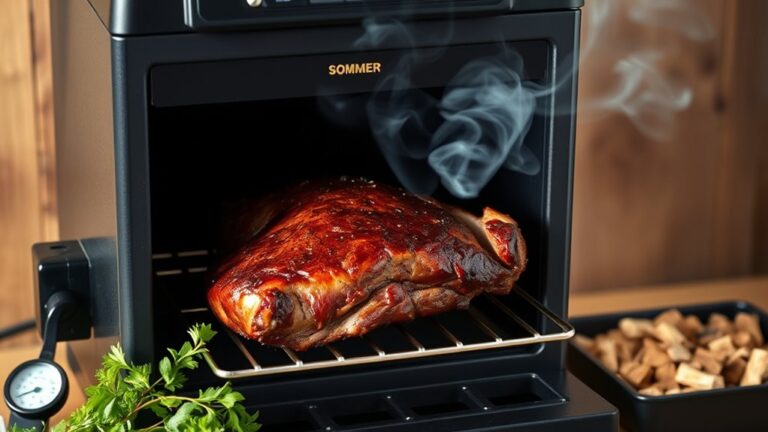
To smoke beef brisket in an electric smoker in 8 easy steps, start by choosing a well-marbled, 8-12 pound packer brisket and season it overnight with a simple rub.
Preheat your smoker to 225°F, add wood chips, and place the brisket fat side up on the rack, with a water pan for moisture.
Smoke for about an hour per pound, wrapping at 165°F, until it reaches 195-200°F.
Rest the brisket for at least 2 hours before slicing against the grain.
Keep everything steady, and you’ll master this process easily.
Key Takeaways
- Select a well-marbled, 8-12 pound packer brisket, season it evenly, and let it rest overnight.
- Preheat your electric smoker to 225°F. Fill the wood tray with your preferred wood chips and add a water pan to keep things moist.
- Smoke the brisket fat side up. Keep the temperature steady and keep a close eye on the internal temperature.
- When the brisket hits around 165°F, wrap it to prevent drying out. Continue smoking until it reaches 195-200°F.
- Let the brisket rest for 1-2 hours before slicing against the grain. This step makes a big difference in tenderness.
Why Use an Electric Smoker for Perfect Brisket?
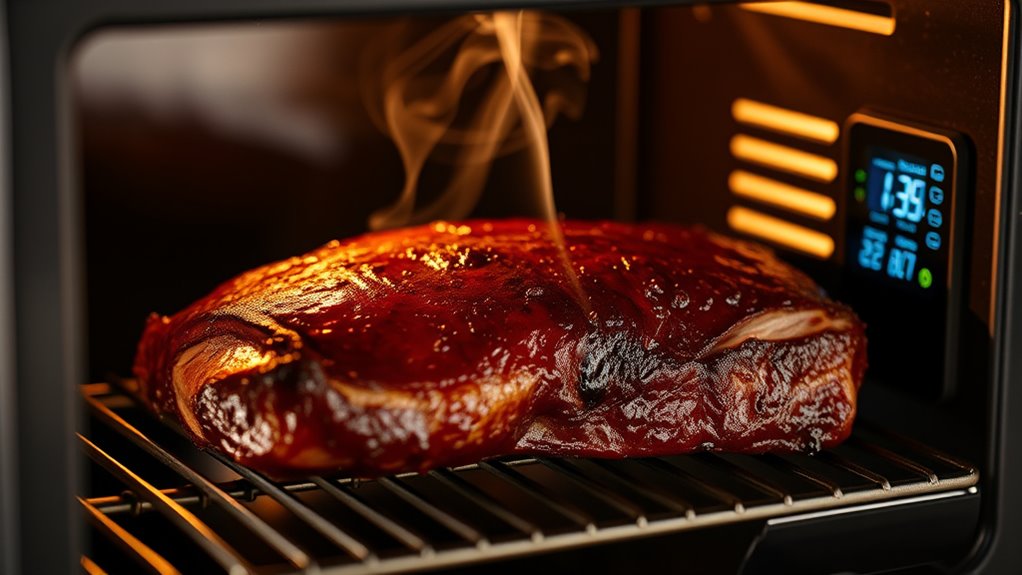
Using an electric smoker makes achieving a perfect brisket much easier because it offers consistent and precise temperature control. This ensures even cooking during the low and slow process, helping prevent hot spots or undercooked areas.
With steady heat, you don’t need to constantly monitor or adjust settings, making it a hands-off cooking experience. Electric smokers provide reliable smoke, producing minimal flare-ups and a clean, smoky flavor that’s easy to control.
Their precise control over temperature and smoke levels lets you focus on other prep work while the smoker maintains ideal conditions. The result is a tender, flavorful brisket with a rich smoky taste, all with less effort and more consistency than traditional methods.
How to Select the Best Beef Brisket for Smoking
Choosing the right beef brisket is key to getting tender, flavorful smoked meat. Look for a whole packer brisket weighing between 8 and 12 pounds, which offers a good mix of flavor and size.
Prioritize briskets with plenty of marbling—those white streaks of fat that keep the meat juicy. Also, check for a thick, even fat cap about a quarter inch thick to help retain moisture.
For top quality, go for prime or Wagyu grades, which have superior marbling. Choice grade is a solid option if you want a good balance of quality and affordability.
Make sure there’s a clear separation between the point and flat sections. This makes slicing easier and helps ensure even cooking.
How to Prepare and Season Your Brisket for Smoking
To get the best flavor, choose a simple rub with salt, pepper, garlic powder, and paprika, then press it firmly into the meat.
Apply the seasoning evenly and consider refrigerating the brisket overnight to develop a rich bark.
Let the meat sit at room temperature for a couple of hours before smoking to guarantee even cooking.
Choosing the Right Rub
Ever wonder how to make your brisket burst with flavor? The key is choosing the right rub. A simple yet effective seasoning blend includes coarse salt, black pepper, garlic powder, and paprika—these *amplify* flavor without overpowering the meat.
To maximize taste, apply the rub generously and evenly on all sides of the brisket. For best results, season the meat the night before and refrigerate uncovered for dry brining, which helps the flavors penetrate deeper.
Using a binder like mustard or oil can help the rub stick and create a nice bark. Resting the seasoned brisket at room temperature for 1-2 hours before smoking allows the spices to settle and the meat to cook evenly.
Proper Seasoning Application
Before you start smoking, it’s important to prepare your brisket properly to get the best flavor and moisture. Apply a generous, even layer of seasoning—like salt, black pepper, garlic powder, and paprika—on all sides of the brisket.
For deeper flavor, season at least 2–4 hours before smoking or refrigerate it overnight uncovered for dry brining. Use a binder like mustard or BBQ sauce to help the rub stick and promote a tasty bark.
Trim away excess silver skin and leave about a quarter inch of fat cap to keep the meat moist and add flavor. Let the seasoned brisket rest at room temperature for 1–2 hours before placing it in the smoker.
Proper seasoning helps ensure even cooking, better flavor, and a tender, flavorful brisket.
How to Set Up Your Electric Smoker and Choose the Right Wood
Getting your electric smoker ready starts with setting it to 225°F and making sure it stays at that temperature throughout. Preheat the smoker for about 15-20 minutes so it’s nice and ready.
Next, pick high-quality wood chips or chunks like hickory, oak, mesquite, apple, or cherry, depending on your flavor preference. Fill the wood tray or hopper with your chosen wood—no need to soak the chips, as dry wood gives cleaner, steadier smoke.
Add a water pan filled with water or juice to help keep the brisket moist and maintain humidity during the long smoking process. Regularly replenish the wood chips every 30-45 minutes to keep the smoke consistent and flavorful.
This will help you maintain a steady temperature and infuse your meat with great smoky flavor throughout the process.
Step-by-Step: How to Smoke Your Brisket
Now that your smoker is preheated and ready, place the seasoned brisket on the rack with the fat side up. Insert a temperature probe into the thickest part of the meat to keep an eye on the internal temperature.
Preheat your smoker, place the seasoned brisket fat side up, and insert a thermometer into the thickest part.
Smoke the brisket at 225°F, using your preferred wood, for about 1 hour per pound. Once the internal temperature hits 165°F, wrap the brisket in foil or butcher paper to keep it moist and continue smoking.
Keep monitoring the temperature probe, aiming for an internal temperature of 195-200°F. After it reaches this point, take the brisket out of the smoker and let it rest for at least 2 hours.
Wrap it in foil or place it in a cooler while resting. When ready to serve, slice against the grain for tender, flavorful brisket.
When and How to Wrap Your Brisket for Maximum Tenderness
Timing your wrap is key to getting tender, juicy brisket. Wrap when the internal temp hits around 160°F to push through the stall and lock in moisture. Here’s what to do:
Use either butcher paper for some smoke penetration or foil for maximum moisture retention. Wrap the brisket tightly to prevent air from entering, which helps keep the temperature steady and the meat moist.
Continue smoking or baking until the internal temperature reaches 195-205°F for the best tenderness. Keep an eye on the temperature after wrapping to avoid overcooking.
This method softens the bark, boosts tenderness, and makes sure your brisket stays moist and flavorful.
Resting and Slicing: How to Serve Juicy Smoked Brisket
After removing your brisket from the smoker, it’s important to let it rest for at least 1 to 2 hours. This helps the juices redistribute throughout the meat, making it more tender and flavorful.
Rest your brisket for 1-2 hours to ensure juicy, tender, and flavorful slices.
Wrapping it in foil or placing it in a cooler during resting helps preserve the heat. When you’re ready to serve, slice against the grain with a sharp knife for tender, easy-to-chew slices.
Proper slicing is key for the best texture and presentation. Keep in mind that during resting, carryover cooking can slightly raise the internal temperature, so plan your timing accordingly.
Resting and slicing correctly ensure each slice stays juicy, flavorful, and irresistibly tender.
Common Tips, Variations, and Troubleshooting for Perfect Brisket
Getting your brisket perfect is all about a few key strategies, like making sure the smoke penetrates well and keeping the meat moist throughout.
You’ll also want to troubleshoot common issues such as dryness or a lack of smoke ring by tweaking your wrapping techniques and temperature control.
Focusing on these tips will help you get a tender, flavorful brisket every single time.
Perfecting Smoke Penetration
To achieve deep and flavorful smoke penetration in your brisket, maintaining a steady smoker temperature of around 225°F is crucial. You should also resist the urge to open the lid too often. Here are some key tips:
Use quality hardwoods like hickory, oak, or mesquite, adding wood chips every 30-45 minutes. This keeps a steady smoke flow and maximizes smoke flavor.
Keep the smoker temperature consistent. Fluctuations hinder smoke penetration and can cause uneven cooking.
Wrap the brisket when it reaches about 160°F internal temperature. This locks in moisture while still allowing smoke to penetrate the meat.
Trim excess brisket fat carefully to about ¼ inch. This helps the meat make better contact with the wood smoke for improved smoke penetration.
Following these tips ensures rich wood smoke contact, boosts flavor, and helps you achieve the perfect brisket.
Managing Meat Moisture
Managing meat moisture is key to getting tender, juicy brisket. There are several effective ways to keep your meat moist during smoking.
Wrap your brisket in foil or butcher paper during the stall phase to prevent moisture loss and keep the juices inside. Using a water pan or adding liquids like apple juice or beef broth during smoking adds moisture and enhances flavor.
Keeping the smoke temperature steady around 225°F slows down cooking and helps reduce moisture loss. Basting the meat with its juices or a light oil before applying seasoning also locks in moisture and improves the bark.
After smoking, let the brisket rest for 1-2 hours. This allows the juices to redistribute, making each bite tender and flavorful.
Troubleshooting Common Issues
Even with careful attention to moisture and temperature, issues can still happen during brisket smoking. To troubleshoot:
- Avoid overcooking by monitoring the internal temperature closely. Once it hits around 195-203°F, take it out to prevent moisture loss.
- Improve bark texture and smoke ring by keeping the heat steady and ensuring proper smoke exposure throughout the cook.
- Wrap the brisket around 165°F to help fat render better and prevent overcooking. This also helps keep the moisture in.
- Make sure to rest the brisket for at least an hour in a cooler or foil-wrapped tray. This allows the juices to reabsorb and makes slicing easier.
Proper temperature control and consistent heat are key to avoiding common problems like dryness and uneven bark development.
Frequently Asked Questions
How Long Do You Smoke a Beef Brisket in an Electric Smoker?
You should smoke a beef brisket in an electric smoker for about 1 hour per pound at 225°F.
For example, a 10-pound brisket takes roughly 10 hours, while a 12-pound one needs around 12 hours.
Keep an eye on the internal temperature, aiming for 195-200°F. Wrapping at 165°F can speed things up, but overall, plan for 8 to 14 hours depending on size and tenderness.
Is Brisket Good for Cholesterol?
Brisket isn’t the best choice if you’re worried about cholesterol because it’s high in saturated fat.
If you love it, go for leaner cuts and trim off any excess fat to cut down on those fats.
Remember, moderation is key—enjoy brisket occasionally and try to prepare it without adding extra fats.
Balancing it with heart-healthy foods can make it a better part of your diet.
What Are the Common Mistakes When Smoking Brisket?
You often make mistakes with brisket by not monitoring the internal temperature, which can lead to dryness or toughness.
Wrapping too early or too late affects the bark and moisture levels.
Using inconsistent wood smoke can overpower or under-flavor the meat.
Also, skipping proper resting lets juices escape, making it less tender.
Finally, failing to trim excess fat or silver skin can prevent proper smoke penetration and cause uneven cooking.
Should I Put Water in My Electric Smoker for Brisket?
Yes, you should put water in your electric smoker for brisket. It helps keep the environment humid, which prevents the meat from drying out during long smoking sessions.
It also stabilizes the temperature, making sure the heat stays consistent. Just remember to use warm or hot water to avoid sudden temperature drops.
Replenish the water as needed, especially if you notice it’s getting low, to maintain ideal moisture and heat control.
Conclusion
Smoking your beef brisket in an electric smoker is a rewarding process that yields tender, flavorful results. Did you know that properly smoked brisket can contain up to 70% more flavor thanks to the slow, even cooking process?
By following these simple steps, you’ll master the art of smoked brisket and impress everyone at your next barbecue. Just remember, patience and proper technique are key to achieving that perfect, melt-in-your-mouth bite every time.