How to Smoke Beef Brisket in an Electric Smoker in 10 Easy Steps
Many barbecue lovers dream of smoking the perfect beef brisket but often feel overwhelmed by the process or unsure where to start. You’re not alone—smoking brisket can seem intimidating, especially if you’re new to electric smokers.
To smoke a beef brisket in an electric smoker, start by selecting a well-marbled packer brisket and trimming excess fat. Rub it with your favorite spices, then preheat your smoker to 225°F.
Place the brisket inside along with soaked wood chips and maintain a steady temperature, replenishing smoke every 30-45 minutes.
Wrap the brisket during the stall at around 165°F, then continue cooking until it reaches 195-205°F.
Rest for at least an hour before slicing. If you keep going, you’ll master the perfect smoked brisket every time.
Key Takeaways
- Select a well-marbled, whole packer brisket and trim any excess fat before applying a dry rub.
- Preheat your electric smoker to 225°F. Soak your wood chips beforehand to ensure consistent smoke throughout the process.
- Place the brisket in the smoker, keeping the temperature steady at 225°F. Add wood chips every 30 to 45 minutes to maintain that smoky flavor.
- When the brisket hits 165°F during the stall, wrap it. This helps retain moisture and speeds up the cooking process.
- After it’s done, let the smoked brisket rest for 1 to 2 hours. This step is key for maximum tenderness and juiciness before slicing.
Why Smoke a Beef Brisket in an Electric Smoker?
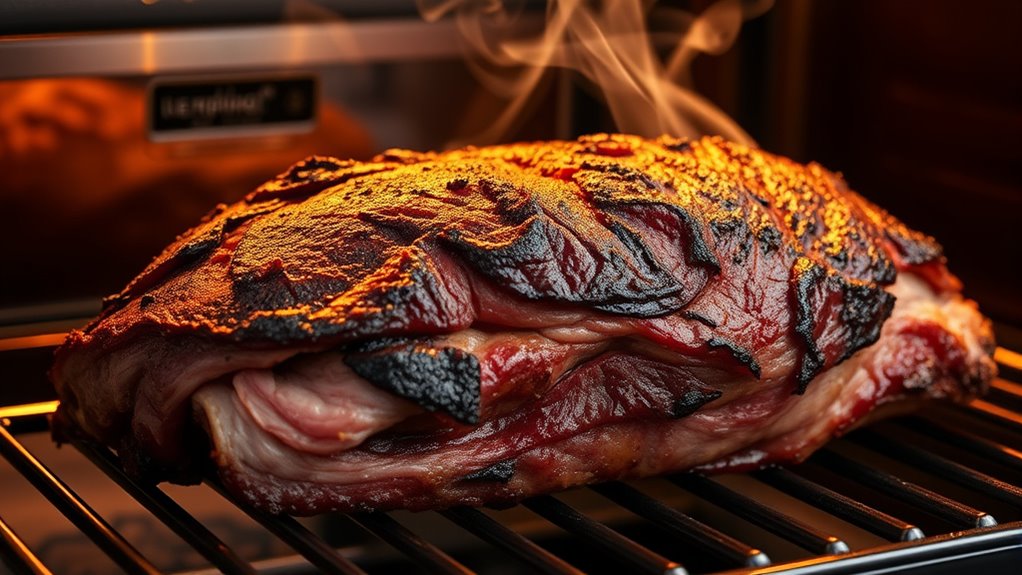
Smoking a beef brisket in an electric smoker offers several advantages that make the process easier and more consistent. With an electric smoker, you can maintain low and slow temperatures, which are essential for tender, flavorful cooked brisket. Its controlled environment guarantees even smoke distribution, giving your meat a uniform smoke flavor throughout.
The steady heat prevents fluctuations that could dry out or undercook the brisket, making it easier to achieve perfect results. Plus, electric smokers allow you to monitor internal temperature precisely, ensuring you hit the ideal point for a juicy brisket.
How to Choose the Best Brisket for Smoking
When choosing a brisket for smoking, look for a whole packer cut between 8-12 pounds that includes both the point and flat muscles.
Pick one with good marbling, a thick fat cap, and a bright white fat layer to ensure tenderness and flavor.
Avoid smaller or heavily trimmed briskets under 6 pounds, as they don’t hold up well to low-and-slow cooking.
Proper Brisket Size
Choosing the right brisket size is key to getting tender, flavorful results. A whole packer brisket weighing between 8 and 12 pounds is perfect for smoking because it has enough meat to develop rich flavor and tenderness without being too bulky.
Look for a brisket with good marbling and a thick fat cap. This helps keep the meat moist and boosts flavor during low-and-slow smoking. Avoid small briskets under 6 pounds, as they’re often just the flat and don’t offer the same depth of flavor.
Pick a brisket with uniform thickness and a flexible feel. This indicates well-distributed connective tissues that will break down during smoking, resulting in juicy, tender meat.
Marbling and Fat Content
Selecting a brisket with the right marbling and fat content guarantees your smoked meat stays juicy and flavorful. Look for abundant white, creamy marbling throughout the meat, which indicates good fat distribution and helps keep it moist during smoking.
A well-marbled brisket will have streaks of fat that melt slowly, boosting tenderness and flavor. Choose a whole packer brisket weighing between 8-12 pounds, as it usually has both a richly marbled point and a leaner flat.
Make sure the brisket has a thick fat cap, about ¼ inch, to help retain moisture and add richness. Avoid cuts with minimal fat streaks or leaner profiles, as they risk drying out and lacking flavor.
Getting the right fat content and marbling is key to a moist, flavorful smoked brisket.
Whole Packard Brisket
To get the best results from smoking, you should look for a whole packer brisket that includes both the flat and point muscles, ensuring a balance of lean and marbled meat. Aim for a brisket weighing between 8 to 12 pounds with good marbling and a thick fat cap, which adds moisture and flavor during the smoking process.
Choose a brisket with white, creamy fat and flexible texture for quality and tenderness. Avoid small or trimmed cuts, as they don’t hold up well to low-and-slow smoking.
When selecting your brisket, opt for USDA Prime or Choice grades for the best flavor. Use wood chips to enhance the smoke flavor, and keep an eye on the internal temperature.
Once it reaches the right point, wrap the brisket to lock in juices before letting it rest.
Preparing and Seasoning Your Brisket for Flavor and Juiciness
Before you start smoking, it’s important to prepare and season your brisket properly to get the best flavor and juiciness. Pick a well-marbled brisket between 8 and 12 pounds for optimal moisture and taste.
Trim away silver skin and excess fat, but leave about ¼ inch of the fat cap. This helps keep the meat moist while it cooks. Rub the brisket evenly with salt, black pepper, garlic powder, and paprika.
Press the spices into the meat to boost flavor. Then, let the seasoned brisket sit in the fridge for 8 to 24 hours. This allows the flavors to soak in and helps tenderize the meat.
Before smoking, bring the brisket to room temperature for 1 to 2 hours. This step helps ensure even cooking and keeps the meat juicy.
Setting Up Your Electric Smoker for Low & Slow Cooking
Start by preheating your electric smoker to 225°F and give it 30-45 minutes to reach the right temperature.
Load the wood chips or chunks into the tray to create flavorful smoke throughout the process. Keep the door closed as much as possible to maintain a steady temperature and consistent smoke flow.
Preheat to 225°F
Ensuring your electric smoker is set to exactly 225°F is key for tender, smoky brisket. During preheating, let it stabilize for at least 30-45 minutes. Keep the smoker door closed to maintain steady heat and avoid fluctuations.
Use a digital thermometer to verify the internal temperature, making sure it hits and stays at 225°F. Adjust the vents for consistent airflow, which helps keep the heat even throughout the cooking process.
Proper preheating guarantees your brisket cooks uniformly and absorbs maximum smoke flavor. It’s all about steady heat and precise control for that perfect smoky bite.
Add Wood Chips
Fill the wood chip tray with your preferred wood chips, like hickory, oak, or fruit woods such as apple or cherry. This will give your brisket a rich, smoky flavor.
Soak the wood chips in water for 30 minutes before adding them. This helps produce steady smoke and prevents them from burning too quickly.
Place the soaked chips directly in the wood tray, making sure they touch the heat source. This ensures efficient smoldering and good smoke production.
Keep the smoker’s temperature steady at around 225°F. This allows the wood chips to produce continuous, thin blue smoke for the best flavor.
Replenish the wood chips as needed during cooking. This keeps a consistent smoke flavor without overpowering the meat.
How to Control Temperature, Smoke, and Timing When Smoking Brisket
Controlling the temperature, smoke, and timing is key to getting tender, flavorful brisket in an electric smoker. Keep the smoker steady at 225°F for slow, even cooking that helps it absorb smoke better.
Use a reliable meat thermometer to keep an eye on the internal temp, aiming for 190-205°F. Add wood chips or chunks every 30-45 minutes to maintain steady smoke without overpowering the meat.
When the brisket hits around 165°F, wrapping helps manage the stall and keeps it moist. Continue smoking until it reaches your desired internal temperature, then let it rest for 1-2 hours.
Proper temperature control ensures even cooking and great smoke flavor, making your brisket tender and delicious.
| Temperature Control | Smoke & Timing |
|---|---|
| Keep at 225°F | Add wood chips regularly |
| Use a thermometer | Wrap at 165°F |
| Monitor internal temp | Rest after smoking |
| Adjust as needed | Maintain consistent smoke |
| Continue until tender | Control cooking time |
When and How to Wrap Your Brisket to Avoid Dryness (The Texas Crutch)
You should wrap your brisket around 165°F to keep it moist and prevent drying out. Use either butcher paper or aluminum foil, depending on whether you want more bark or tenderness.
Wrapping at the right time and letting the meat rest afterward guarantees a juicy, tender final result.
Timing for Wrapping
Timing your brisket wrap is key to keeping it juicy and tender. Wrap the brisket once it hits about 165°F, which is when the stall happens and the meat stops rising in temperature. This is the perfect moment to use the Texas Crutch to lock in moisture and speed things up.
Wrap during the stall phase, usually between 150°F and 170°F. Use foil or butcher paper for wrapping, whichever you prefer. Wrap it early enough so it doesn’t dry out, but not so early that you miss out on the initial smoke flavor.
Keep cooking until the brisket reaches 195-205°F for that perfect tenderness. Then, let it rest wrapped for at least an hour before slicing. Following this timing helps you get a juicy, tender brisket without it turning dry.
Wrapping Materials Choice
Choosing the right wrapping material during the stall phase really makes a difference in keeping your brisket moist and flavorful. You can go with butcher paper, which lets the bark breathe while trapping moisture, or foil, which creates a moisture lock.
The key is to wrap when the internal temperature hits 160-165°F, seal it tightly, and get it back in the smoker quickly. This helps prevent dryness and speeds up the cooking process.
Your choice of wrapping material affects moisture retention and flavor development, especially since the smoker temperature stays steady.
Benefits of the Crutch
Wrapping your brisket with foil or butcher paper during the stall phase offers several key benefits, mainly helping to keep the meat moist and preventing it from drying out. The Texas Crutch speeds up cooking by trapping heat and smoke, especially once the internal temperature reaches around 165°F.
This wrapping process helps retain moisture, making the brisket juicy and tender. It also softens the bark a bit, giving it a more enjoyable texture. Plus, wrapping reduces moisture loss during the long cook, which boosts the flavor.
After smoking, resting the wrapped brisket allows the juices to redistribute, further lowering the chance of dryness.
Benefits include maintaining juiciness throughout the cook, speeding up the process, preventing the bark from becoming too hard, ensuring even heat distribution, and improving tenderness and flavor.
How to Monitor Internal Temperature and Recognize the Stall
To ensure your brisket smokes perfectly, it’s crucial to keep a close eye on its internal temperature with a reliable digital meat thermometer that has a probe. Regularly check the temperature to track its progress.
Monitoring internal temperature with a reliable probe thermometer ensures perfectly smoked brisket every time.
You’ll want to watch for the stall, which happens when the internal temperature stays around 150-170°F for several hours. During this time, the meat’s temperature stops rising, signaling moisture evaporation and collagen breakdown.
To get past the stall, wrap the brisket in butcher paper or foil. Keep monitoring the internal temperature closely, aiming for 195-205°F for the best tenderness once the stall is over.
When the brisket hits the target temperature and feels tender, it’s time to take it out of the smoker and let it rest.
Resting and Slicing Your Brisket for Maximum Tenderness
Once your brisket hits the right internal temperature and feels tender, it’s important to rest it properly to lock in those juices and boost its tenderness. Resting for at least 1 to 2 hours in a towel-lined cooler helps the juices redistribute, making your meat moist and flavorful.
When it’s time to slice, cut against the grain to keep each piece tender and easy to chew. Use a sharp, long-bladed knife to get clean, thin slices that look good and taste even better.
Remember, resting prevents your meat from losing too much juice too quickly, which can lead to dryness. Keep the meat warm and moist during this time to enhance flavor and tenderness.
Proper resting and slicing are the final steps to enjoying a perfectly smoked, juicy brisket with maximum tenderness.
Pro Tips for Perfecting Your Smoked Brisket Every Time
Achieving a perfectly smoked brisket every time hinges on consistent technique and attention to detail. Keep your smoker temperature steady at 225°F to ensure even cooking and ideal smoke absorption.
Consistent temperature at 225°F ensures even cooking and optimal smoke absorption for perfect brisket.
Use a probe thermometer to monitor the internal temperature closely, aiming for 195-200°F for tenderness. During the stall phase around 165°F, wrap the brisket in butcher paper or foil to retain moisture and speed up cooking.
A water pan in your smoker helps combat moisture evaporation, keeping the environment stable. Use quality wood chips like hickory, oak, or mesquite for robust flavor, and consider blending woods for balance.
Once done, rest the brisket for at least 1-2 hours to allow juices to redistribute. This results in juicy, flavorful meat every time.
Creative Ways to Serve and Use Leftover Smoked Brisket
Leftover smoked brisket offers endless possibilities for creative and delicious meals. You can slice it thinly for brisket sandwiches or chop it for hearty BBQ bowls.
Shredded brisket works perfectly in smoked brisket recipes like tacos, quesadillas, or nachos, adding smoky richness. Reheating brisket is simple—just use an oven or air fryer for quick, juicy results.
You can also incorporate leftover brisket into recipes like chili, beef hash, or stuffed baked potatoes for extra flavor. Or try mixing chopped brisket into pasta salads or scrambling it with eggs for a smoky breakfast.
These ideas help your smoked brisket stay flavorful and versatile, turning leftovers into new, satisfying dishes.
Frequently Asked Questions
How Long Do You Smoke a Beef Brisket in an Electric Smoker?
You should smoke a beef brisket in an electric smoker for about 1 hour per pound at 225°F.
For an 8-12 pound brisket, expect it to take roughly 8 to 12 hours.
Keep an eye on the internal temperature, aiming for 195-200°F for tenderness.
Remember to rest the meat for 1-2 hours before slicing, ensuring maximum flavor and juiciness.
Is Brisket Good for Cholesterol?
In the age of chivalry, brisket isn’t the best choice for your cholesterol levels. It’s high in saturated fat, which can raise your LDL cholesterol if you eat too much.
While a leaner cut or trimming excess fat helps, moderation remains key. Enjoy brisket occasionally, and balance it with heart-healthy foods.
What Are the Common Mistakes When Smoking Brisket?
You often make mistakes like not monitoring the internal temperature, which can dry out your brisket. Failing to wrap during the stall causes moisture loss, and uneven fat can lead to dryness.
Opening the smoker too often disrupts the temperature, making the cooking process take longer and risking a tough brisket. Also, skipping the resting period prevents the juices from redistributing, leaving your brisket less tender.
Paying attention to these details helps you achieve a juicy, flavorful smoked brisket every time.
Should I Put Water in My Electric Smoker for Brisket?
Yes, you should put water in your electric smoker for brisket, especially for long cooks. It helps keep the humidity high, which keeps the meat moist and prevents it from drying out.
Water also helps stabilize the internal temperature of your smoker and softens the bark, making the brisket tender and juicy. If you’re aiming for a crisper crust, you might skip the water, but generally, using a water pan improves your results.
Conclusion
Now that you’ve mastered smoking brisket in your electric smoker, you’re ready to impress your friends at the next backyard gathering. Think of it as your modern-day alchemy, transforming raw meat into a tender feast. Keep practicing, and you’ll soon have a smoky masterpiece worthy of legend.
Much like the grand feasts of kings and knights, your smoked brisket will become a true showstopper. So fire up that smoker, channel your inner culinary wizard, and enjoy every savory bite of your perfectly smoked beef brisket.