
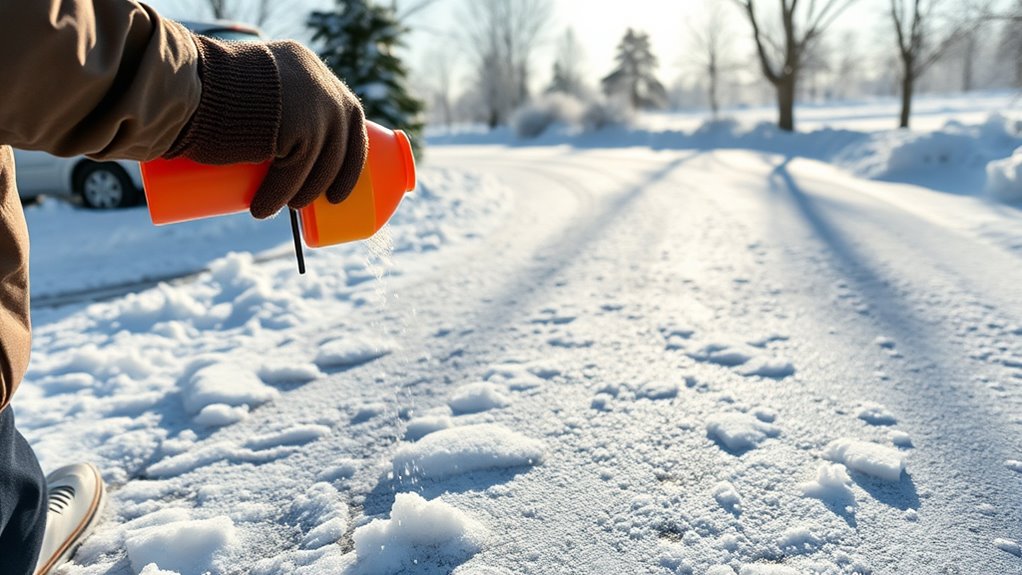
7 Tips for the Best Time to Salt Your Driveway
If you’ve ever struggled to keep your driveway safe during winter, you’re not alone. Many people find it tricky to figure out the best time to salt, hoping to avoid ice without wasting product. Proper timing can make all the difference in safety and efficiency.
To get the best results, apply salt just before snow or after shoveling, when temperatures are above 20°F. Clear loose snow and debris first for better contact. Use weather forecasts to time your salting, aiming for consistent cold spells.
Avoid applying during rain or after snow starts melting, as it reduces effectiveness. Reapply during long cold periods to maintain safety.
If you want to master ideal salting times, keep exploring for more helpful tips.
Key Takeaways
- Apply salt just before snowfall or after shoveling for the best results.
- Wait until temperatures are above 20°F to ensure the salt works effectively.
- Pre-treat your driveway before forecasted snow or freezing rain to get a head start.
- Reapply salt during long cold spells to keep the surface safe and slip-free.
- Make sure to remove loose snow and debris before salting. This helps the salt make better contact and melt more efficiently.
Why Timing Is Critical for Salting Your Driveway
Timing is crucial when it comes to salting your driveway because applying salt at the right moment can make a big difference.
The best time to salt is just before a snowstorm starts or right after you shovel or plow. This helps prevent ice from sticking to the surface, making it easier to remove later.
Applying salt during or after a snowstorm isn’t as effective because the snow insulates the ice, which slows down melting. It’s better to wait until temperatures are above 20°F, as salt works best then.
Waiting until snow has piled up can make removing ice harder and reduce how well the salt melts. Knowing the right moment to salt helps keep your driveway safer and ice-free with less effort.
When Are the Best Weather Conditions to Apply Salt
Knowing the right weather conditions to apply salt can make a big difference in how well it melts ice and keeps your driveway safe.
Applying salt at the right time and conditions enhances melting and safety on your driveway.
You should apply salt just before snow or ice starts to pile up, ideally when temperatures are above 20°F. This helps prevent snow and ice from sticking to the surface, making cleanup easier later.
Apply salt right after you clear snow or when the forecast shows temperatures above 20°F. This way, it works more efficiently.
Avoid applying salt during or after rain, since runoff can wash it away and harm the environment. Wait until the surface is free of loose snow or ice for the best contact and melting results.
Following these conditions maximizes salt’s effectiveness and keeps your driveway safer.
How to Prepare Your Surface Before Salting
Before applying salt, it’s important to prepare your driveway surface thoroughly to guarantee maximum effectiveness. Start by removing snow and slush with a shovel or broom to ensure better contact between the salt and the pavement.
Clear away debris, as it can interfere with salt adhesion and reduce melting efficiency. Pre-treatment is key—apply salt before a forecasted snowfall or freezing rain to prevent ice from bonding tightly to the surface.
Make sure the driveway is dry and free of moisture since salt works best when it can lower the freezing point effectively. Use a broom or spreader to distribute a thin, even layer of salt across the entire surface.
Proper preparation helps your salt work more efficiently, saving you time and effort in melting ice.
How to Know the Right Time to Salt Based on Weather Forecasts
Keeping an eye on weather forecasts helps you time your salting effectively. Check temperature trends and look for signs of upcoming snow or ice so you can act before conditions get worse.
Avoid applying salt during rain because runoff can wash it away, making it less effective. Waiting for dry, cold weather is usually the best approach to get the job done right.
Monitor Temperature Trends
Monitoring temperature trends is key to timing your salt application just right. By keeping an eye on how temperatures change over several hours, you can see if it’s staying below freezing, which means you might need to salt.
Use a digital thermometer or a weather app to get real-time surface and air temperatures. When forecasts predict temperatures below 20°F, it’s a good idea to apply salt ahead of time because salt doesn’t work well below that point.
Watch upcoming weather forecasts and see if the cold sticks around for a while. Applying salt when the trend shows sustained cold helps prevent ice from forming and keeps your driveway safer and clearer.
Check Weather Predictions
Checking the weather forecast is essential for timing your salt application effectively. By staying informed, you can anticipate snow or freezing rain and act just before these conditions hit. Use weather alerts and apps to get real-time updates, making sure you don’t miss the ideal window.
Apply salt when a forecast predicts freezing rain or snow, especially if temperatures are expected to stay below 20°F. Avoid salting too early when temperatures are above 32°F, as salt won’t work well then.
Monitoring temperature trends and weather predictions helps you prevent ice from bonding to your driveway. Stay alert to changing conditions to keep your surfaces safe and clear.
Watch for Rain Signs
How can you tell the right moment to salt your driveway when rain is on the way? Watch for rain signs in the weather forecast to figure out the best time to apply salt.
If rain is predicted soon, it’s best to put down salt just before it starts. Heavy rain within an hour can wash away the salt quickly and make it less effective at melting ice.
Checking weather alerts for rain can help you time your salting perfectly, so the salt stays on the surface long enough to do its job.
When to Apply Salt During Snow or Freezing Rain
1. Apply salt before the first snow or freezing rain for the best results.
This helps prevent ice from forming on your driveway or sidewalks.
2. Reapply salt during long cold spells to keep surfaces safe and ice-free.
Don’t wait until the ice gets thick—regular applications help maintain safety.
3. Use ice melt when temperatures are above 20°F for optimal effectiveness.
Below that, salt and ice melt might not work as well, so plan accordingly.
Timing your salt application just right keeps your driveway safer and prevents slipping longer.
What’s the Ideal Temperature for Different Ice Melts
Choosing the right ice melt depends on the temperature conditions you’ll face. For warmer conditions above 15°F, rock salt works well for melting ice, making it a popular choice for most winter days.
Choose ice melt based on temperature: rock salt above 15°F, calcium chloride for colder conditions.
When temperatures drop below that, it’s less effective, so you’ll need a different type of ice melt. Calcium chloride is great down to about -25°F, which makes it perfect for extremely cold weather.
Magnesium chloride remains effective as low as 0°F, but its performance drops off below that. Calcium magnesium acetate isn’t suitable below 20°F, so it’s limited in severe cold.
Picking the right ice melt for your specific temperature range ensures you melt ice effectively and keep your driveway safe. Knowing the ideal temperatures for these products helps you choose the best one for the job.
Common Mistakes That Reduce Salt Effectiveness and How to Avoid Them
Have you ever sprinkled salt only to find it didn’t melt the ice as expected? Common mistakes can make your efforts ineffective.
First, applying salt after snow has already built up won’t break through thick ice layers. It’s better to salt early or before a storm hits.
Second, over-salting or applying salt too early can cause runoff and harm the environment without actually helping. Use the right amount at the right time.
Third, spreading salt unevenly or in big clumps leads to inconsistent results, leaving some spots untreated. Try to spread it evenly for the best effect.
Also, using salt when temperatures are below its effective range, like under 20°F for rock salt, reduces its ability to work. Check the temperature before salting.
Finally, not shoveling snow before salting stops the salt from making good contact with the ice. Clear away as much snow as you can first.
Avoid these mistakes to make sure your salt works efficiently and keeps your driveway safe.
Frequently Asked Questions
Should I Salt the Driveway at Night or Morning?
You should salt your driveway in the morning, preferably before temperatures drop below 20°F. This helps maximize melting before traffic and snowfall, reducing ice buildup.
If you salt at night, it might be less effective if temperatures fall further, causing snow to accumulate again.
Salting during the day or early morning guarantees the surface is treated at the right time, keeping your driveway safer and reducing unnecessary salt use.
Does Salting Your Driveway Ruin the Concrete?
Salting your driveway can damage concrete over time, like a slow leak that erodes a pipe. Sodium chloride penetrates and weakens the surface, especially with frequent or early applications.
I once watched a neighbor’s driveway crack after heavy winter use. To protect your concrete, limit salt use, apply it during the warmest part of the day, and consider less damaging alternatives.
Proper timing and moderation are key to avoiding long-term harm.
At What Temperature Should You Salt Your Driveway?
You should salt your driveway when temperatures are above 20°F, as common salts work best then. If it’s colder than that, especially below 15°F, consider using calcium chloride, which remains effective down to -25°F.
Applying salt before a storm starts helps prevent ice from bonding. Avoid salting during extreme cold, as it won’t melt the ice efficiently and could waste your time and resources.
When Not to Salt a Driveway?
You shouldn’t salt your driveway during or right before rain because runoff can pollute waterways. It’s best to avoid salting when it’s raining or about to rain.
Don’t salt when temperatures are above 32°F and there’s no ice or snow. It’s just unnecessary and can damage your driveway surface.
Also, skip salting after a storm has ended and snow has piled up, since salt works best on ice, not solid snow or ice that’s already formed.
Finally, don’t salt on windy days. The wind can blow the salt away before it has a chance to do its job.
Conclusion
Think of salting your driveway like tending a garden. You want to strike when the conditions are just right. Timing is your secret weapon against icy chaos, making sure your efforts don’t go to waste.
By understanding the weather, preparing properly, and avoiding common mistakes, you become the master gardener of your driveway. When you get it just right, your driveway will shine like a well-tended path, ready to welcome you safely after every snowstorm.
Getting the timing right for salting is key to keeping your driveway safe and ice-free.