How to Keep Dogs Safe in Salt Water Pools
Many dog owners worry about keeping their furry friends safe during pool time, especially with saltwater pools becoming more popular. If you’re one of those people, you’re not alone—lots of pet parents struggle with how to protect their pups while they enjoy swimming.
To keep your dog safe in a saltwater pool, supervise them at all times and limit their swimming time. Provide fresh water nearby to prevent saltwater ingestion and avoid dehydration.
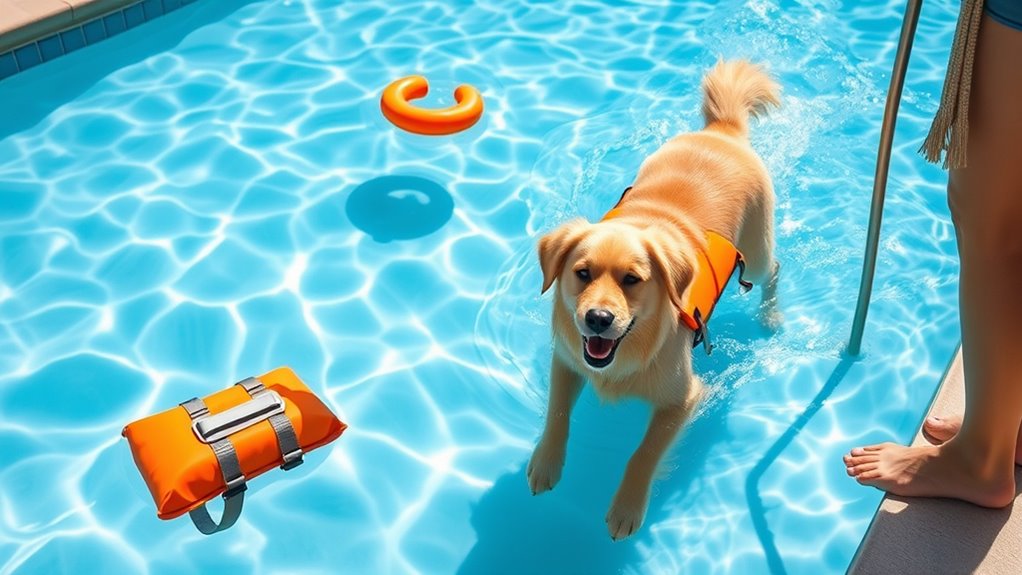
Use safety gear like life vests and ramps, and rinse your dog with fresh water after swimming. Watch for signs of discomfort, such as skin irritation or behavioral changes.
For more tips on ensuring your dog stays safe, find essential safety strategies and precautions.
Key Takeaways
- Supervise your dog at all times to prevent them from swallowing too much saltwater.
- Keep fresh drinking water nearby so your dog can stay hydrated and dilute the salt intake.
- Make sure your dog has a properly fitted life vest, and provide ramps and non-slip surfaces for safe entry and exit.
- Rinse your dog immediately after swimming to wash off the salt residue and protect their skin and eyes.
- Keep an eye out for any signs of discomfort or health issues. If you notice anything unusual, don’t hesitate to contact your veterinarian.
Are Saltwater Pools Safe for Dogs?
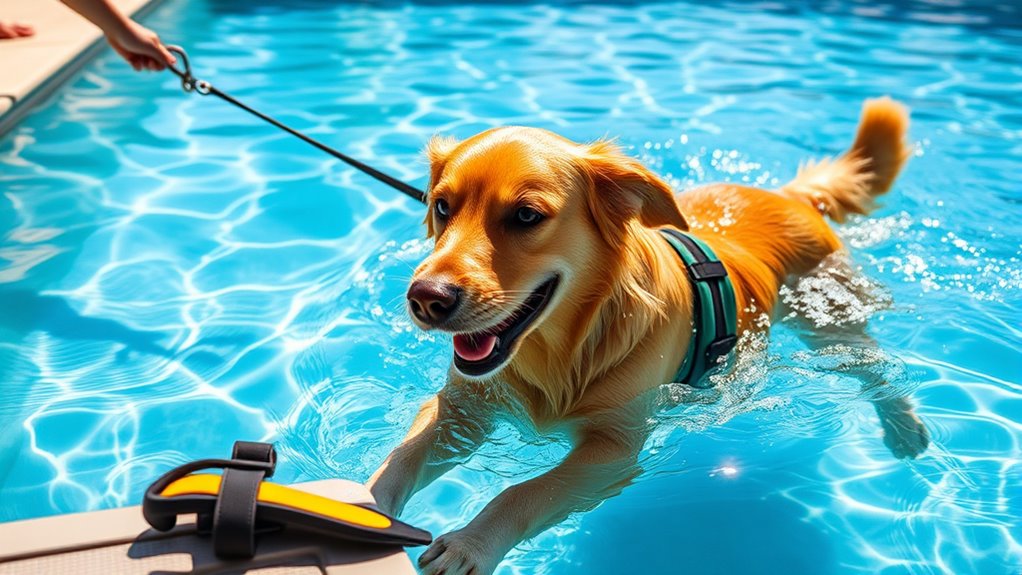
Saltwater pools are generally safer for dogs than traditional chlorinated pools because they contain lower levels of salt and fewer harsh chemicals. This makes them more tolerable for your dogs’ skin and eyes, reducing irritation.
While both saltwater pools and chlorinated pools pose risks if dogs swallow large amounts of water, saltwater pools tend to be slightly safer due to decreased chemical exposure.
However, it’s important to supervise your dog’s water consumption, as excessive salt intake can lead to dehydration, salt poisoning, and gastrointestinal issues.
Always supervise your dog while swimming and limit their time in the water. Proper oversight ensures their safety, allowing them to enjoy the pool without risking health problems related to water intake or salt levels.
How Do Saltwater Pools Differ From Traditional Chlorinated Pools?
While saltwater pools are often considered a safer option for your dog’s skin and eyes, they differ significantly from traditional chlorinated pools in how they keep the water clean.
Saltwater pools use a salt concentration of around 3,000 ppm, which is about 10% of ocean water, to generate chlorine.
Saltwater pools use about 3,000 ppm of salt to generate chlorine naturally.
Chlorine generators produce chlorine through electrolysis, so you don’t have to add chemicals manually as much.
They also need less chemical balancing because the chlorine levels stay more stable compared to traditional pools.
The salt stays dissolved in the water, making it gentler on skin and eyes, although some chlorine is still produced as a byproduct.
These differences make saltwater pools feel more natural, but understanding how they work is key to keeping your dog safe.
What Are the Risks of Saltwater for Dogs?
Although saltwater pools are often seen as a gentler alternative to traditional chlorinated pools, they still pose significant health risks for dogs. Saltwater can cause dehydration if your dog swallows large amounts, leading to sickness and diarrhea.
Excessive salt intake from the pool may result in salt poisoning, which can be fatal if not treated. Plus, saltwater can irritate your dog’s skin and eyes, causing discomfort and increasing the risk of infections.
Ingesting high quantities of saltwater can also disrupt electrolyte balance and cause gastrointestinal upset. While small amounts are generally safe if supervised, frequent or large ingestion poses serious health risks.
Being aware of these dangers helps you better protect your dog from the potential harms of saltwater pools.
How Can You Keep Your Dog Safe in Saltwater Pools?
Keeping your dog safe around saltwater pools requires vigilance and proactive measures. First, always supervise your dog when they’re in or near the pool to prevent them from swallowing too much saltwater.
Supervise your dog around saltwater pools to prevent swallowing excessive saltwater and ensure their safety.
Second, provide fresh water nearby to encourage your dog to drink that instead of pool water. This can help dilute any salt they might ingest.
Third, consider using a doggy life vest and a ramp or steps. These make entering and exiting the pool easier and safer, reducing the risk of drowning.
Finally, rinse your dog with fresh water immediately after swimming. Doing this removes salt and helps prevent skin and eye irritation.
What Safety Equipment Should You Use for Your Dog?
To keep your dog safe in the pool, make sure you have a well-fitting life vest that keeps them afloat and reduces fatigue.
You should also provide accessible ramps or steps designed for dogs so they can exit easily and safely.
Furthermore, using durable, non-slip mats around the pool can prevent slips and injuries.
Properly Fitted Life Jackets
Selecting the right life jacket is essential for keeping your dog safe in salt water pools. A well-fitting dog life jacket provides buoyancy and support without restricting movement.
To ensure safety, follow these key points:
- Choose a life jacket with adjustable straps to get a snug, secure fit.
- Look for a model with a handle on the back for easy lifting and control.
- Make sure the material is buoyant, quick-drying, comfortable, and durable.
- Measure your dog’s girth and neck circumference carefully to pick the right size.
Regularly check the life jacket for signs of wear or damage. Proper fit is crucial for your dog’s safety and confidence in the water.
Accessible Pool Ramps
When introducing your dog to a saltwater pool, using a sturdy and non-slip ramp can make all the difference in ensuring safe and easy entry and exit. A well-designed dog ramp supports your dog’s weight and features slip-resistant surfaces, reducing the risk of falls and making pool safety easier.
Look for a ramp with an adjustable height and gentle incline to fit different pool depths and dog sizes. This makes secure entry effortless and more comfortable for your pup. Attach the ramp firmly to the pool edge to prevent shifting or slipping during use.
Regularly check the ramp for wear or damage and replace it if needed. This helps maintain safety and stability for your furry friend. A reliable, slip-resistant dog ramp gives you peace of mind and keeps your dog safe in the water.
Durable Floating Toys
Ensuring your dog’s safety during water play means choosing the right floating toys—those made from durable, non-toxic materials that can stand up to chewing and water exposure.
Select floating toys specifically designed for dogs, making sure they’re the right size to prevent choking. Always supervise your dog while they play with floating toys to reduce the risk of choking or swallowing small parts.
Regularly check the toys for signs of wear or damage, and replace them if you notice tears or broken seams. Opt for floating toys with secure closures or seams to keep them intact during water play.
Prioritizing durable, safe floating toys improves water safety, keeps your dog engaged, and helps prevent accidents in salt water pools.
How Do You Prevent Saltwater Ingestion and Skin Irritation?
To prevent your dog from ingesting saltwater and getting skin irritation, make sure fresh water is always available nearby.
Rinse your dog thoroughly after swimming to wash away salt residue, and use dog-safe ear cleaners to prevent infections.
Limiting swimming time and training your dog to choose clean water over pool water can also make a big difference.
Provide Fresh Water Regularly
Providing fresh water nearby is essential to prevent your dog from drinking saltwater, which can cause stomach upset and skin irritation. To encourage this, you should:
- Place multiple water bowls in different spots so your dog can easily access fresh water whenever they want.
- Try offering flavored or diluted water, like chicken broth, to make drinking fresh water more tempting than pool water.
- After swimming, rinse your dog thoroughly with fresh water to wash away salt, chemicals, and irritants.
- Keep practicing commands that encourage your dog to drink from their designated bowls instead of the pool water.
Use Protective Pool Accessories
How can you minimize your dog’s saltwater intake and protect their skin during pool time? Using the right protective accessories can make a big difference.
A doggy life vest keeps your pup afloat, helping prevent them from swallowing too much saltwater. A pool ramp or steps makes it easier for your dog to get out quickly, reducing their contact with salt on their paws and skin.
Protective goggles are great for shielding their eyes from irritation and stinging caused by saltwater. Applying waterproof ointments or balms creates a barrier that helps prevent dryness and irritation on their paws and skin.
Here’s a quick overview:
| Accessory | Purpose | Benefit |
|---|---|---|
| Doggy life vest | Keeps dog afloat and prevents ingestion | Safer swimming experience |
| Pool ramp | Facilitates quick exit | Less skin exposure |
| Protective goggles | Shields eyes from saltwater | Prevents irritation |
| Waterproof ointments | Protects paws and skin | Reduces dryness and irritation |
| Regular rinsing | Washes away salt residue | Maintains healthy skin |
What Are the Signs Your Dog Is Uncomfortable After Swimming?
If your dog seems uncomfortable after swimming in a saltwater pool, there are certain signs to watch for that shouldn’t be ignored. Recognizing these signals can help you prevent more serious issues.
Look for skin irritation, excessive scratching, or paw licking. These can indicate your dog is reacting to the saltwater and feeling uncomfortable.
Keep an eye on your dog’s eyes. Persistent redness, squinting, or tearing are signs of irritation or pain that need attention.
Notice if your dog avoids the pool area or seems reluctant to re-enter the water. That’s often a clear sign they’re not feeling right.
Be alert for behavioral changes like restlessness, whining, or trouble settling down. These can suggest your dog isn’t feeling well after swimming.
Pay attention to these cues to help keep your dog comfortable and healthy after a swim.
When Should You Contact a Veterinarian About Your Dog’s Pool Safety?
You should contact a veterinarian immediately if your dog shows any signs of salt poisoning, such as vomiting, diarrhea, excessive thirst, or lethargy after swimming in a saltwater pool. These symptoms mean your dog might have ingested too much salt or water, which can be very serious.
Seek veterinary care promptly if your dog struggles with breathing, has persistent skin irritation, or develops ear infections after being in the pool. It’s important to get help quickly to prevent further health issues.
If your dog ingests a large amount of pool water and shows signs like dehydration, electrolyte imbalance, or seizures, contact a vet right away. These are urgent signs that your dog needs professional care immediately.
Also, reach out without delay if your dog shows signs of water intoxication, such as disorientation, bloating, or loss of coordination. Any unusual behavior or health concerns after swimming should prompt a vet visit.
Frequently Asked Questions
Is It Safe for Dogs to Go in Saltwater Pools?
Yes, dogs can go in saltwater pools safely if you supervise them closely. Keep an eye on how much saltwater they swallow, as ingesting too much can cause health issues like salt poisoning or dehydration.
Offer fresh water nearby to encourage drinking there instead. Remember, some breeds, especially flat-faced ones, may struggle with swimming, so always monitor their activity and avoid letting them get overwhelmed.
What Is the 10 Minute Rule for Dogs?
The 10-minute rule for dogs means you should limit their time in the saltwater pool to around 10 minutes. You do this to prevent exhaustion, dehydration, and saltwater ingestion.
After that, give your dog a break, offer fresh water, and watch for signs of fatigue or distress. This helps keep your dog safe, especially if they’re not natural swimmers or unfamiliar with saltwater environments.
What Words Do Dogs Hear Best?
You might be surprised, but dogs hear certain words almost instantly. Sharp, clear commands like “sit,” “stay,” and “come” really grab their attention.
Words with distinct sounds, especially those including their name or a specific tone, cut through distractions.
Keep your commands simple and repeat them often with positive reinforcement.
When you use these words consistently, your dog quickly learns what you want, making safety and training much easier.
Can a Dog Smell a Drop of Blood in a Swimming Pool?
Yes, your dog can smell a drop of blood in a swimming pool. Their highly sensitive sense of smell allows them to detect even faint chemical scents like blood, especially if the concentration is higher or the water is still.
Because they use their nose for tracking and detecting injuries, your dog will likely pick up on the blood’s scent from a considerable distance. That’s why it’s important to monitor them around pools with potential blood traces.
Conclusion
While saltwater pools are often thought to be safer than traditional chlorinated pools, it’s a myth that they’re completely risk-free for dogs.
With proper precautions like watching your pup closely, providing fresh water, and preventing ingestion, you can keep your canine safe and happy during pool time.
Remember, even “natural” options still need your vigilance. Trust your instincts, watch for signs of discomfort, and ask your vet if you’re unsure.
Your dog’s safety depends on it, especially when it comes to saltwater pools.