Which Salt Is Best for Water Softener?
Are you tired of dealing with hard water that leaves your skin dry, your dishes spotty, and your appliances sluggish? Many people struggle with choosing the right salt for their water softener, unsure which option will keep their system running smoothly. You’re not alone—finding the best salt can feel overwhelming with so many choices out there.
The best salt for your water softener depends on your water hardness and system guidelines. High-purity options like evaporated or solar salt are recommended because they dissolve well and leave fewer residues, reducing system buildup.
Avoid lower-quality salts like rock salt, which can cause clogs and damage. Using the right salt and maintaining proper levels help your softener work efficiently and last longer.
To learn more about selecting and maintaining the ideal salt, keep exploring the details.
Key Takeaways
- Evaporated salt pellets, which are about 99.9% pure, are great for very hard water. They dissolve quickly and leave minimal residue, making them a popular choice.
- Using high-purity salts like evaporated or solar salt can help reduce system buildup and boost efficiency.
- It’s a good idea to follow your water softener manufacturer’s recommendations for the type of salt to use. This ensures your system works at its best.
- Keep an eye on your salt levels and refill so they stay between a quarter and a half full. This helps prevent bridging and keeps everything running smoothly.
- If you’re looking for a low-sodium option, potassium chloride is a good alternative. Just know that it might require some adjustments to your system.
How to Choose the Right Water Softener Salt for Your Needs
Choosing the right water softener salt depends on your water’s hardness level and your maintenance preferences. High-purity salts like evaporated or solar salt help minimize residue and reduce maintenance issues.
Selecting the right water softener salt depends on water hardness and maintenance needs for optimal system performance.
If your water is very hard, go for evaporated salt because it dissolves more efficiently. Always follow your system manufacturer’s guidelines to ensure compatibility and to keep your warranty valid.
If you’re worried about sodium intake, potassium chloride is a good low-sodium alternative. Regularly inspecting and cleaning the brine tank is important, especially when using coarse or lower-quality salts, to prevent buildup.
Choosing the right water softener salt helps keep your system running smoothly, prevents clogs, and extends its lifespan.
Understanding Water Hardness and Your Softener’s Requirements
Understanding water hardness is key to making sure your softener works properly because it affects how well the system performs and what type of salt you should use.
Water hardness, measured in grains per gallon (GPG) or parts per million (PPM), shows how many minerals are in your water. Anything above 7 GPG is considered hard water.
To meet your softener’s needs, pick a salt that matches your hardness level. High-purity salts like evaporated or solar salt are great for handling specific hardness levels efficiently.
Harder water with more minerals means you’ll need to regenerate your system more often and use better-quality salt to keep it running smoothly.
Always follow your manufacturer’s guidelines to choose the right salt type and amount. This helps your system perform at its best and last longer.
Types of Water Softener Salt: Pros and Cons Made Simple
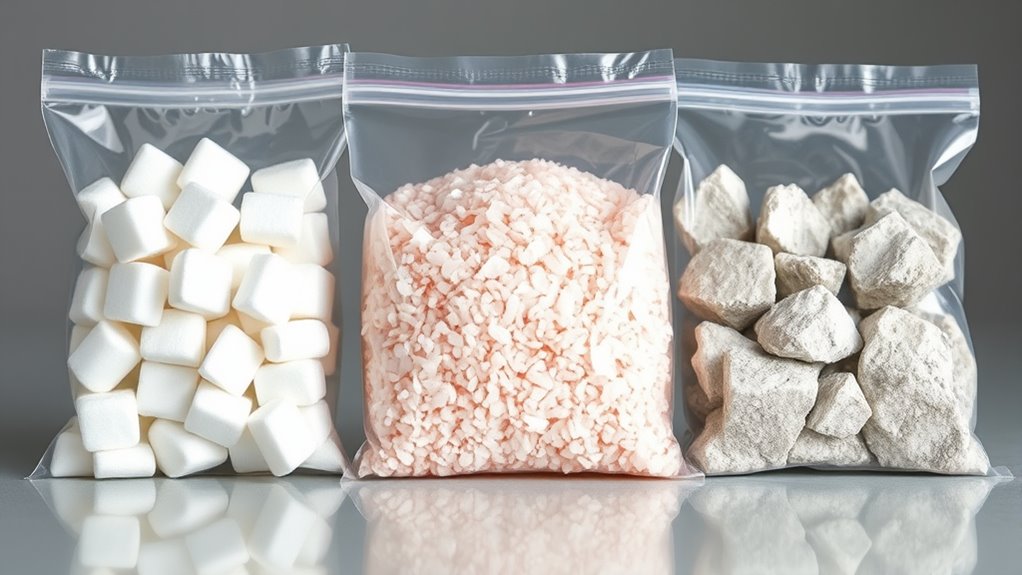
There are several types of water softener salt, each with its own advantages and disadvantages. Evaporated salt pellets are the purest at 99.9%, dissolving quickly and reducing residue, which helps keep your water softener running smoothly.
Solar salt, made by evaporating seawater, is eco-friendly and about 99.6% pure but can leave dust or brown rings over time. Rock salt is less refined, contains impurities like calcium sulfate, and isn’t recommended unless it’s your only option.
Potassium chloride is a sodium-free alternative but costs more, is less efficient, and may require adjusting your softener’s regeneration settings. Higher-quality salts like evaporated or solar minimize issues like bridging and mushing, leading to better, cleaner softener operation.
How to Pick the Best Salt for Your Water and System
Selecting the right salt for your water softener depends on both your water quality and your system’s requirements.
Choosing the right water softener salt depends on your water quality and system needs.
To ensure the best performance, choose high-quality salt with at least 99.6% purity, like evaporated or solar salt. This helps reduce residue and maintenance issues.
Match the salt type to your water hardness. Use evaporated salt for very hard water, and only consider rock salt as a last resort. Always follow your manufacturer’s recommendations to avoid damaging your system.
If lowering sodium intake is important, potassium chloride is an option. However, it’s more expensive and less efficient.
Regularly clean your brine tank and monitor salt levels to prevent salt bridges or buildup. This helps keep your system working effectively and prolongs its lifespan.
Tips for Managing Salt Levels and Maintaining Your Softener
Keeping an eye on your salt level each month helps guarantee your softener runs smoothly without interruptions. Refill when the salt drops below a quarter full and use high-purity salts to prevent residue buildup.
To avoid issues like salt bridges, don’t overfill the tank and clean it regularly. This will help keep your system performing at its best.
Monitoring Salt Levels
Monitoring your salt levels regularly is essential to make sure your water softener works properly. Check the salt level in your brine tank at least once a month, and keep it above the minimum recommended level.
Refill the tank before it’s completely empty to prevent hard water issues and keep the softening process running smoothly. Keep the salt level between 1/4 and 1/2 full to avoid problems like salt bridging and mushing.
Using high-purity salt, ideally 99.9%, helps reduce residue buildup and cuts down on maintenance. Also, make sure to clean the brine tank every 6 to 12 months to remove dust, sediment, and prevent salt bridges.
Preventing Salt Bridges
Have you ever had trouble with your water softener because of salt bridges? These are hard crusts that form when moisture gets trapped under too much salt, creating a bridge that blocks the salt from dissolving properly.
To prevent salt bridges, keep the salt level in the brine tank between 1/4 and 1/2 full. Don’t overfill, because too much salt can create a hard crust that leads to bridging.
Using high-quality, moisture-free salt can really help reduce the risk of salt mushing or bridges. Regularly cleaning the tank every 6 to 12 months also helps remove salt buildup and keeps everything working smoothly.
Regular Tank Cleaning
How often do you clean your brine tank? Regular tank cleaning is key to keeping your water softener working well.
You should clean the brine tank every 6 to 12 months to get rid of salt buildup, dust, sediment, and residue. This is especially important if you use coarse or solar salts.
Check the salt levels monthly and refill before the tank is completely empty. This helps prevent system malfunctions.
Use high-purity salts like evaporated or solar salt to reduce residue and avoid salt bridges and mushing.
Be careful not to overfill the tank, as it can cause salt bridging and make salt dissolve less effectively.
Regularly inspect the tank for clogs or salt bridges to ensure smooth regeneration and good softening performance.
Proper tank cleaning keeps your system running smoothly and helps it last longer.
When to Use Special Additives or Alternative Salts Like Potassium Chloride
You should consider using special additives or alternative salts like potassium chloride when your water has specific issues or you have health concerns. For example, if you’re dealing with iron or manganese buildup, salt additives like Iron Out or Rescare can help improve the water softening process.
Potassium chloride is a sodium-free alternative suitable for low-sodium diets or health-conscious households. Keep in mind, using potassium chloride may require adjusting your softener’s regeneration settings because it’s slightly less efficient than sodium chloride.
Here’s a quick comparison:
| Use Case | Recommended Salt or Additive |
|---|---|
| Iron or manganese buildup | Special additives like Iron Out |
| Low-sodium diet | Potassium chloride |
| Resin cleaning | Resin cleaners, follow manufacturer’s instructions |
| Temperature fluctuations | Be cautious; may cause hardening or dissolution issues |
Avoid These Common Water Softener Salt Mistakes
Avoiding common water softener salt mistakes is key to keeping your system running smoothly. One mistake is overfilling the brine tank, which can cause salt bridging. This solid salt build-up blocks the flow of brine and prevents proper regeneration.
Switching salt types before the tank is low can also cause issues. It may lead to uneven dissolving, which reduces efficiency. Using low-purity salts like rock salt can introduce contaminants and cause buildup in the tank.
Relying on table salt or additives not designed for softeners can clog the system and cause damage. Regularly cleaning the brine tank is important—neglecting this allows dust, mineral deposits, and impurities to build up, lowering softener performance.
Avoiding these mistakes helps ensure your system regenerates properly and keeps working efficiently.
Frequently Asked Questions
Does It Matter What Water Softener Salt I Get?
Yes, it matters what water softener salt you get because the wrong type can cause system issues, reduce efficiency, and lead to more maintenance.
High-quality salts like evaporated or solar salt help prevent residue buildup and tank problems.
Always follow your system’s manufacturer recommendations and consider your water hardness.
Using the right salt guarantees your softener works effectively, lasts longer, and keeps your water quality high.
What Is the Difference Between the Yellow and Blue Bag of Water Softener Salt?
You get what you pay for, so choosing the right salt matters. The yellow bag offers highly purified pellet or solar salt, which dissolves easily and requires less maintenance. It’s a great choice for very hard water.
The blue bag contains coarser, less processed salt. It might leave some residue and need more cleaning over time.
Pick the yellow bag if you want high efficiency and minimal hassle. But go for the blue if you’re on a budget and okay with a bit more upkeep.
Does Water Softener Help With Mold?
Water softeners don’t directly kill mold, but they can help prevent it by reducing excess moisture and mineral buildup around leaks or damp spots. Softened water also improves indoor air quality by limiting mineral deposits that mold spores feed on.
To effectively control mold, you should keep areas dry and well-ventilated, regularly clean and disinfect, and fix leaks promptly. Softening water alone isn’t enough.
Which Is Better Softener, Salt Pellets or Crystals?
Pellet salt is your best choice, acting like a steady drumbeat for your water softener. It dissolves faster and more evenly, reducing clogs and buildup, which keeps your system running smoothly.
Because it’s cleaner and purer, it causes less maintenance and fewer issues over time. Crystals, on the other hand, can cause blockages and need more frequent cleaning.
Conclusion
Choosing the right water softener salt isn’t just about preferences; it’s about making an informed decision that benefits your system and water quality. Remember, “A stitch in time saves nine,” so regularly maintain and monitor salt levels to keep everything running smoothly.
By understanding your needs and selecting the proper salt type, you’ll enjoy better water softening results and extend your system’s lifespan. The best salt for water softeners depends on your specific setup, water hardness, and budget.
Stay diligent with your maintenance, and your water softener will perform at its best. Choosing the right salt for water softeners makes all the difference in keeping your water clean and your system running efficiently.