
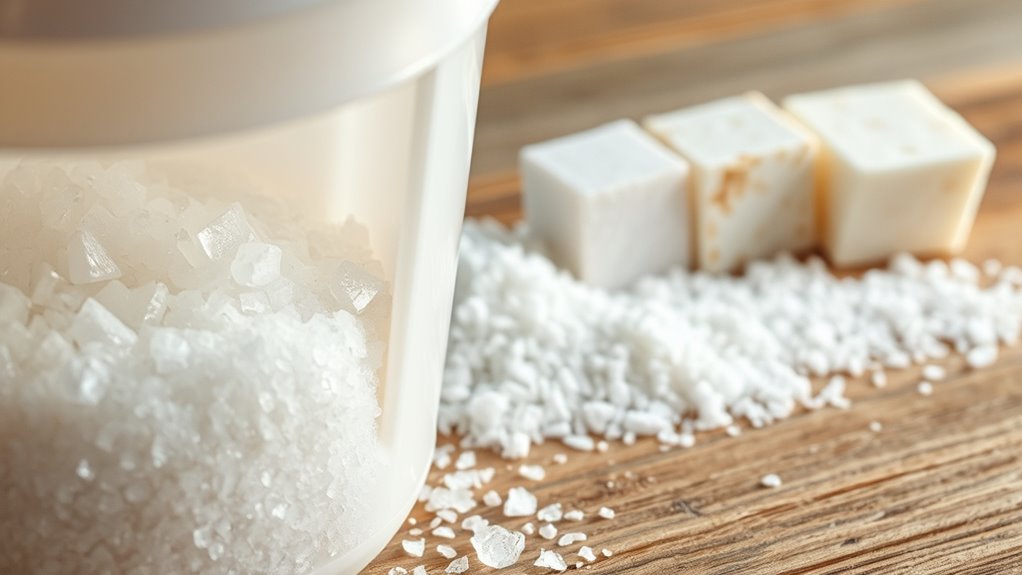
How to Choose the Right Kind of Salt for Your Culligan Water Softener
Many people struggle with finding the right salt for their Culligan water softener, especially with so many options out there. It can be confusing to choose a salt that keeps your system running smoothly and efficiently. You’re not alone—selecting the best salt is a common concern among homeowners.
To choose the right salt for your Culligan water softener, consider its compatibility and your water quality needs. Opt for high-purity salts like evaporated or solar salt pellets to prevent buildup and guarantee efficient softening.
Avoid low-quality salts like rock salt, which can cause bridging and maintenance issues. If you need to reduce sodium, potassium chloride is a good option, but it’s pricier. Exploring these options further will help you maintain a reliable, effective system.
Key Takeaways
- Use high-purity evaporated salt to keep residue to a minimum and ensure your softening works at its best.
- Make sure the salt type you choose is compatible with your Culligan system specifications.
- Think about your water hardness, iron levels, and budget when picking the right salt for your needs.
- It’s best to avoid table salt or low-quality rock salt, as these can cause damage to your system.
- Regularly check your salt levels and clean the brine tank to keep everything running smoothly.
How Can You Tell Your Water Is Hard and Why It Matters
How can you tell if your water is hard? Hard water contains high levels of minerals like calcium and magnesium, which you can detect with a water test kit.
Hard water has high calcium and magnesium levels—detect with a water test kit.
If you notice persistent mineral deposits on fixtures, soap scum buildup, or soap doesn’t lather well, these are signs of water hardness.
Water is considered hard when its hardness exceeds 7 grains per gallon or 120 mg/L. This indicates it needs softening.
Knowing your water hardness level helps you choose the right softening approach and salt type for your Culligan system.
High mineral content can damage appliances and plumbing over time, so it’s essential to monitor your water hardness regularly.
Doing so keeps your system running efficiently and helps prevent costly repairs.
What Are the Key Factors to Consider When Choosing Softener Salt
- Purity level is important to prevent residue buildup and ensure your system works efficiently.
- Choose the right salt types for proper dissolution and better performance.
- Make sure the salt you pick is compatible with your system’s specifications.
- Consider adjustments based on your water hardness and iron content for optimal results.
Which Water Softener Salt Types Are Best for Your Culligan System
Choosing the right salt type for your Culligan water softener depends on balancing efficiency, cost, and system compatibility. Evaporated salt pellets, with their 99.9% purity, are ideal for minimizing residue and maximizing performance.
Solar salt, made from seawater, offers a budget-friendly option but has slightly lower purity at around 99.6%. It may also dissolve less efficiently in hard water.
Rock salt contains impurities like calcium sulfate, which can cause bridging and mushing. This makes it less suitable for most systems.
Potassium chloride is a good alternative if you’re aiming to reduce sodium intake. However, it’s pricier and may require some system adjustments.
Use the table below to compare your options:
| Salt Type | Purity | Cost | Compatibility | Notes |
|---|---|---|---|---|
| Evaporated salt pellets | 99.9% | Higher | Highly compatible | Best for efficiency |
| Solar salt | ~99.6% | Moderate | Generally compatible | Lower cost, slightly less dissolving |
| Rock salt | Impure | Low | Not recommended | Causes bridging and mushing |
| Potassium chloride | Varies | Higher | Compatible, check system | For low-sodium diets |
Why Salt Purity and Quality Impact Your Water Softening Effectiveness
The purity and quality of salt you use directly influence how well your water softener works. High-quality salt, like evaporated salt, contains 99.9% sodium chloride, which minimizes impurities that can cause buildup.
Impurities from low-quality salts can lead to insoluble particles, causing bridging, mushing, and more maintenance. Using better salt helps ensure consistent regeneration and keeps the resin functioning properly.
It also helps keep the brine tank residue-free, prevents mineral deposits that can damage the resin, and extends your softener’s lifespan. Plus, it guarantees your system performs at its best.
Choosing high-quality, pure salt helps your system work efficiently and provides softer water over time, avoiding costly repairs and replacements.
How Compatibility Affects Your Salt Choice and System Performance
When your salt type matches your Culligan water softener’s specifications, it helps the system regenerate properly and run efficiently. Compatibility ensures the right regeneration cycles, preventing problems like bridging or mushing that can slow down performance.
Using incompatible salts, like non-approved block or rock salts, can cause buildup and residue. This can damage the resin bed and lower the system’s efficiency. Proper salt choice keeps your softening results consistent and reduces the need for maintenance.
It also helps extend your system’s lifespan by minimizing wear and tear caused by using the wrong salt. To find the best match, check your Culligan user manual or ask a professional. This way, your water softener works at its best and provides reliable, soft water.
Common Mistakes to Avoid When Selecting or Using Softener Salt
Many homeowners make mistakes that can harm their water softener’s performance, often by choosing the wrong type of salt. Using table salt or rock salt instead of designated softener salt can cause damage and reduce how well the system works.
Overfilling the brine tank with low-quality or impure salt leads to insoluble residue buildup and clogs. Failing to check and maintain the correct salt level regularly results in inadequate regeneration and hard water symptoms.
Using salt with less than 99% purity increases mineral buildup, bridging, and sludge in the tank. Ignoring manufacturer recommendations for specific salt types can cause malfunctions and shorten your softener’s lifespan.
To avoid these issues, focus on choosing the right salt, keep an eye on salt levels, and perform regular maintenance.
Pellets, Crystals, Blocks, and Potassium Chloride: Which Salt Is Right for You?
Choosing the right type of salt for your water softener depends on your system’s needs, water conditions, and personal preferences. Water softener salt comes in different forms: pellets, crystals, blocks, and potassium chloride.
Pellets are the most common—they dissolve quickly and provide consistent softening with minimal residue buildup. Crystals are high-purity, natural salt that dissolve efficiently and support long-term system performance.
Blocks need the water level to rise for full submersion and are suitable for specific softener models. Potassium chloride is an alternative to sodium chloride, great if you’re on a low-sodium diet, though it tends to be more expensive.
Always consider your water hardness and system compatibility when choosing the best water softener salt for your needs.
How to Properly Maintain and Replenish Your Water Softener Salt
Make sure to check your softener’s salt level at least once a month and refill it before it drops below half full.
Use the manufacturer’s recommended salt to keep your system running smoothly and avoid damage. If the salt runs low or shortages happen, refill it promptly.
Consider scheduling professional checkups to keep everything working efficiently. This helps ensure your water softener stays in good shape and functions properly.
Monitoring Salt Levels
Regularly monitoring your water softener’s salt level is crucial to keep it working smoothly. Use the system’s indicator or window to quickly check the salt level without opening the brine tank.
When the salt drops below half, it’s time to refill with the recommended type and amount. This helps maintain the system’s efficiency and prevents issues like salt bridging or clogging that can affect performance.
During routine maintenance, clean the brine tank to remove any buildup that could interfere with salt dissolving properly. Keep an eye on these key points:
- Check the salt level monthly
- Use the indicator for quick monitoring
- Refill before the salt gets too low
- Avoid overfilling to prevent clogs
Consistent monitoring ensures your system runs well and helps extend your softener’s lifespan.
Refilling Strategies
How you refill your water softener’s salt tank plays a crucial role in keeping it working well. Check your salt levels monthly and refill when they drop below half to prevent system issues.
Use the recommended salt type and size to avoid residue buildup or salt crystals that can cause bridging or mushing. Be careful not to overfill or underfill the salt tank, as both can reduce softening performance and lead to maintenance problems.
If you have a large household or high water usage, consider scheduling regular salt delivery so you don’t run out unexpectedly. Periodically rinse or clean the brine tank to remove any accumulated residue, especially when using lower purity salts.
Proper refilling strategies keep your system running smoothly and extend its lifespan.
Handling Salt Shortages
When your water softener runs low on salt, it’s important to refill it quickly to keep everything working smoothly. If you run out of salt, your system might start showing hard water signs again. So, timely refills are key to restoring soft water.
Make it a habit to check the salt level regularly and refill before it drops below halfway. Using the right type of salt recommended for your system helps prevent damage or buildup. To avoid salt bridging or mushing, clean the salt tank often and choose high-quality salt.
You can also prevent surprises by scheduling regular salt deliveries or refills. Staying on top of these simple steps keeps your water softening system running at its best.
What Are the Costs, Convenience Factors, and Environmental Impacts of Different Salts
Choosing the right salt for your water softener involves weighing costs, convenience, and environmental impacts. Evaporated salt pellets cost around $10 to $15 for a 40-pound bag. They dissolve quickly and are convenient, but tend to be pricier.
Evaporated salt pellets are quick-dissolving and convenient but come at a higher cost.
Rock salt is cheaper, about $5 to $8 per 50-pound bag. However, it needs more frequent refills and can leave residues that might affect your system’s efficiency.
Solar salt, made from seawater evaporation, is environmentally friendly but less pure at around 99.6%. This lower purity can lead to increased maintenance and costs.
Potassium chloride reduces sodium intake but is roughly 50% more expensive. It also has a bigger environmental footprint because of higher energy use during production.
Each option balances cost, convenience, and environmental impact differently, so pick the one that fits your priorities.
Troubleshooting Softening Problems: What to Do When Your Water Isn’t Softening
If your water isn’t softening as it should, it’s often due to issues with the salt or the softener’s regeneration process. Low-quality or improper salt can cause problems like bridging, where salt forms a crust that blocks the brine tank, or insufficient regeneration, leaving minerals in your water.
To troubleshoot, check the salt level regularly and make sure it’s clean and free of bridging or crusting. Consider cleaning the resin bed or replacing the salt with a higher purity option if needed.
Also, perform a water hardness test to confirm if the softener is working properly. Addressing these issues quickly helps prevent mineral deposits, soap scum, and other hard water symptoms.
Frequently Asked Questions
What Is the Best Salt for Culligan Water Softener System?
The best salt for your Culligan water softener is high-purity evaporated or solar salt, with at least 99.9% sodium chloride. Using the right type helps ensure your system works efficiently.
You should use specially formulated salt pellets or cubes designed for softening systems to guarantee peak performance. These are made specifically for the job and help keep your system running smoothly.
Avoid lower-quality options like rock salt or block salt, as they can cause system issues. They may be cheaper, but they can lead to clogs and damage over time.
Regularly check and refill with the right salt to keep your system running well and extend its lifespan. Staying on top of this simple maintenance step makes a big difference.
Does It Matter What Kind of Water Softener Salt I Get?
Yes, it does matter what kind of salt you get. Think of it like the difference between a smooth, steady flow and a clogged, sluggish system—that’s what the right salt can do.
Using high-purity, evaporated or pellet salt ensures your softener runs efficiently, helping you avoid buildup and damage.
On the other hand, wrong salts like rock or block types can cause malfunctions. Picking the right salt helps your softener last longer and keeps your water quality top-notch.
Should I Use Pellets or Crystals in My Culligan Water Softener?
You should choose pellets if you want a slow, steady salt flow that reduces bridging and minimizes buildup. This is especially helpful for larger or more frequent regenerations.
Opt for crystals if you prefer faster dissolving salt for quicker regeneration cycles and easier maintenance. Consider your softener model, water hardness, and budget.
Pellets tend to be purer and last longer, while crystals are more affordable and convenient for quick, simple use.
What Is the Difference Between the Yellow and Blue Bag of Water Softener Salt?
Like choosing between gold and silver, the yellow and blue bags differ in purity and performance. The yellow bag offers high-purity evaporated salt, about 99.9%, which helps ensure cleaner softening and fewer residues.
The blue bag contains solar salt, made from seawater, which may have more impurities and can cause buildup over time. Your choice depends on your water hardness and system needs, but for the best results, the yellow bag is often the better option.
Conclusion
Choosing the right salt guarantees your Culligan water softener works efficiently and lasts longer. For example, using high-purity potassium chloride might cost more upfront, but it prevents buildup and saves you money on repairs later.
By understanding water hardness, salt types, and maintenance, you keep your system running smoothly. When you select the best salt for your needs, you enjoy soft, clean water every day—making life simpler and more comfortable.