10 Key Differences Between Wagyu Beef and Kobe Beef
Are you a meat lover constantly searching for the perfect cut of premium beef? You’re not alone—many people struggle to understand the subtle differences between top-tier options like Wagyu beef and Kobe beef. With so many choices, it’s easy to get overwhelmed trying to pick the best.
Wagyu beef includes several Japanese breeds raised worldwide, known for high marbling and tender texture.
While Kobe beef is a premium Wagyu from the Tajima strain raised exclusively in Hyogo, Japan, with strict certification. Kobe is more expensive, rare, and region-specific, with higher marbling scores and unique standards.
Wagyu offers a broader range of flavors and grades.
If you want to learn more about these luxurious meats’ differences, there’s plenty to examine below.
Key Takeaways
- Kobe beef is a special type of Wagyu from the Tajima strain in Hyogo. It has strict regional and breed standards.
- To be considered authentic Kobe, the beef must be certified and meet high marbling grades like A4 or A5. It also needs to come from a specific region in Japan.
- Wagyu is a broader term that refers to Japanese cattle breeds. These cattle are raised all over the world, and the quality can vary a lot.
- Because Kobe beef is rare and highly regulated, it tends to be more expensive and exclusive compared to general Wagyu.
- Both Kobe and Wagyu are known for their high marbling and tenderness. But Kobe puts more emphasis on luxury, regional authenticity, and a well-balanced flavor profile.
What Is Wagyu Beef and Why Is It So Special?
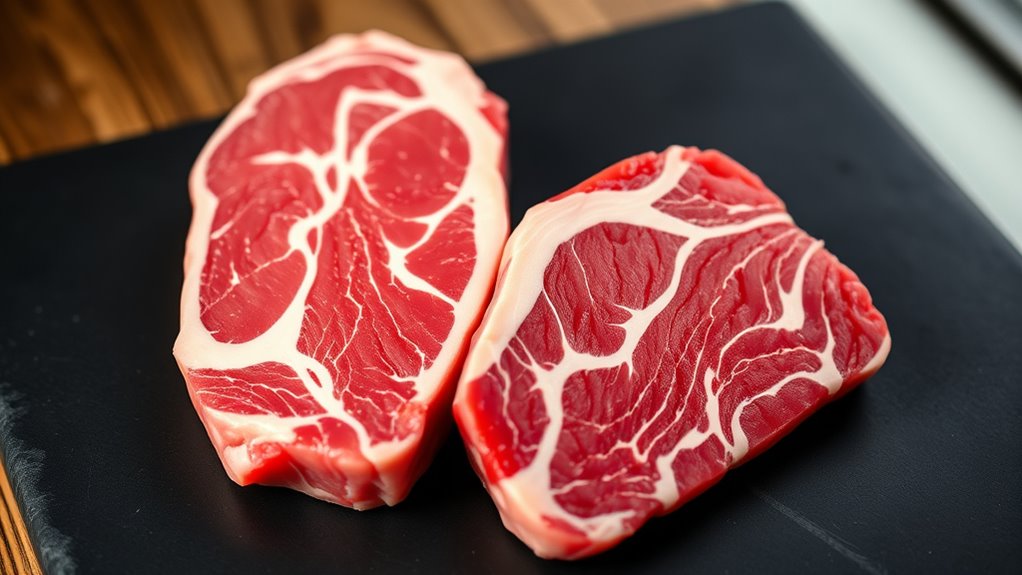
Wagyu beef is a premium type of meat that comes from four specialized Japanese cattle breeds known for their exceptional marbling and flavor. These Japanese cattle breeds, especially Japanese Black, produce meat with high intramuscular fat, creating a tender, buttery texture and rich umami taste.
Wagyu from Hyogo Prefecture, where authentic Kobe beef originates, is renowned worldwide. The highest quality Wagyu, graded A5, features extensive marbling, indicating superior meat characteristics.
This marbling results from unique genetics and meticulous Japanese farming practices, making Wagyu a luxurious, sought-after beef. While Wagyu can be raised internationally, authentic Kobe beef strictly comes from Japanese Black cattle raised in Hyogo, emphasizing its exclusivity and premium quality.
How Is Kobe Beef Different From Other Wagyu?
Kobe beef is unique because it comes from a specific region and breed, with strict standards for origin and quality.
Unlike other Wagyu, it must meet high marbling and carcass weight requirements to earn its name.
This makes Kobe a more exclusive and highly regulated type of Wagyu, often commanding higher prices.
Origin and Region
The main difference in origin between Kobe beef and other Wagyu is the strict regional and breed restrictions. Kobe beef must come solely from Tajima-strain Japanese Black cattle raised and processed in Hyogo Prefecture, Japan.
Only cattle born, raised, and slaughtered within Hyogo can be officially certified as Kobe beef. This geographical restriction makes Kobe beef highly exclusive and special.
| Region | Details |
|---|---|
| Hyogo Prefecture | The only place where certified Kobe beef is produced. |
| Tajima strain | The specific breed used for Kobe beef. |
| Regional certification | Ensures strict adherence to geographic and breed rules. |
This certification and breed verification set Kobe apart from Wagyu beef produced elsewhere.
Strict Qualification Standards
To qualify as authentic Kobe beef, cattle must meet a strict set of standards that guarantee its exceptional quality and regional authenticity. These include strict grading standards, requiring a minimum Beef Marbling Score of 6, with many Kobe cuts scoring 10 or higher.
The cattle must be Japanese Black, born, raised, and slaughtered exclusively in Hyogo Prefecture. This guarantees regional and genetic traceability. Only cattle with at least A4 or A5 grade meet the high quality benchmarks, supported by detailed certification and documentation.
Regulatory standards strictly control the process, and only about 3,000 cattle annually qualify as genuine Kobe beef. This rigorous qualification process ensures that every piece of Kobe beef maintains its reputation for superior marbling, flavor, and regional integrity.
Marbling and Quality
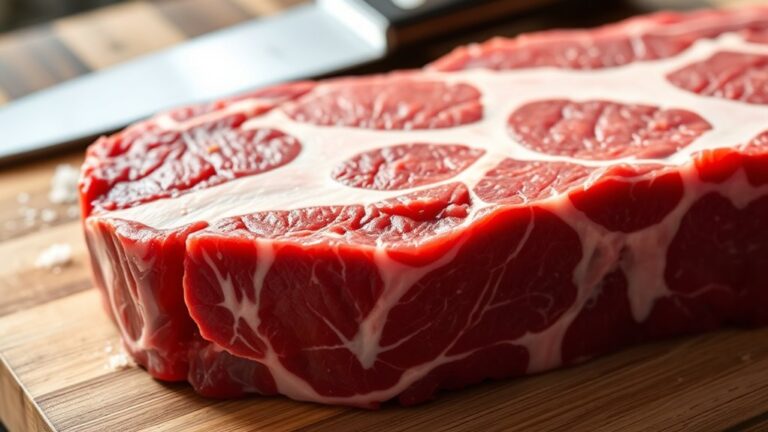
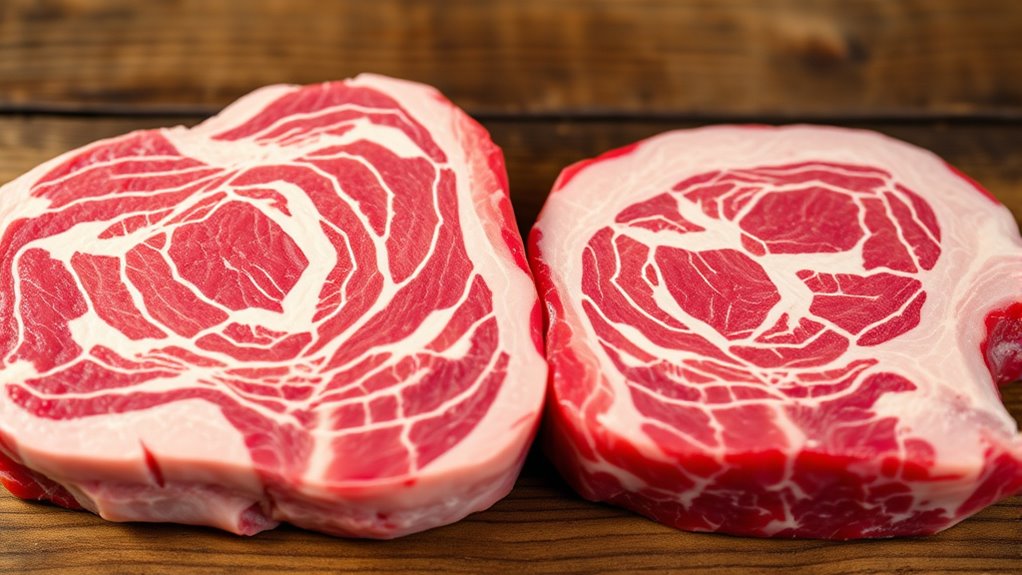
Marbling is one of the key features that make Kobe beef stand out from other Wagyu varieties. Its exceptional marbling and flavor come from higher Beef Marbling Scores (BMS), often above 10, which creates a melt-in-your-mouth texture.
Kobe beef is graded as A4 or A5, with A5 being the highest grade. This reflects superior marbling, color, and texture. The consistent and intense marbling shows the high standards of its regional raising practices and Tajima genetics.
Compared to other Wagyu, Kobe’s grading ensures a more refined, richly marbled meat. This results in a tender, buttery experience that’s hard to beat.
What Are the Main Types of Wagyu Beef?
Wagyu beef comes in several main types, each with unique breed traits and flavor profiles.
You’ll find differences in marbling, regional origins, and taste depending on the breed.
Understanding these variations helps you appreciate the diversity within Wagyu beef.
Breed Variations
Several main breeds make up the diverse world of Wagyu beef, each offering unique flavor profiles and characteristics. The most prominent is Japanese Black, which accounts for about 90% of Wagyu and is prized for its high marbling and rich umami flavor, especially in Kobe Beef. The Tajima strain, a specific lineage within Japanese Black, is highly sought after.
Japanese Brown, also called Kumamoto or Red Wagyu, is leaner with a stronger flavor and a well-balanced fat profile. Japanese Shorthorn produces leaner meat with a robust, savory taste and is often appreciated for its distinct flavor rather than marbling.
Japanese Polled Wagyu is the rarest breed, known for its rich umami and firmer texture, with less marbling compared to Japanese Black. These breed variations create the diverse spectrum of Wagyu beef enjoyed worldwide.
Regional Differences
Different regions in Japan and beyond produce distinct types of Wagyu beef, each with unique flavors and characteristics shaped by local climate, feeding practices, and breed genetics.
Hyogo Prefecture is famous for Kobe beef, derived from the Tajima strain of Japanese Black cattle. It has a highly prized regional flavor profile.
Mie Prefecture produces Matsusaka beef, known for its rich marbling and tenderness, thanks to specific local feeding practices.
Shiga Prefecture offers Ohmi beef, which benefits from traditional breed genetics and regional climate.
These regional differences create diverse flavor profiles and textures across Wagyu, reflecting local feeding practices and genetics.
Understanding these variations helps you appreciate the rich diversity of Wagyu beef beyond just Kobe.
Marbling Characteristics
The distinctive flavor and texture of Wagyu beef are largely shaped by its marbling, which is the distribution of intramuscular fat within the meat.
The main types of Wagyu, like Japanese Black, are known for their rich marbling thanks to high-quality genetics.
Japanese Black, especially the Kuroge variety, produces meat with a high marbling score, making it tender and juicy.
This fat distribution creates a melt-in-your-mouth experience, characteristic of premium Wagyu.
In contrast, breeds like Japanese Brown, Shorthorn, and Polled have less marbling, offering leaner and more robust flavors.
Kobe Beef, a subset of Japanese Black, exemplifies high marbling and sets the standard for luxurious Wagyu.
Why Is Kobe Beef So Exclusive and Expensive?
Kobe beef’s exclusivity and high price come from strict standards and limited supply. It’s only produced from Tajima-gyu cattle born, raised, and processed within Hyogo Prefecture to ensure authenticity.
Strict regulations require Kobe beef to meet specific criteria, like a minimum BMS (Beef Marbling Score) of 6 and a carcass weight limit. These rules guarantee top quality and consistency.
Only around 3,000 qualified Tajima cattle are available each year, making the supply quite rare. Authentic Kobe beef is also carefully traced and certified, which further limits its production and boosts its rarity.
As a regional delicacy known for high marbling and guaranteed origin, Kobe beef embodies luxury. Its strict standards, regional exclusivity, and high demand all contribute to its high cost and reputation as a sought-after specialty.
How Are Wagyu and Kobe Beef Graded and Certified?
You’ll find that Wagyu and Kobe beef are graded and certified based on strict standards, but Kobe’s process is more rigorous. Wagyu grading considers marbling, color, and texture.
Kobe certification emphasizes origin, breed, and marbling scores. Both follow detailed regulations to guarantee authenticity and quality.
However, Kobe’s regional and lineage requirements make it distinctly regulated. This makes the certification process for Kobe beef even more stringent.
Grading Standards and Criteria
Wagyu and Kobe beef are graded through detailed systems that assess their quality and authenticity. The Japanese Meat Grading Association evaluates carcasses based on standards for meat quality, marbling score, yield grade, and carcass weight.
Wagyu’s highest grade, A5, signifies superior meat quality, including excellent marbling and texture. Kobe beef requires a BMS (Beef Marbling Score) of at least 6 and must meet strict regional and breed criteria for authenticity. It often earns A4 or A5 grades.
The grading process guarantees consistency and value. Detailed standards guide the classification of these premium meats.
| Grading Aspect | Wagyu Standards | Kobe Standards | Certification Criteria |
|---|---|---|---|
| Marbling Score (BMS) | 1-12, A5 highest | ≥6, A4/A5 highest | Breed, region, carcass weight |
| Meat Quality | Texture, color, fat quality | Same as Wagyu | Authenticity verification |
| Yield Grade | A, B, C | A, B, C | Carcass weight, meat yield |
| Overall Grade | A1-A5 | A4 or A5 | Regional standards, breed purity |
| Certification | Japan Meat Grading Association | Same | Documentation of origin |
Certification and Authenticity Verification
Certification and authenticity verification are crucial for ensuring high-quality Wagyu and Kobe beef meet strict standards and genuine origin claims.
For Kobe beef, certification from the Kobe Beef Marketing and Distribution Promotion Association confirms its authenticity. This requires strict criteria like origin, breed, marbling score, and carcass weight.
Authentic Kobe beef must display certification labels and seals, backed by detailed documentation of breed, birthplace, and regional processing in Hyogo Prefecture.
Wagyu beef from outside Japan, such as American or Australian, often lacks this traceability and certification, making it harder to verify authenticity.
Proper certification guarantees the beef’s provenance, while traceability and certification labels help consumers distinguish genuine Kobe and Japanese Wagyu from other products.
This helps protect quality and origin claims, ensuring buyers get what they pay for.
Regional Regulations and Standards
Understanding how Wagyu and Kobe beef are graded and certified is all about regional standards that set the rules for quality and authenticity.
Kobe beef must come from the Tajima strain of Japanese Black cattle raised, fed, and processed within Hyogo Prefecture. It has to meet strict grading criteria, like an A4 or A5 grade and a Beef Marbling Score (BMS) of 6 or higher.
Certification involves verifying the breed, regional origin, carcass weight, and marbling levels. These details are sealed with a government-regulated certification mark to ensure authenticity.
Wagyu from Japan is graded by the Japan Meat Grading Association based on yield and quality, with A5 being the top standard. Outside Japan, grading standards vary, but regional origin and processing standards still matter for authentic Kobe beef.
How Do Kobe and Wagyu Beef Taste and Feel?
Kobe and Wagyu beef are both famous for being incredibly tender and flavorful, but they have subtle differences in taste and texture. Kobe beef, with its high marbling, offers a luxurious melt-in-your-mouth feel and tender bite that practically dissolves.
Kobe beef’s high marbling delivers a tender, melt-in-your-mouth experience with rich, umami flavor and a silky, luxurious texture.
Its intense marbling highlights a sweet, umami flavor that’s creamy and decadent. Wagyu, including Kobe, has a soft, silky texture and a balanced flavor with subtle nutty or beefy undertones.
The taste and feel of Kobe are quite consistent, emphasizing its premium quality. High marbling contributes to its melting tenderness and rich texture, making every bite special.
Its umami flavor adds a creamy, decadent taste, while the silky mouthfeel creates a truly luxurious experience. Overall, Kobe’s flavor profile is refined and well-balanced.
Where Can You Buy Authentic Wagyu and Kobe in the U.S.?
If you’re looking to buy authentic Wagyu and Kobe beef in the U.S., your best options are specialized high-end butcher shops, premium grocery stores, and reputable online retailers that verify their sourcing.
Look for products with official certification from the American Wagyu Association or Japanese authorities to verify authenticity. Genuine Wagyu and Kobe beef are available through trusted importers and select high-end butchers.
However, Kobe beef remains rare and is typically found only through exclusive importers or restaurants importing directly from Hyogo Prefecture. Many “Kobe-style” products are crossbred Wagyu and don’t meet strict regional standards.
Always check for traceability, proper labeling, and certification to confirm you’re purchasing authentic Kobe beef or Wagyu from reputable U.S. retailers.
What Factors Influence the Price of Wagyu and Kobe?
Several key factors drive the high prices of Wagyu and Kobe beef, with regional origin, certification, and rarity playing essential roles. Authentic Kobe beef’s limited supply—about 3,000 cattle qualify each year—significantly boosts its market value.
Strict grading standards, especially for high-grade A5 Wagyu, emphasize superior marbling and quality, which commands premium prices. Certification costs, transportation, and adherence to regional standards also add to the overall expense.
Moreover, the high demand for these luxurious meats, combined with labor-intensive farming practices, further increases their value. These factors together make Wagyu and Kobe some of the most expensive beef options out there.
Which Beef Type Is Best for Different Cooking Styles and Occasions?
Choosing the right type of beef depends on your cooking style and the occasion.
Kobe beef’s exceptional marbling and tenderness make it perfect for quick, high-heat methods like searing or grilling, which preserve its melt-in-your-mouth quality.
Kobe beef’s marbling and tenderness excel with quick, high-heat methods like searing or grilling.
Wagyu beef, with its rich flavor and firmer texture, suits delicate preparations such as sashimi or pressed dishes, where its marbling can shine without overwhelming.
For special occasions or intimate dinners, Kobe beef’s luxurious, buttery profile *raises* shared dishes like steak or shabu-shabu, emphasizing its exclusivity.
Less marbled Wagyu cuts like sirloin or flank are better suited for slow-cooking or braising, developing deep flavors in stews or pot roasts.
Both types are versatile, but Kobe often serves as the centerpiece for celebratory, indulgent meals.
Is Wagyu or Kobe Better for Your Next Special Meal?
Deciding between Wagyu and Kobe for your next special meal really depends on what you care about most: regional authenticity and exclusivity or maximum marbling and flavor. Kobe beef, made from Japanese Black cattle and certified by Kobe standards, is known as the ultimate luxury because of its strict regional origin and high standards. It’s perfect if you want an exclusive experience.
On the other hand, A5 Wagyu, regardless of where it’s from, offers similar marbling and tenderness. This makes it a versatile choice for different cuts and dishes. Kobe emphasizes authenticity and certification, while Wagyu provides great flexibility for your meal.
Kobe’s refined flavor profile is ideal for celebratory occasions. Wagyu, meanwhile, offers more options for various recipes and preparations.
Frequently Asked Questions
What Is the American Version of Wagyu Called?
The American version of Wagyu is called “American Wagyu” or “Domestic Wagyu.” You’ll often see it as crossbreeds of Japanese Wagyu and local breeds like Angus, mainly raised in Texas and California.
While some premium American Wagyu is marketed as “Kobe-style,” it’s not authentic Kobe unless it meets Japanese regional standards. This beef usually surpasses USDA Prime in marbling and tenderness, making it a high-quality alternative.
Is Wagyu Good for High Cholesterol?
Wagyu can be good for high cholesterol if you eat it in moderation. It contains healthier monounsaturated fats and omega-3 and omega-6 fatty acids, which may help improve cholesterol levels.
However, because of its high fat content, eating too much could raise LDL cholesterol. It’s best to enjoy Wagyu as part of a balanced diet and pay attention to portion sizes.
This is especially important if you’re concerned about cholesterol levels.
Is Kobe the Same as Wagyu?
You might think Kobe and Wagyu are the same, but they’re not. Imagine visiting a vineyard and tasting a specific, exclusive wine. That’s Kobe, a premium Wagyu from Hyogo with strict standards.
Wagyu covers various Japanese and international breeds, including Kobe. So, while all Kobe is Wagyu, not all Wagyu qualifies as Kobe.
Kobe’s a protected, high-quality subset within the broader Wagyu family.
Which Is Expensive, Kobe or Wagyu?
Kobe beef is more expensive than other types of Wagyu because of its strict regional standards, limited supply, and exclusive certification. When you buy Kobe, you’re paying for its rarity, meticulous breeding, and high reputation.
While Wagyu from regions like Kagoshima or Miyazaki can be similar in quality, they usually cost less because they’re more widely available. So, if price is your main concern, Wagyu might be the more affordable option.
Conclusion
In the end, choosing between Wagyu and Kobe is like picking a star from the night sky—you’ll want to select the one that shines brightest for your palate.
Whether you’re after the rich history or the exclusive tenderness, knowing these key differences helps you make a confident decision.
So go ahead, indulge in this luxurious journey and savor each bite. After all, it’s a rare galaxy of flavor waiting just for you.