Is Pink Salt the Same as Celtic Salt?
Are you overwhelmed trying to choose the right salt for your cooking or wellness routine? You’re not alone—many people struggle with understanding the differences between various salts and what makes each unique.
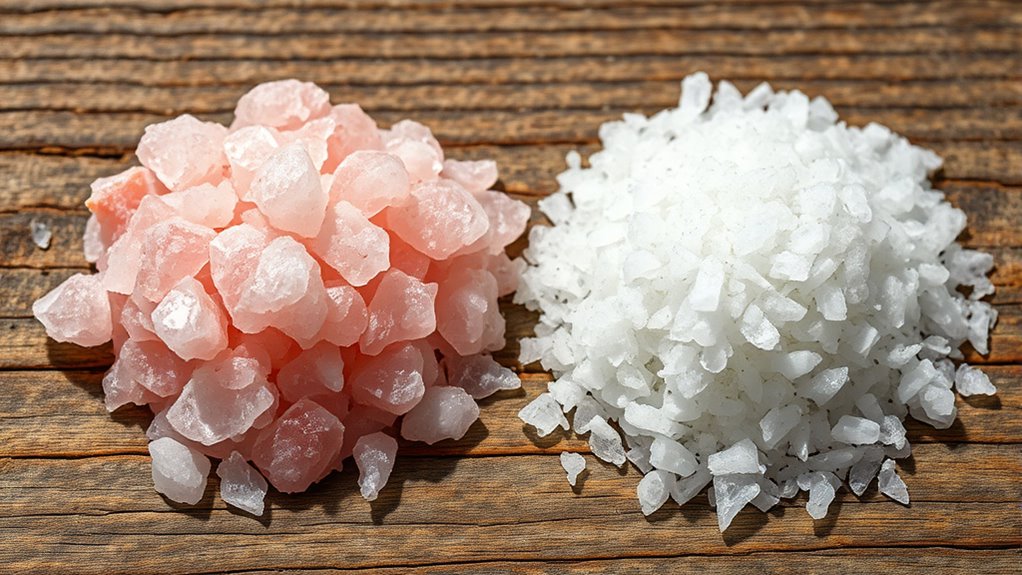
Pink Himalayan salt and Celtic sea salt are not the same; they come from different sources and have unique characteristics. Pink salt is mined from ancient deposits in Pakistan, is dry, crystalline, and rich in over 80 minerals. Celtic salt is harvested from seawater in France, is moist, coarse, and contains about 34 minerals.
Each offers distinct flavors, textures, and uses in cooking. Understanding these differences can help you choose the right one for your needs. Keep exploring to learn more about their unique qualities.
Key Takeaways
- Pink salt, specifically Himalayan salt, comes from underground deposits in Pakistan. Celtic salt, on the other hand, is harvested from seawater in France.
- Himalayan salt is dry, crystalline, and contains over 80 trace minerals. Celtic salt is moist, coarse, and has about 34 minerals.
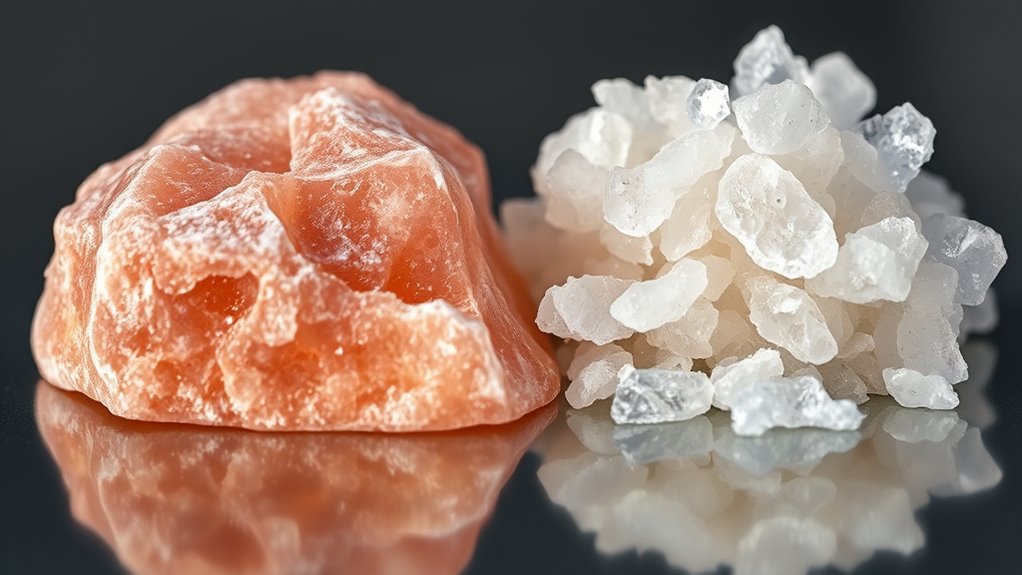
- They look different too. Himalayan salt is pink and crystalline, while Celtic salt is grey, damp, and coarse.
- Their flavors and textures are also different. Himalayan salt has a subtle taste and a dry feel, whereas Celtic salt has a briny flavor and moist grains.
- Overall, they are quite distinct in how they’re made, their mineral content, appearance, and how they’re used in cooking. So, they are not the same.
What Are Pink Himalayan Salt and Celtic Sea Salt?
Pink Himalayan salt and Celtic sea salt are two popular types of natural salts that differ in origin and characteristics.
Pink Himalayan salt comes from ancient salt deposits in Pakistan and is known for its pink color, caused by trace iron minerals. It’s a mineral-rich rock salt with about 80 trace minerals, mostly sodium chloride.
Pink Himalayan salt from Pakistan is a mineral-rich rock salt with about 80 trace minerals, including iron.
Celtic sea salt, on the other hand, is harvested from seawater in Brittany, France, through traditional evaporation methods. It’s a grey salt with a moist texture and larger grains, thanks to its mineral content, which includes magnesium and calcium.
While Himalayan salt is dry and coarse, Celtic sea salt retains moisture and damp grains. Both are valued for their unique mineral profiles and natural origins, making them popular choices as mineral-rich sea salts.
How Are These Salts Mined, Processed, and Made?
Celtic sea salt is harvested through a natural evaporation process in clay-lined salt pans along France’s Atlantic coast. Seawater slowly evaporates under the sun and wind, leaving behind moist, greyish crystals.
It’s collected manually using traditional methods, which helps keep its mineral content intact. The salt undergoes minimal processing, mainly natural drying, and is kept in its raw, moist state to preserve its natural minerals.
Unlike refined salts, Celtic salt isn’t extensively processed or refined. It remains as handcrafted, coarse crystals that closely reflect its original form.
Himalayan pink salt, on the other hand, is mined from underground rock salt deposits. It’s then cleaned and sometimes crushed, but both salts focus on minimal processing to maintain their mineral purity.
What Are Their Mineral Content, Appearance, and Flavor Differences?
The mineral content, appearance, and flavor of these salts vary a lot because of where they come from and how they’re processed. Himalayan salt, packed with over 80 trace minerals including iron, has a distinct pink color. Its look is dry and crystalline, with a uniform structure, and it generally has a pure taste with subtle mineral notes.
Celtic salt, on the other hand, contains around 34 trace minerals, mainly magnesium. It’s known for its grey hue and moist, wetter grain texture. Its flavor is more pronounced and briny, reflecting its high mineral content.
Pink Himalayan salt’s eye-catching look and refined flavor stand out, while Celtic salt offers a robust, mineral-rich taste and grey appearance. Each one is unique and suited to different culinary and health uses.
How Do Their Textures and Uses Compare in Cooking and Health?
Because of their distinct textures, these salts serve different roles in cooking and health practices. Celtic salt has a moist, coarse texture with larger grains, making it perfect as a finishing salt for visual appeal and flavor boost.
Its high moisture content causes it to dissolve quickly on hot foods, which is useful for quick seasoning. Pink salt, on the other hand, is usually dry with fine or coarse grains, offering versatility for cooking and presentation.
Its mineral-rich composition and uniform texture make it good for precise measurements and slow dissolving in recipes. In health, Celtic salt’s larger grains and moisture help regulate hydration, while pink salt’s dryness and grain size make it easier to store and grind, affecting how you use them in routines.
Which Salt Is Better for Your Health, Cooking, or Decor?
Choosing the right salt depends on your priorities for health, cooking, or decoration. Pink salt, like Himalayan, offers notable health benefits because of its mineral diversity and lower sodium, making it a good choice for mineral content and hydration.
Celtic salt, harvested from seawater, contains more trace minerals like magnesium and calcium, supporting digestion and mineral intake.
For cooking, Himalayan salt’s dry, uniform texture is perfect for seasoning, while Celtic salt’s moist grains work well for melting or adding texture.
Decoratively, pink salt lamps are popular for their aesthetic appeal and air-purifying qualities, unlike Celtic salt, which is mainly valued for health and culinary uses.
How Do You Choose the Right Salt for Your Needs?
When selecting the right salt for your needs, start by considering the mineral content and flavor profile that match your preferences and goals. Celtic salt has a briny taste with higher moisture, making it great for finishing dishes or grinding.
Pink salt offers a milder, mineral-rich flavor with a vibrant hue, perfect for presentation. Think about your culinary use—Celtic salt enhances oceanic flavors, while pink salt adds aesthetic appeal and decorative value.
Also, evaluate storage needs. Celtic salt’s moisture requires careful storage to prevent clumping, while pink salt stays dry and stable. Finally, consider your dietary needs—Celtic salt supports hydration with more minerals, while pink salt’s subtle flavor suits versatile dishes.
Frequently Asked Questions
Which Is Better for You, Pink Salt or Celtic Salt?
You might find Celtic salt better for hydration and mineral absorption because of its higher mineral content and moisture.
Pink salt is often considered purer and more refined, making it ideal for culinary uses.
Your choice depends on your health goals and preferences: if you want more trace minerals and hydration benefits, choose Celtic salt.
If you prefer a versatile cooking salt, pink salt suits you better.
What Does Mayo Clinic Say About the Pink Salt Diet?
The Mayo Clinic doesn’t endorse the pink salt diet specifically. They recommend moderation in all salt consumption because eating too much can increase your risk of high blood pressure and heart problems.
They also mention that there’s no scientific proof pink salt has health benefits over other salts. So, if you’re thinking about making big changes to your salt intake, it’s best to talk to your healthcare provider first to make sure it’s right for you.
Is 1 Teaspoon of Pink Salt a Day Too Much?
Yes, a teaspoon of pink salt daily can be too much, especially if you eat other high-sodium foods.
Pink Himalayan salt has about 2,300 mg of sodium per teaspoon, which often exceeds the recommended daily limit of 1,500 mg for most adults.
To stay within healthy limits, try using less than a teaspoon or balance your diet with low-sodium options. This can help prevent high blood pressure or heart problems.
What Happens When You Take Celtic Salt Every Day?
When you take Celtic salt every day, it can help improve hydration and support your electrolyte balance. This might help prevent cramps and boost muscle function.
Its mineral content, including magnesium and calcium, benefits your overall health. But if you overdo it, you could consume too much sodium.
That might raise your blood pressure or cause dehydration. So, moderation is key to enjoying Celtic salt’s benefits without any downsides.
Conclusion
While pink Himalayan salt and Celtic sea salt both offer unique flavors and mineral benefits, they aren’t the same. Pink salt contains more trace minerals, giving it a distinctive hue and taste.
Celtic salt boasts a moist texture and briny flavor. Notably, studies show that less than 1% of your daily sodium intake is needed for health.
Choosing the right salt depends on your taste, health goals, and culinary preferences. Pink salt and Celtic salt each have their own appeal. Pick what suits you best and enjoy its benefits!