How to Cook Beef Brisket on a Charcoal Grill in 8 Easy Steps
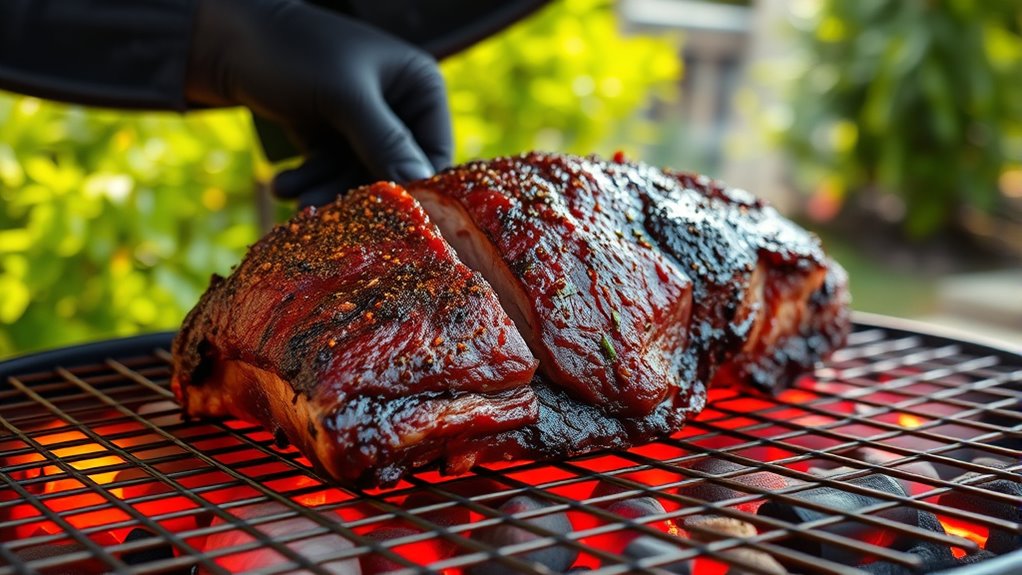
Cooking a perfect beef brisket on a charcoal grill can feel intimidating, especially if you’re new to grilling or trying to master that smoky, tender texture. Many people struggle with getting the right flavor, moisture, and tenderness, but don’t worry—you’re not alone. With a little guidance, you can turn out an amazing brisket that impresses everyone.
To cook beef brisket on a charcoal grill in 8 easy steps, start by preparing and seasoning your meat, applying a rub and refrigerating overnight.
Set up your grill in a three-zone configuration with a water pan, using charcoal and wood chunks for flavor.
Smoke the brisket at 225-250°F until it reaches 190°F, wrapping it partway through.
Rest the meat, then slice against the grain for tenderness.
Keep in mind tips for maintaining moisture and flavor for the best results, and if you continue exploring, you’ll become a brisket master.
Key Takeaways
- Set up a three-zone charcoal fire with indirect heat and add wood chunks for smoky flavor.
- Prepare and season the brisket, then refrigerate overnight for enhanced tenderness.
- Keep the grill temperature steady between 225-250°F. Add charcoal and adjust vents as needed to maintain that heat.
- Smoke the brisket until the internal temperature hits around 190°F. Wrap it up to help retain moisture.
- Let the meat rest for at least one hour before slicing. Be sure to cut against the grain for the best tenderness.
Why Brisket Is the Best Cut for Smoking
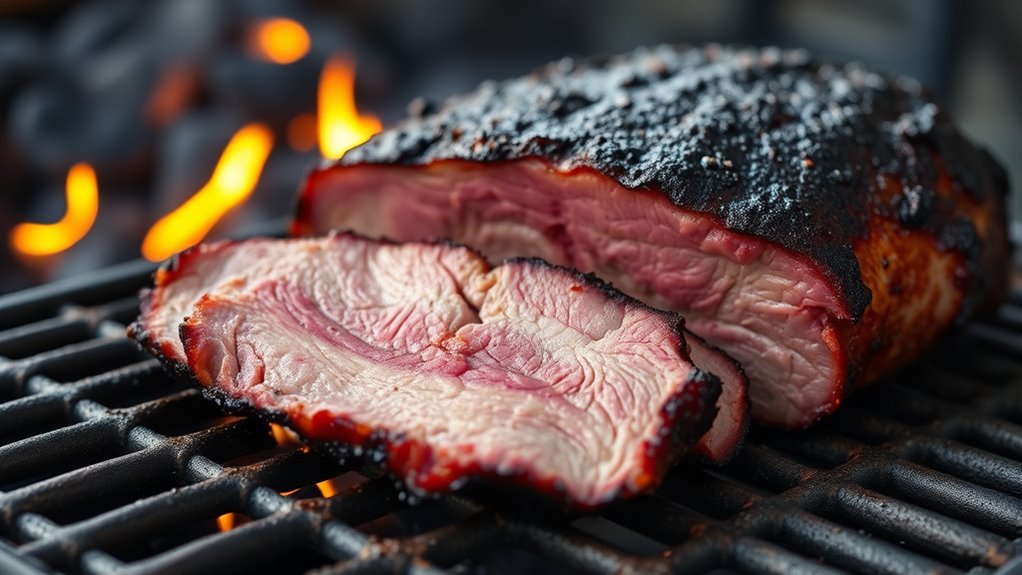
Since brisket contains a lot of connective tissue and fat, it’s naturally great for smoking. The high amount of connective tissue breaks down during the low and slow process, turning into tender, flavorful meat.
Its thick marbling and fat cap help keep it moist during the long smoke, preventing it from drying out. The muscle structure responds well to indirect heat, allowing for even cooking and the development of a rich bark.
When making a smoked brisket, the fat cap protects the meat and boosts flavor. The deep smoky taste from the smoke interacts with the marbling, creating a melt-in-your-mouth texture.
How to Prepare and Season Your Brisket for the Grill
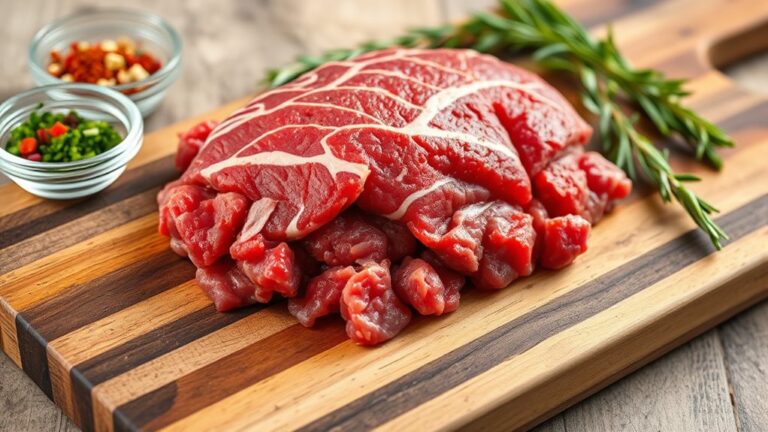
Start by trimming any excess fat, leaving about a quarter-inch of fat cap to help protect the meat during smoking.
Next, spread a thin layer of Worcestershire sauce or mustard to help the dry rub stick better.
Then, generously coat the brisket with your chosen seasoning mixture.
For the best flavor, wrap the meat and refrigerate it overnight before grilling.
Trim Excess Fat
Before grilling, it’s essential to trim excess fat from the brisket to ensure even cooking and better smoke absorption. Proper trimming involves removing thick or uneven fat deposits, especially around the fat cap, while leaving about 1/8 to 1/4 inch to protect the meat and keep it moist.
Be sure to also remove the silver skin, which is the tough connective tissue layer. This helps the seasoning penetrate better and makes the meat more tender. Use a sharp knife for precise cuts, focusing on the flat and point muscles.
This careful meat prep promotes even cooking and allows the smoke flavor to penetrate the meat evenly. Trimming the excess fat improves the final texture, making your brisket more enjoyable and flavorful after grilling.
Apply Flavorful Rub
Applying a flavorful rub is a key step to make your brisket taste amazing and soak up that smoky flavor. Start with a dry rub made from black pepper, garlic powder, paprika, salt, sugar, and optional herbs, mixing everything well.
To help the rub stick, coat the whole surface of the brisket with a thin layer of Worcestershire sauce or mustard. Then, generously sprinkle the dry rub on all sides, pressing it into the meat to really boost the flavor.
For the best results, apply the rub 1-2 hours before grilling or chill the seasoned brisket in the fridge overnight. To make sure the coverage is even, divide the rub into sections and pat it onto the meat, avoiding too much in one spot.
This prep ensures a tasty, well-seasoned brisket ready to go on the grill.
Let Rest Overnight
Allowing your seasoned brisket to rest overnight is a key step for boosting flavor and tenderness. Resting it in the fridge lets the meat reabsorb juices, making it more flavorful and juicy.
After applying the dry rub, wrap the brisket tightly in plastic wrap or butcher paper. Then refrigerate it for at least 12 hours, ideally up to 24 hours, to help the flavors penetrate better.
This resting time also helps break down connective tissues, resulting in a more tender final product. When you’re ready to grill, take the brisket out and let it come to room temperature for about an hour.
Proper resting ensures even cooking and a melt-in-your-mouth texture that really elevates your barbecue.
How to Set Up Your Charcoal Grill for Smoking Brisket
Setting up your charcoal grill properly is key for smoking brisket. A three-zone split-fire setup works really well.
Start by preheating your grill to around 250°F. Arrange unlit coals into two piles on opposite sides of the grill to create the split-fire setup.
Light 10-16 charcoal pieces and place them on one side. This gives you an indirect heat zone, leaving the other side free for the brisket.
Put a water pan filled with hot water in the center. This helps keep humidity high and maintains a steady temperature.
Add 3-4 wood chunks like mesquite or cherry directly onto the lit coals for extra flavor.
Adjust the vents periodically to keep the temperature steady between 225-250°F. This helps ensure consistent smoking conditions.
Which Wood Flavors Work Best for Smoked Brisket
Choosing the right wood can really make or break your smoked brisket. Mesquite is a popular choice because of its bold, earthy flavor.
If you prefer a milder, sweeter smoke, fruitwoods like apple or cherry are perfect options. Think about your flavor preferences to pick the wood that will best complement your brisket.
Mesquite’s Bold Profile
Mesquite wood is prized for its intense, smoky flavor, making it a popular choice for smoking brisket in Texas-style barbecue. Its bold profile amplifies the natural richness of beef brisket, creating a robust flavor that really stands out.
Because mesquite burns quickly and produces a strong smoke, it’s best used in moderation or mixed with milder woods like hickory or fruit woods for balance. To extend smoke production during long smoking sessions, soak wood chunks in water for 30 minutes.
When smoking on a charcoal grill, use mesquite wood chunks carefully to avoid overpowering the meat. This approach guarantees your Texas-style brisket develops that signature, bold flavor without overwhelming your palate.
- Use in moderation or mix with mild woods
- Soak wood chunks to prolong smoking process
- Perfect for rich beef cuts on a charcoal grill
- Amplifies natural flavors in traditional brisket
Fruitwood’s Subtle Flavor
While mesquite’s bold smoke adds intensity to brisket, many pitmasters prefer a more subtle approach with fruitwoods like apple, cherry, and pear. These woods give a delicate, sweet smoke flavor that enhances the beef without overpowering it.
Applewood offers a subtle fruity aroma that complements the rich, smoky profile of brisket, adding a gentle touch of sweetness. Cherrywood imparts a deep red hue and a mild, fruity undertone, giving both visual appeal and flavor.
Pear and other fruitwoods burn at lower temperatures, producing a delicate smoke ideal for slow cooking. This develops a smoky aroma without overwhelming the meat’s natural flavors.
Using fruitwood in grill smoking results in a balanced, nuanced smoky profile. It’s perfect for those who want a subtler smoke flavor that enhances rather than masks the meat.
Step-by-Step: How to Smoke Brisket on a Charcoal Grill
To smoke brisket on a charcoal grill, start by setting up a three-zone fire. Place unlit briquettes on one side and lit coals on the other to create a consistent heat of around 250°F.
Add wood chunks like mesquite or cherry for flavor, placing them over the hot coals. Arrange the brisket on the cooler side of the grill, with the fat side up or down depending on your heat source.
Maintain heat management by adjusting the vents to keep a steady temperature. Smoke the brisket until it reaches an internal temperature of 165°F, adding unlit briquettes and wood chunks hourly.
Wrap the brisket in double-layer foil with beef broth or Worcestershire sauce at 165°F, then continue smoking until it hits 190°F. Rest for 15–20 minutes before slicing against the grain.
Handling the Stall and Checking When Your Brisket Is Done
The stall is a common hurdle when cooking brisket. It happens when the internal temperature stays around 165°F because evaporation cools the meat down.
Many pitmasters wrap the brisket in foil or butcher paper to handle the stall. This traps moisture and helps it cook faster.
Wrapping the brisket in foil or butcher paper traps moisture and speeds up the cooking process.
You’ll know it’s time to wrap when the internal temperature stalls for a few hours. To check if the brisket is done, insert a probe thermometer. When it slides in easily, the meat is tender.
The brisket is ready when the internal temperature reaches about 190 to 203°F. About 190°F gives you the best tenderness. After cooking, let the brisket rest for at least an hour.
Resting allows the juices to redistribute, making the meat more tender and flavorful. Managing the stall and checking for doneness properly will give you a juicy, perfectly smoked brisket.
Resting and Slicing Your Smoked Brisket for Maximum Juiciness
Once your brisket reaches the right internal temperature and you’ve wrapped it up to rest, the next step is to let it sit undisturbed for at least an hour. Resting helps the juices redistribute, making the brisket tender and moist.
Keep it wrapped in foil or butcher paper during this time to prevent moisture loss. After resting, slice against the grain into ¼-inch thick pieces to maximize tenderness and juiciness.
Use a sharp knife and hold the meat steady for even slices. To keep the brisket warm and moist before serving, place the sliced meat in a low-temperature oven or covered container.
Serving Tips and Delicious Ways to Enjoy Your Smoked Brisket
After you’ve smoked and sliced your brisket, serving it with the right sides and presentation can really elevate your meal. For the best tenderness, slice against the grain into ¼-inch pieces.
Pair your sliced brisket with classic BBQ sides like coleslaw, baked beans, or German Rotkohl to create a well-rounded plate. To reheat leftovers, unwrap, slice, and warm in a skillet with beef broth or reserved brisket juice to keep it moist and flavorful.
For more variety, serve brisket with warm potato salad with bacon, sauerkraut, or roasted vegetables to complement its smoky flavor. Use rendered fat to make gravy or enrich tacos and chili, adding depth and richness.
These tips help you enjoy your smoked brisket at its best.
Frequently Asked Questions
How Long Does a Brisket Take to Cook on a Charcoal Grill?
A brisket takes about 8 to 12 hours to cook on a charcoal grill at 225°F to 250°F. You’ll want to keep an eye on the internal temperature with a thermometer, aiming for 190°F to 203°F for that perfect tenderness.
Wrapping it in foil or butcher paper can help speed up the process and keep the meat moist. After it’s done, let it rest for 1 to 2 hours to lock in all the juices and flavor.
Is Brisket Good for Cholesterol?
Brisket is like a rich, smoky treasure chest, but inside, it hides a hefty load of saturated fat. If you eat too much, it can raise your LDL cholesterol, putting your heart at risk.
To enjoy it safely, trim away excess fat, savor smaller portions, and balance your meal with veggies and grains. Think of brisket as a treat—best enjoyed in moderation, like a splash of flavor in a healthy diet.
Can I Smoke a Brisket on a Regular Charcoal Grill?
Yes, you can definitely smoke a brisket on a regular charcoal grill. Set it up for indirect heat with a two-zone fire, and control the temperature with vents and by adding unlit coals as needed to stay around 225°F to 250°F.
Use wood chunks for flavor, place a water pan to keep the meat moist, and wrap the brisket once it stalls at around 165°F for tender, delicious results.
What Is the 3 2 1 Rule for Brisket?
Think of the 3-2-1 rule as a dance for ribs, not quite fitting for brisket. It involves 3 hours unwrapped, 2 wrapped, and 1 unwrapped, mainly to preserve moisture.
But for brisket, you should focus on the internal temperature, aiming for 190-203°F. This method ensures your brisket reaches tender perfection, giving you control over the process rather than strict timeframes.
Conclusion
Now that you’ve mastered the art of smoking brisket on a charcoal grill, your next great meal awaits.
But remember, the true magic isn’t just in following steps. It’s in the patience and passion you bring to the process.
As the aroma fills the air and the meat reaches perfection, you’ll realize that great barbecue isn’t just about flavor. It’s about creating memories that linger long after the last bite.
Are you ready to impress with your perfectly cooked beef brisket?