When to Do Salt Water Rinse After Extraction – 8 Essential Steps
If you’ve recently had a tooth extraction, you’re probably eager to heal quickly and avoid any complications. Many people struggle with knowing the right steps to take for a smooth recovery. One helpful tip is using salt water rinses, but timing and technique matter so much.
You should start salt water rinses about 24 hours after your tooth extraction once bleeding stops and healing signs appear. Gently swish with warm, salty water 2-3 times a day, especially after meals, and avoid forceful spitting or vigorous movements.
Continue until your mouth is fully healed, which usually takes about a week. If you stay mindful of proper technique and signs of healing, you’ll promote better recovery and prevent complications.
Keep going for more helpful tips to make your recovery smoother.
Key Takeaways
- Wait at least 24 hours after your extraction before you start doing salt water rinses.
- Once the bleeding has stopped and you see signs of healing, you can begin rinsing.
- Gently rinse with warm salt water 2 to 3 times a day during the first week.
- Keep rinsing until the surgical site is fully healed, which usually takes around 7 days.
- You can stop rinsing when there’s no more bleeding, swelling, or pain.
- Make sure your dentist confirms that healing is complete before you stop.
Why Timing Matters When Rinsing After Tooth Extraction
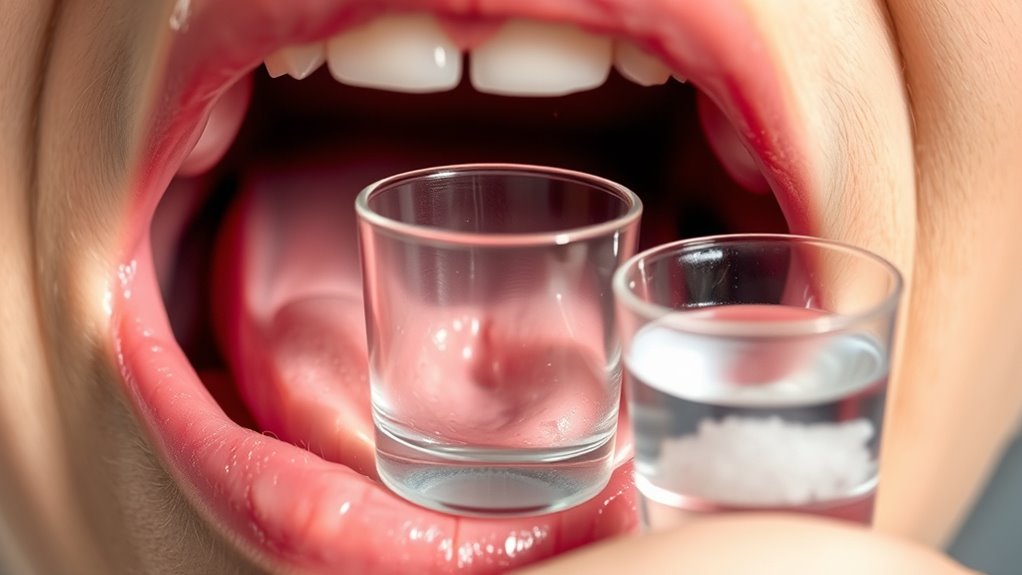
Timing is crucial when it comes to rinsing after a tooth extraction because doing it at the wrong time can interfere with healing.
Rinsing too early risks dislodging the blood clot, which is key for proper healing and preventing dry socket. The blood clot forms right after extraction, protecting the bone and nerves underneath.
Rinsing too soon can cause bleeding to continue and slow down recovery. Experts suggest waiting until at least the day after surgery to start salt water rinses.
This waiting period helps the blood clot stabilize and reduces the chance of complications. Proper timing helps keep the site clean while protecting the healing tissue.
Following this schedule supports smooth healing and helps you avoid unnecessary discomfort.
When Is the Best Time to Start Salt Water Rinses?
You should wait at least 24 hours after your extraction before starting salt water rinses. Rinsing too soon can cause bleeding and disturb blood clot formation, which might slow down healing.
Keep an eye out for signs like less bleeding and reduced swelling. These are good indicators that it’s safe to start rinsing.
Timing for Rinse Initiation
Although it might be tempting to start rinsing immediately after your wisdom teeth extraction, it’s best to wait until the next day. Proper timing of salt water rinses is key for good healing.
Rinsing too soon can cause bleeding and disturb the blood clot, which can slow down recovery. Usually, you should start gentle salt water rinses about 24 hours after surgery, once the initial bleeding has stopped.
This helps promote healing and reduce the risk of infection without messing up the process. Always follow your dentist’s specific instructions about when to start rinsing, since individual cases may differ.
Waiting until the right time helps support your body’s natural healing and keeps your mouth clean.
Signs to Begin Rinsing
Waiting until your mouth has stopped bleeding is a key sign that you’re ready to begin salt water rinses.
Look for the cessation of active bleeding and the first signs of healing.
If the bleeding has subsided, it’s a good sign that your tissues are stabilizing.
Gentle rinsing then won’t disturb the blood clot.
Rinsing too early can interfere with healing and increase the risk of complications like dry socket.
Usually, wait about 24 hours after surgery before starting salt water rinses.
This gives the blood clot time to form properly and helps prevent disrupting healing.
Always follow your dentist’s instructions, but patience is really important for a smooth recovery.
How Often Should You Rinse With Salt Water During Recovery?
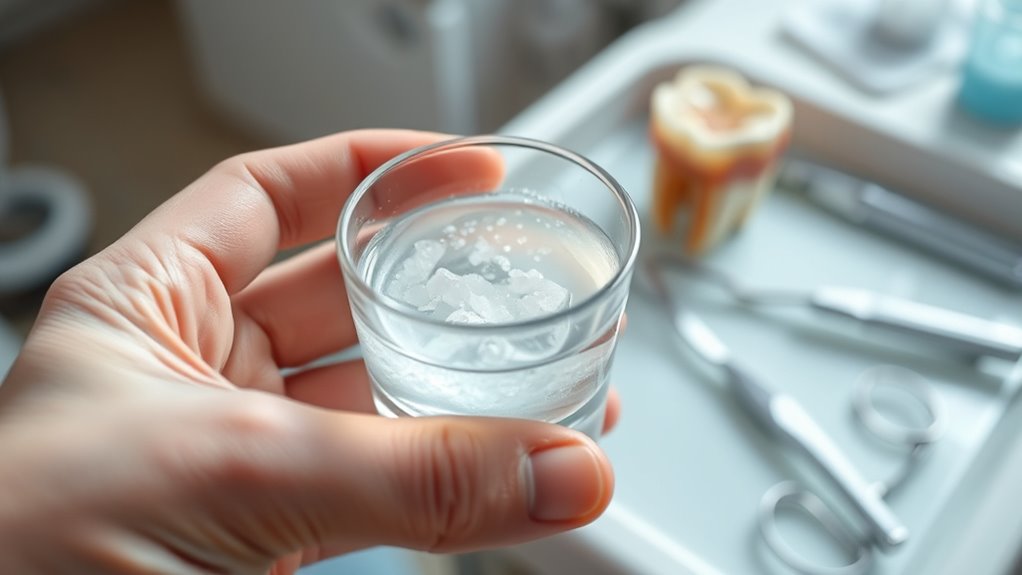
During the first week of recovery, rinsing with salt water 2 to 3 times daily helps keep the surgical area clean and promotes healing. You should start rinsing the day after your procedure, using warm salt water—about half a teaspoon of salt in 8 ounces of water.
This routine prevents bacteria buildup and encourages tissue repair. Be gentle when rinsing; avoid forceful movements that could dislodge the blood clot and delay recovery.
Continue this routine until the surgical sites are fully healed, usually around 7 days. Consistent salt water rinses are a simple yet effective way to support your healing process.
Stick to this schedule, and you’ll help guarantee a smoother, faster recovery from your extraction.
How to Gently Rinse Your Mouth After Extraction
After your first salt water rinse the day after surgery, it’s important to keep rinsing gently to help healing without disturbing the blood clot. Use about half a teaspoon of salt dissolved in 8 ounces of warm water for a soothing saline rinse.
Swish the solution gently in your mouth for about 30 seconds, avoiding any forceful movements. Be careful when spitting out the rinse so you don’t dislodge the blood clot or harm the surgical area.
Rinse 2-3 times daily, especially after meals, to keep the extraction site clean and support healing. Remember, gentle rinsing helps prevent infection and makes your recovery smoother.
Avoid aggressive swishing to protect the healing tissue, and stick with warm salt water for comfort and effectiveness. Follow the recommended frequency to prevent disrupting the site and promote proper healing.
How Long Should You Continue Salt Water Rinses?
You should typically continue salt water rinses for about 7 days after your extraction, or until the surgical sites are fully healed. During this time, rinsing 2-3 times daily helps prevent infection and supports your recovery.
If healing is slow or your dentist advises it, you might need to extend this period. Once there’s no bleeding, swelling, or discomfort, and the area looks healed, you can stop rinsing.
Proper rinsing guarantees ideal healing and minimizes complications. Keep an eye on the healing process and follow your dentist’s advice for the best results.
Signs That It’s Time to Stop Rinsing and Heal Fully
You can stop rinsing once the surgical site is fully healed, with no bleeding or swelling. When discomfort or signs of infection go away, it’s safe to stop rinsing.
Wait until the tissue is completely closed and your oral functions are back to normal before ending your rinses.
Complete Healing Signs
When the surgical sites have fully healed, signs will clearly indicate it’s safe to stop salt water rinsing. You’ll notice the tissue looks pink, healthy, and intact, with no bleeding or swelling.
Pain and discomfort should have disappeared, and there should be no persistent soreness. Swelling, bruising, and tenderness will have resolved, signaling that healing is complete.
You can also consider the absence of bleeding or any signs of infection as confirmation. A healthcare professional can verify that your healing is on track, giving you confidence to discontinue salt water rinses.
- The tissue appears uniform, with no open wounds or signs of infection
- No more bleeding, swelling, or pain persists
- Your dentist or oral surgeon confirms full healing
No Discomfort or Bleeding
Once the surgical site shows no signs of bleeding or discomfort, it’s generally safe to stop salt water rinsing.
When bleeding has completely stopped for at least 24 hours and there’s no ongoing oozing, rinsing becomes unnecessary. You’ll notice that the area appears fully healed, with tissue looking normal, without redness or tenderness.
If you experience no persistent pain or discomfort, it indicates healing is progressing well. It’s important to avoid rinsing if signs of bleeding or discomfort reappear, as this can hinder recovery.
Always confirm with your dentist or surgeon before stopping salt water rinses to guarantee your healing is complete. Once these signs are gone, you can cease rinsing and allow your mouth to heal naturally.
Common Mistakes to Avoid When Rinsing Post-Extraction
Rinsing too soon or too forcefully after a tooth extraction can slow down healing and cause complications. It can dislodge the blood clot and lead to dry socket, which is painful and delays recovery.
Rinsing too soon or forcefully after extraction risks dislodging the blood clot and causing dry socket.
Using hot or warm solutions often can irritate the surgical site and make healing take longer. It’s best to wait until the day after surgery before starting salt water rinses. Avoid rinsing beyond seven days to prevent issues.
Be mindful of these common mistakes:
- Rinsing immediately after extraction, which can dislodge the blood clot
- Rinsing too forcefully, damaging healing tissues
- Rinsing too often or using hot solutions that cause irritation
Proper rinsing techniques protect your healing, reduce discomfort, and help prevent infection.
Expert Tips for Safe and Effective Salt Water Rinsing
To ensure your salt water rinses support healing without causing issues, it’s important to follow proper techniques. Start rinsing the day after surgery with a warm salt water solution made with half a teaspoon of salt in 8 ounces of water.
Rinse gently for about 30 seconds, being careful not to dislodge the blood clot. Doing this 2-3 times a day, especially after meals, helps keep the area clean and reduces bacteria that could slow healing.
Avoid rinsing on the same day as the extraction to prevent dry socket. Continue this routine during the first week or until the site is fully healed, with no bleeding or swelling.
When your dentist says it’s okay, stop rinsing to protect your recovery and promote the best healing possible.
Frequently Asked Questions
How Many Days After a Tooth Extraction Should I Rinse With Salt Water?
You should start rinsing with salt water the day after your tooth extraction. Continue doing it 2-3 times daily for about 7 days or until your dentist says it’s okay.
Make sure the bleeding has stopped before you start rinsing, and avoid rinsing right after surgery to prevent dislodging the blood clot. Follow your dentist’s instructions to ensure proper healing and avoid complications.
Why Is Day 3 the Worst After Tooth Extraction?
Day 3 after your tooth extraction is the worst because swelling and pain tend to peak around this time. Your body’s immune system ramps up its response, leading to inflammation that helps with healing.
The blood clot may start to break down or become dislodged, which increases the risk of dry socket and more discomfort. Swelling can put pressure on the tissues, making it harder to move or open your mouth comfortably.
That’s why gentle care and rinsing are so important now. They help support your recovery and keep things as comfortable as possible.
Why No Ibuprofen After Tooth Extraction?
You shouldn’t take ibuprofen right after a tooth extraction because it can thin your blood, which increases bleeding risks.
It might also delay healing or cause swelling if you use it too much. Instead, follow your dentist’s advice on pain relief, like choosing acetaminophen.
Will Salt Water Rinse Cause Dry Socket?
A salt water rinse won’t cause dry socket if you do it properly. When you rinse gently with a diluted salt water solution after the first 24 hours, it helps keep the site clean and reduces infection risk.
Just avoid forceful rinsing or rinsing too early, as that can dislodge the blood clot and increase the chance of dry socket. Follow your dentist’s instructions for safe and effective healing.
Conclusion
Think of your mouth as a delicate garden, needing gentle care to flourish back to health. Timing your salt water rinses properly is like watering at just the right moment. Too soon or too often can hinder your healing.
Follow these steps, listen to your body, and let your recovery blossom. With patience and caution, you’ll soon see your smile shining brighter than ever. Stay fresh, resilient, and ready to face the world anew.