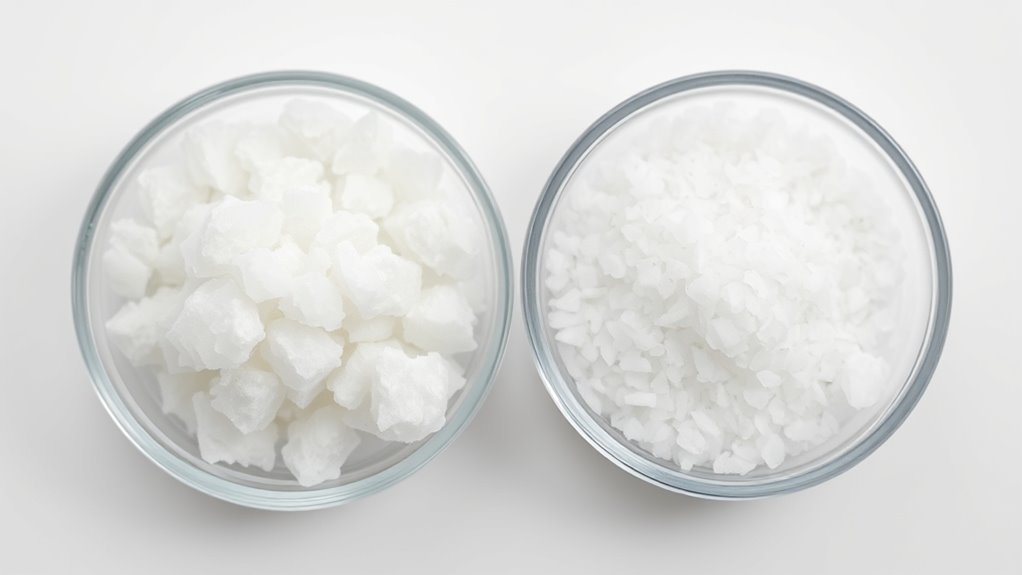
8 Key Differences Between Kosher Salt and Canning Salt
Many home cooks and preserving enthusiasts often find themselves confused about which salt to use for their pickling or cooking projects. You’re not alone—choosing the right salt can be tricky, especially when different types seem similar but have distinct qualities.
You’ll find that canning salt is pure, with fine, uniform grains that dissolve quickly and won’t cloud your brine.
Kosher salt has larger, flaky crystals that dissolve more slowly and can contain anti-caking agents or iodine, affecting flavor and clarity.
Particle size impacts dissolving and measuring accuracy, especially when substituting.
Understanding these differences helps you choose the best salt for pickling or cooking—stay with us to learn more about making the right choice.
Key Takeaways
- Canning salt is pure, additive-free sodium chloride. In contrast, kosher salt may contain anti-caking agents and iodine.
- Canning salt has fine, uniform grains that dissolve quickly. Kosher salt, on the other hand, features large, flaky, irregular crystals.
- When making brine, canning salt produces a clearer solution with no cloudiness. Kosher salt’s larger grains can cause cloudiness and tend to dissolve more slowly.
- Volume measurements of kosher salt are less accurate because of its irregular shape. It’s better to measure by weight for consistency.
- Canning salt is often preferred for pickling and preserving. It helps ensure safety, clarity, and a consistent flavor in your recipes.
What Are the Main Characteristics of Canning Salt?
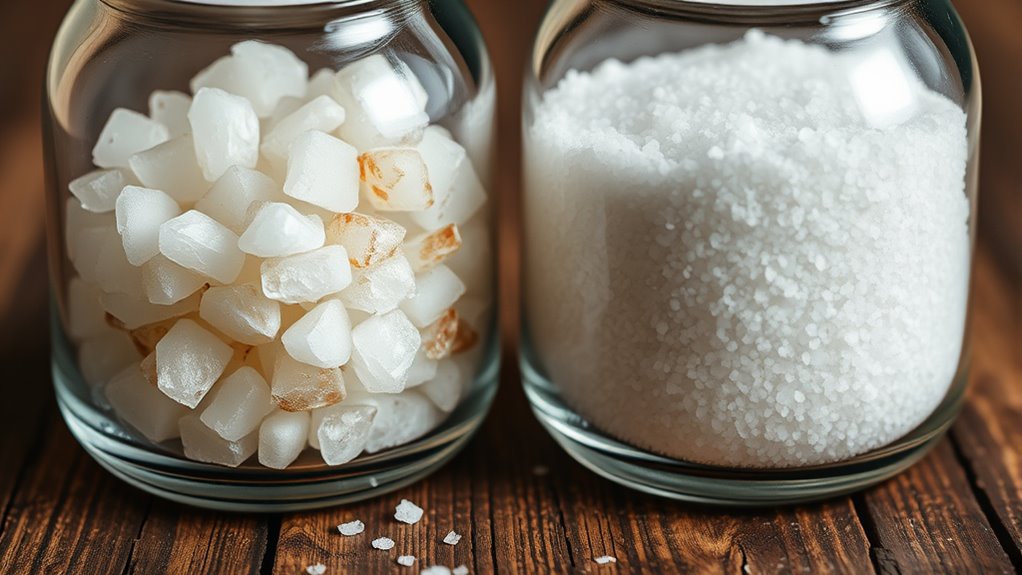
Canning salt is a type of pure, finely ground salt that contains no additives, iodine, or anti-caking agents. Its fine grains help it dissolve quickly and evenly in water, which is essential for making a clear brine.
Made from pure sodium chloride, canning salt offers a consistent and uniform texture similar to regular table salt, but without any additives that could cloud the solution. This ensures purity and clarity in your preservation process.
Because of its formulation, canning salt is perfect for pickling, canning, and other preservation methods. It provides a reliable level of salinity and keeps the solution clear, helping to maintain food quality during preservation.
How Is Kosher Salt Different in Texture and Appearance?
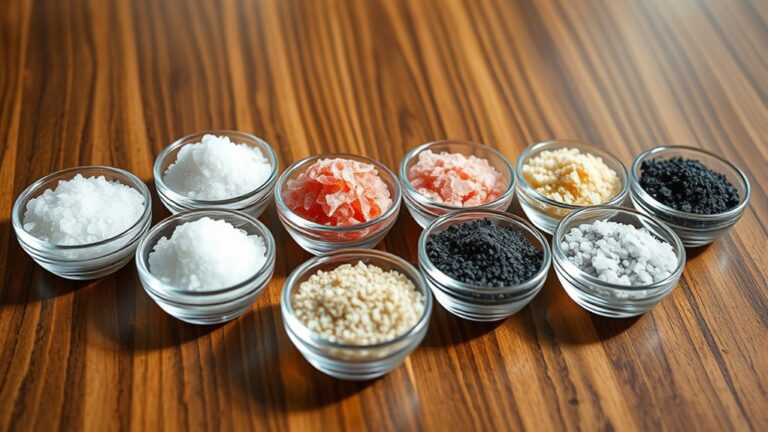
Kosher salt has large, flaky, irregular-shaped crystals that you can easily feel and see.
Its coarse grains give it a gritty, chunky texture, making it stand out from finer salts.
In contrast, canning salt features small, smooth, uniform grains that resemble fine table salt.
Distinct Crystal Shapes
The crystal shapes of these salts are key to telling them apart by sight and touch. Kosher salt features large, irregular crystals that look like tiny, uneven sheets or flakes, making it easy to identify by shape.
These irregular crystals give kosher salt a flaky texture, thanks to how they form. On the other hand, canning salt has small, uniform grains with smooth, consistent crystal shapes that create a fine, even structure.
The distinct crystal shapes also affect how each salt interacts with water and food, influencing their best uses in cooking and curing. The uneven shape of kosher salt crystals makes them easy to recognize, while the uniform grains of canning salt give it a finer, more consistent look.
Coarse Grain Texture
One of the most noticeable differences between kosher salt and canning salt is their grain size and feel. Kosher salt has coarse grains with irregular shapes, resembling small, uneven rock salt fragments. Its large crystals give it a rough texture that’s easy to feel and see.
The irregular shape and size of kosher salt cause it to clump naturally, which can affect how it flows and measures. Because the crystals are large, kosher salt dissolves more slowly, making it great for dry brining or koshering meat.
Canning salt, on the other hand, has finer, uniform grains that flow smoothly and dissolve quickly. This gives it a different texture and dissolving rate. The crystal appearance of kosher salt highlights its chunky, flaky nature.
How Does Particle Size Affect Dissolution and Cooking?
Particle size plays a crucial role in how quickly salt dissolves during cooking. Fine salts, like canning salt, have smaller crystal sizes and a larger surface area, which speeds up dissolution and promotes uniform distribution. This helps ensure consistent seasoning and efficient brining.
Smaller salt particles dissolve faster, ensuring even seasoning and better cooking results.
Coarse salts, such as kosher salt, have larger, irregular crystals that dissolve more slowly, often needing more agitation or time. Their bigger crystal size can cause clumping or settling, making precise measurement more challenging.
Because fine salts are more soluble, they dissolve completely and evenly, making recipes easier and flavors more consistent. In contrast, coarse salts may require pre-dissolving or conversion.
Understanding how particle size affects dissolution helps you better control your cooking and seasoning processes.
Which Salt Is Best for Pickling and Why?
Canning salt is your best choice for pickling because it’s pure, additive-free, and dissolves quickly, ensuring a clear brine.
While kosher salt can work if it’s additive-free, its larger grains need more careful measurement and take longer to dissolve.
Purity and Additives
When it comes to pickling, choosing the right salt is key for clarity and safety. Canning salt is prized for its purity, with no additives or preservatives, making it perfect for clear brine and safe food preservation.
Kosher salt is usually additive-free, but some brands include anti-caking agents. These can cloud your brine and reduce its visual appeal, so it’s good to check the label.
Regular table salt often contains iodine or anti-caking chemicals that can discolor or cloud pickling liquids. This impacts the look of your brine and may affect safety.
For the best results, stick with canning salt or verified additive-free kosher salt. The absence of additives keeps your brine clear and ensures your food stays safe and visually appealing during pickling.
Particle Size and Dissolution
Since dissolving salt efficiently is key for a clear and effective pickle brine, choosing the right type of salt really matters. Canning salt has fine grains that dissolve quickly and evenly because of its larger surface area, which boosts solubility and speeds up dissolving.
In contrast, kosher salt has larger, irregular flakes that dissolve more slowly, which can cause cloudiness in the brine. The grain size difference affects how well the salt mixes into your pickling liquid.
Faster dissolving means a well-balanced brine without cloudiness, making canning salt the better choice for pickling. To help visualize, here’s a quick comparison:
| Salt Type | Grain Size | Dissolution Rate | Brine Clarity |
|---|---|---|---|
| Canning Salt | Fine grains | Fast | Clear |
| Kosher Salt | Larger, irregular flakes | Slow | Potential cloudiness |
Measurement Accuracy and Consistency
Choosing the right salt for pickling depends on measurement, accuracy, and consistency, which are key for safe and effective preservation.
Canning salt’s fine, uniform grains ensure precise volume measurement, making it reliable for following your recipe. Its consistent particle size dissolves quickly, reducing variability and helping you get the right salt concentration.
On the other hand, kosher salt has larger, irregular crystals that can lead to inconsistent measurements when using standard spoons. This might affect your pickling process.
To improve accuracy with kosher salt, it’s best to use weight measurements, which are more reliable. Overall, canning salt offers the most consistent and precise results, making it the best choice for maintaining the right salt levels for safe, tasty pickling.
When Should You Use Kosher Salt in Cooking?
Kosher salt is best used for seasoning meats and vegetables before or after cooking because its coarse texture and large flakes make it easy to handle and distribute evenly.
Its grains provide more control, making it ideal for seasoning and dry brining. This process helps draw out moisture and boost flavor.
Use kosher salt when you want a milder, less intense saltiness, especially in meat koshering processes. Its flaky texture also makes it perfect for finishing dishes, adding a burst of saltiness and a pleasing appearance.
Keep in mind that measurement differs from finer salts. Because of its larger grains, you’ll need more volume to achieve the same saltiness.
Incorporating kosher salt at the right stage guarantees balanced flavor and maximum results in your cooking.
Can You Substitute Kosher Salt for Canning Salt? Risks and Tips
Can you swap kosher salt for canning salt in your recipes? Yes, but with caution. The best option is to choose kosher salt that doesn’t contain anti-caking agents, as those can affect preserving and make things cloudy.
Since kosher salt has larger, coarser grains, you’ll need about 1¼ teaspoons of kosher salt for each teaspoon of canning salt. Using volume measurements instead of weight can lead to inaccuracies because kosher salt takes up more space.
To ensure even distribution and proper dissolving, dissolve kosher salt in water before adding it to your recipe. Remember, the difference in grain size makes precise measurement important; otherwise, you might change the saltiness, flavor, or preservation quality of your canned foods.
How Do Additives in Salt Impact Canning and Koshering?
Additives in salt, like anti-caking agents and iodine, can really impact the quality of your canned and pickled foods.
Anti-caking agents might not dissolve fully, which can make your brine cloudy and cause uneven salt distribution. This can affect the clarity and overall look of your preserved foods.
Anti-caking agents can cause cloudiness and uneven salt distribution in your brine.
Iodine can lead to discoloration and might give your products an off-flavor or metallic taste. To avoid this, it’s best to use pickling salt or other pure salts labeled as additive-free.
Using additive-free salts helps keep your brine clear, improves flavor, and results in a more attractive finished product.
It also ensures better safety and preservation for your canned goods. Choosing the right salt makes your canning and koshering process more consistent and successful.
What Are the Best Tips for Measuring and Using These Salts?
To ensure your salt measurements are accurate and your preserved foods turn out just right, follow some simple tips. Use weight measurements instead of volume when substituting kosher salt for canning salt because salt grains vary in size.
Dissolve kosher salt in water before adding it to your brine. This helps it disperse evenly and ensures consistent salinity throughout. When measuring by volume, remember that 1 teaspoon of canning salt equals about 1 1/4 teaspoons of kosher salt.
Avoid packing or compacting the salt, especially with coarse kosher salt. This prevents inaccurate portions and helps maintain proper salinity levels. Always check that both salts are additive-free for the best flavor and preservation.
Using weight measurements gives you more accuracy with salt grains. Dissolving kosher salt improves texture and even dispersal, leading to consistent flavor. Avoid packing salt to prevent incorrect salinity, ensuring your preserved foods turn out perfect.
Convert volume to weight for better measurement accuracy, especially in canning or curing. And always check for additives to guarantee clarity and proper flavor, resulting in better preservation and taste.
Frequently Asked Questions
Can I Replace Canning Salt With Kosher Salt?
Yes, you can replace canning salt with kosher salt, but keep in mind the differences. Since kosher salt has larger grains, use about 1¼ teaspoons for every teaspoon of canning salt. It’s best to measure by weight for accuracy.
Make sure your kosher salt is pure and free from anti-caking agents. Keep in mind that kosher salt may dissolve slower, which could affect your pickling or preserving process.
What Is the Best Salt for Heart Patients?
Like steering a ship through calm waters, choosing the best salt for your heart requires careful guidance. For heart patients, the ideal option is to limit sodium intake, regardless of the salt type.
That means using salts with no additives or opting for salt substitutes like potassium chloride. Always check with your healthcare provider for personalized advice.
And remember, flavoring with herbs and spices can help you enjoy food without risking your health.
How Much Kosher Salt Equals 1 Tablespoon of Pickling Salt?
One tablespoon of pickling salt is roughly equivalent to about two tablespoons of kosher salt. Because kosher salt has larger, coarser grains, it takes up more space for the same weight.
To substitute accurately, you should use about twice the volume of kosher salt compared to pickling salt. For the best results, weighing both salts is ideal since volume measurements can vary based on grain size.
How Is Kosher Salt Different From Canning Salt?
Imagine two artists: one uses broad, sweeping strokes, the other fine, precise lines. That’s how kosher salt and canning salt differ.
You’ll notice kosher salt’s large, flaky crystals. They add a rustic touch but make measuring tricky. Canning salt’s fine, uniform grains dissolve quickly and evenly, perfect for pickling.
Plus, canning salt’s pure and doesn’t have additives. Kosher salt may contain anti-caking agents, which can affect purity and flavor.
Conclusion
Think of choosing between kosher salt and canning salt as selecting the perfect brush for a masterpiece. Each has its unique stroke—one brings texture and seasoning, the other precision and clarity.
By understanding their differences, you’ll craft dishes with finesse and avoid the pitfalls of misused ingredients. Mastering these salts is like an artist honing their tools.
Your culinary canvas will thank you, resulting in flavors as refined and deliberate as a carefully painted masterpiece.
When you pick the right salt, whether kosher or canning, you’re elevating your cooking to an art form—so choose wisely!