What’s the Best Water Softener Salt in 2026?
Are you tired of dealing with hard water spots, clogged appliances, or reduced water softness? You’re not alone—many people struggle with choosing the right water softener salt to keep their systems running smoothly. Finding the best option can feel overwhelming with so many choices out there.
In 2026, the best water softener salt depends on your water quality and system needs. Generally, high-purity evaporated salt is the top choice because it dissolves quickly, reduces buildup, and extends your system’s lifespan.
For moderate hardness, solar salt works well, while potassium chloride is a good option if you’re on a sodium-restricted diet.
To choose the right salt and keep your system running smoothly, examine the details ahead.
Key Takeaways
- Evaporated salt pellets offer the highest purity, quick dissolution, and optimal performance for severe water hardness.
- Regular water testing helps you choose the right salt and keeps your system running efficiently, especially as seasons change.
- High-purity salts like evaporated and solar salts tend to reduce buildup and lower maintenance costs over time.
- If you’re concerned about household health restrictions, potassium chloride is sodium-free but less effective and more expensive.
- For consistent quality and eco-friendly options, consider reputable brands like Morton or Diamond Crystal.
What Are the Different Types of Water Softener Salt in 2026?
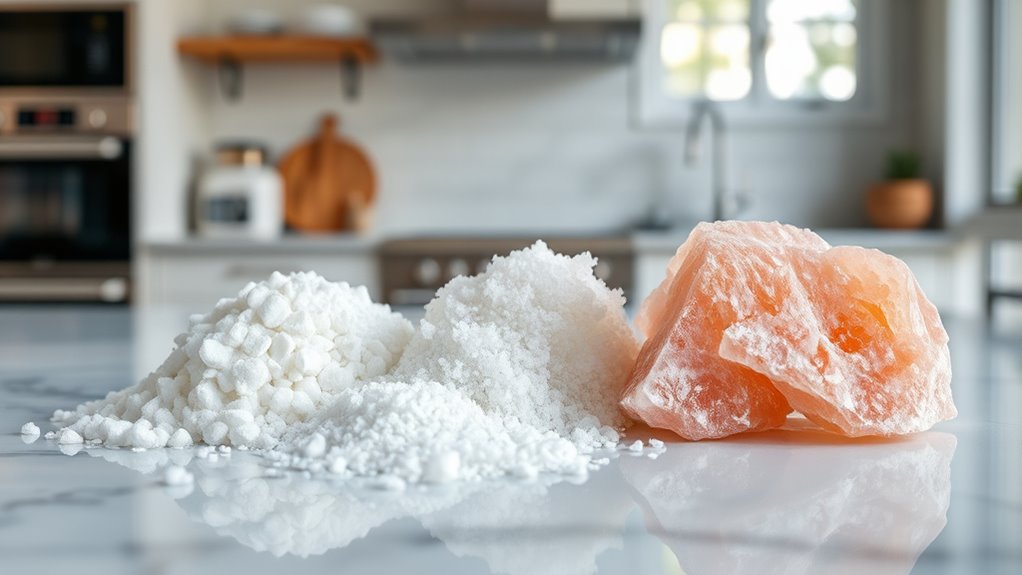
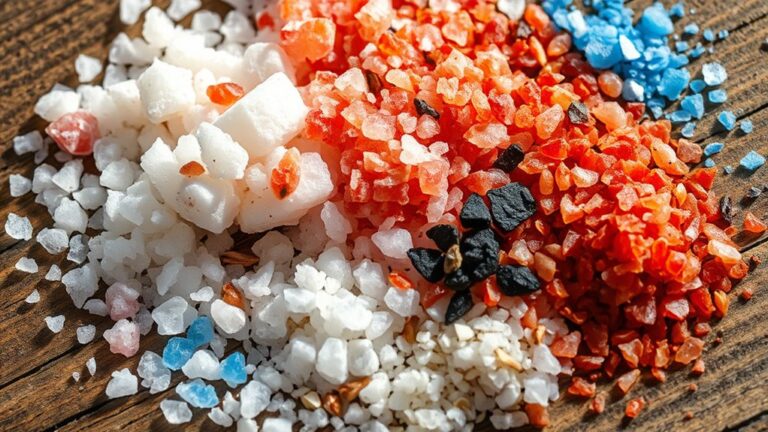
In 2026, the main types of water softener salt are rock salt, solar salt, evaporated salt, and potassium chloride, each offering different levels of purity, cost, and performance.
Water softener salt options vary in how effective they are and how much maintenance they need. Rock salt is the most affordable but contains impurities that can cause buildup and residue in the system.
Water softener salt varies in effectiveness and maintenance, with rock salt being affordable but impurity-prone.
Solar salt, made through seawater evaporation, is cleaner but may leave brown rings in tanks over time. Evaporated salt pellets are almost pure sodium chloride with over 99.6% purity, providing better softening and less clogging.
Potassium chloride is a sodium-free option, but it’s less effective at about 70% efficiency. It’s a good choice for households with sodium restrictions. Picking the right salt depends on your budget and water quality needs.
How Can You Test Your Water Hardness to Choose the Right Salt?
To pick the right salt, you need to test your water hardness first. Use a test kit or test strip to get an accurate reading of mineral levels in your water.
Once you have your results, interpreting them will guide you toward the best salt type for your softener. Knowing your water hardness makes it easier to choose the right product.
Testing Methods and Tools
Measuring your water hardness accurately is key to choosing the right softener salt. There are several reliable methods to do this.
Water testing tools like test strips, digital meters, and liquid test kits help you determine calcium and magnesium levels in grains per gallon (GPG). Test strips are affordable, easy to use, and give quick color results within seconds—perfect for routine checks.
Digital meters provide precise, digital readings and are great for ongoing monitoring, especially if you’re using well water. Liquid test kits involve adding a reagent to a water sample and comparing the color change to a chart, giving reliable results.
Regular water testing ensures you select the right salt type and dosage. This helps optimize your water quality and improves softener efficiency.
Interpreting Water Results
Understanding your water hardness results is key to choosing the right softener salt. Accurate water testing shows your GPG levels, helping you figure out if your water is very hard or moderately soft.
You can get test results quickly at home with test strips or get more precise lab analysis if needed. Interpreting these results guides your choice—use evaporated salt for very hard water over 10 GPG or solar salt for moderate hardness.
Regular testing every 6 to 12 months keeps your water softening system working well as GPG levels change over time. Many testing kits include instructions to help you understand the results, making it easier to pick the best salt for ideal water softening.
Which Salt Type Performs Best for Hard Water?
When dealing with hard water, evaporated salt pellets perform the best, especially for severe hardness. They dissolve quickly and help reduce system buildup.
Solar salt can be a cost-effective choice for moderate hardness, offering a good balance between efficiency and maintenance.
Less pure options like rock salt may cause more buildup and require frequent cleaning. Potassium chloride is good for sodium-free needs but needs more frequent refills.
Effectiveness in Severe Hardness
For households dealing with extremely hard water over 10 GPG, evaporated salt pellets are the top choice because of their high purity, exceeding 99.6%. Their purity helps prevent system clogging and residue buildup, making mineral removal more effective.
They dissolve quickly and reduce salt bridging, which promotes consistent regeneration. This is especially important when dealing with high mineral content in your water.
Using evaporated salt extends your water softener’s lifespan and reduces mineral scaling, keeping your system running smoothly. It’s the best option for severe hardness issues.
Maintenance and Cleaning Needs
In hard water conditions, choosing the right salt type can really impact your maintenance routine. Some salts tend to cause more buildup and need more frequent cleaning.
Evaporated salt pellets, with over 99.6% purity, dissolve quickly, which means less sediment buildup and better system efficiency. This can lower how often you need to clean.
Solar salt is cleaner than rock salt, but it can leave brown rings and residue. That means you’ll need to clean your brine tank more often.
Rock salt contains impurities that can clog your system and increase maintenance, especially in very hard water areas.
Potassium chloride may require extra cleaning because it hardens with temperature changes. Regularly cleaning your brine tank, especially when using solar or coarse salts, is key to preventing sediment buildup.
This helps keep your water softening system running smoothly and reduces the need for more extensive maintenance.
Cost-Performance Balance
Choosing the right water softener salt is about balancing upfront costs with long-term performance. Evaporated salt offers the highest purity (>99.6%), which helps reduce mineral deposits and keeps maintenance low, especially in extremely hard water (>10 GPG).
Solar salt is a more budget-friendly option that performs well in moderately hard conditions. It provides a good balance without the high price of evaporated salt.
Potassium chloride, while less effective at softening (~70%), appeals to households focused on health despite its higher cost. It’s a good choice for specific health needs.
Here’s a quick comparison:
| Salt Type | Cost | Effectiveness | Best Use Case |
|---|---|---|---|
| Evaporated salt | High | Best for mineral deposits, low maintenance | Extremely hard water |
| Solar salt | Moderate | Good balance, moderate hardness | Moderate to hard water |
| Potassium chloride | Very high | Less effective, health-focused | Specific health needs |
Balancing cost and performance helps your system run efficiently and minimizes long-term expenses.
Are Potassium Chloride Softeners a Good Alternative?
Potassium chloride softeners are a good alternative for those wanting a sodium-free option, especially if health concerns or dietary restrictions are a priority. They effectively soften water but are about 30% less efficient than traditional sodium chloride.
Their higher cost—around $28 for a 40-pound bag—makes them less economical. Because of lower solubility, you’ll need to refill more often and regularly adjust your equipment settings.
Potassium chloride may cause hardening or damage in environments with temperature fluctuations, especially in basements. While healthier for sodium-restricted diets, it can increase maintenance needs and pose risks to your water softener equipment.
How Do You Pick the Right Salt Based on Your Water Softener and Water Quality?
To choose the right salt, you need to consider your water’s hardness level and your system’s requirements.
Higher hardness calls for purer salts like evaporated pellets. For medium hardness, solar salt can be a good option to save costs.
Always follow your manufacturer’s advice and test your water first. Doing so will help you pick a salt that reduces maintenance and fits your budget.
Water Hardness Levels
Understanding your water’s hardness level is essential for selecting the right salt type for your softener because it directly impacts system efficiency and maintenance.
For water hardness above 10 GPG, evaporated salt pellets are best. They provide ideal softening performance and help reduce salt bridging issues.
Medium water hardness, between 5 and 10 GPG, offers a balance of cost and efficiency, making solar salt a good choice.
If your water has low hardness or needs minimal softening, yellow bag pellets that resist hardening work well.
Extremely hard or well water might benefit from mixing potassium chloride with traditional salt, though it could slightly reduce efficiency.
Measuring your water hardness accurately helps you choose high-purity salts, ensuring effective, long-lasting softening and minimal residue buildup.
System Compatibility Needs
Choosing the right water softener salt depends heavily on your system’s specifications and the water quality. To confirm compatibility, always check your manufacturer’s guidelines for suitable salt types, like pellets or solar salt.
For very hard water over 10 GPG, go for high-purity evaporated salt to prevent salt bridges and improve system efficiency. If your water contains iron or manganese, choose salts with additive formulations designed to remove these minerals.
Households with sodium restrictions should consider potassium chloride. Just make sure your system can handle it since it has lower solubility. Regularly check your water quality and adjust your salt choice as needed.
This helps maintain optimal softening and avoids issues like salt bridges. Proper selection guarantees your system runs smoothly and efficiently.
Maintenance and Cost
Selecting the right water softener salt depends on your water hardness and how much maintenance your system needs. Your choice impacts both maintenance and overall cost.
For very hard water, evaporated salt pellets are the best option. They help reduce residue buildup and prevent system clogs.
Make sure to regularly check and refill the salt tank when the salt drops below half. This keeps your system running smoothly and avoids salt bridges.
High-purity salts like evaporated pellets also decrease the need for cleaning and help extend your softener’s lifespan.
While potassium chloride costs more and isn’t as efficient, it might be necessary if you have health restrictions. This can affect your long-term costs.
Using solar or coarse salts may require periodic cleaning of the salt tank to prevent sediment buildup and hardening, which can increase maintenance needs.
How Can You Maximize Salt Efficiency and Extend Your Softener’s Life?
To maximize salt efficiency and extend your softener’s lifespan, keep your brine tank properly maintained. Regularly check the salt level and refill when it drops to 1/4 to prevent salt bridges and ensure consistent regeneration.
Maintain your brine tank by checking salt levels regularly and refilling at 1/4 to prevent salt bridges and ensure optimal softener performance.
Use high-purity evaporated salt pellets because they dissolve quickly and reduce system clogging, which boosts salt efficiency. Clean your brine tank every 6 to 12 months to remove sediment buildup, especially if you’re using solar or coarse salts.
Avoid overfilling the tank, as full tanks hinder salt dissolution and promote salt bridges, decreasing system longevity. If you’re using potassium chloride, insulate the tank to prevent temperature-related hardening.
Keep salt levels topped up at 1/4 tank, use high-purity salt pellets, and clean your tank regularly. Also, avoid overfilling for optimal salt dissolution.
Which Water Softener Salt Brands Are Best in 2026?
In 2026, the top water softener salt brands stand out for their high purity, reliable performance, and user-friendly features. Diamond Crystal’s Solar Naturals and Bright & Soft series feature 99.8% pure salt crystals, which help prevent bridging and promote efficient water softening. These brands focus on purity to protect your appliances and extend their lifespan.
Morton offers convenient multi-pack options, like 4-pack bundles with easy-tear bags, making it easy to get consistent, long-lasting softening. Many premium brands also use eco-friendly, solar-powered production methods, so they’re environmentally conscious choices.
What Common Mistakes Should You Avoid When Choosing or Using Water Softener Salt?
Choosing the wrong type of water softener salt or mishandling it can lead to system problems and reduced efficiency. One common mistake is overfilling the brine tank beyond half full, which can cause salt bridges and hardening issues.
Mixing different types of salt, such as solar salt and evaporated salt, may clog the system or cause uneven dissolution. Using low-quality rock salt increases maintenance issues because of impurities and residue buildup.
Ignoring your water’s hardness level and selecting the wrong salt type can reduce system performance and lead to costly repairs. Also, neglecting regular cleaning of the brine tank, especially when using solar salt, can cause sediment buildup.
To keep your system running smoothly, always choose high-quality water softener salt and follow proper handling practices.
How Do Seasonal Changes and Water Quality Impact Your Salt Choice?
Seasonal changes and variations in water quality can significantly impact your salt choice. During colder months, low temperatures slow down salt dissolution, which can reduce how well your system regenerates.
If your water has high iron or manganese, you might need specialized salts like green bags or additives. Seasonal shifts can also affect how well these perform.
Hard water sources with fluctuating mineral content, such as during seasonal runoff or treatment changes, may require different salts like evaporated or solar salts to keep things running smoothly.
Potassium chloride, in particular, can harden or cement in the tank during winter, so insulation or special handling is often needed.
Final Tips for Selecting the Most Effective and Cost-Effective Water Softener Salt
Selecting the right water softener salt involves matching your water hardness and system needs to guarantee ideal performance and cost savings. For optimal efficiency, choose high-purity evaporated salt, which contains over 99.6% purity, reducing maintenance and preventing salt bridges.
Consider potassium chloride as a sodium-free alternative if health concerns are a priority, though it’s less efficient and more costly. Regularly monitor and refill the brine tank to ensure consistent softening and avoid clogs.
Cleaning the brine tank every few years, especially when using solar salt, keeps sediment at bay. Use premium pellets tailored to your water hardness and match salt type to your system specifications.
Schedule routine maintenance and tank cleaning. Adjust your salt choice based on your water quality and system needs to keep everything running smoothly.
Frequently Asked Questions
What Is the Best Salt to Use in a Water Softener System?
You should use evaporated salt pellets with over 99.6% purity for your water softener. This high-quality salt dissolves quickly, prevents bridging, and leaves fewer residues, helping your system run efficiently and last longer.
If your water’s extremely hard, evaporated salt is the best choice. However, solar salt can be a more affordable alternative.
Avoid lower-quality salts to minimize maintenance and ensure your softening system works at its best.
What Is the Most Reliable Brand of Water Softener?
You’ll find Morton and Diamond Crystal to be the most reliable brands for water softeners in 2026. They both deliver high purity, over 99.6% sodium chloride, ensuring your system runs smoothly and needs less maintenance.
Morton’s pellets dissolve consistently, which helps keep your system working efficiently. Diamond Crystal’s eco-friendly solar salts offer durability and environmental benefits, making them a great choice.
These brands are widely available through Amazon and retail outlets, so you can trust them for long-term water softening needs.
Which Is Better, Diamond Crystal or Morton Water Softener Salt?
You’ll find that Diamond Crystal and Morton both deliver high-quality water softener salts, but your choice depends on your needs.
Diamond Crystal’s natural crystals dissolve quickly and reduce mineral buildup, making it ideal if you want efficiency.
Morton’s wide availability and variety of pack sizes suit households needing flexibility.
Consider your system compatibility, eco-friendly preferences, and budget to decide which brand works best for you.
What Is the Best Water Softener According to Consumer Reports?
According to Consumer Reports, the best water softener is one that uses evaporated salt pellets. You’ll benefit from over 99.6% purity, which means less clogging and maintenance.
This type dissolves faster and leaves fewer residues, especially in hard water conditions. Choosing evaporated salt improves your system’s efficiency, reduces mineral buildup, and helps your appliances last longer.
For ideal results, select a high-purity salt like Morton or Diamond Crystal.
Conclusion
As you navigate the sparkling, mineral-scented waters of your home, choosing the right softener salt becomes like selecting the perfect key to release silky-smooth, limescale-free appliances.
Picture your pipes gleaming, your skin feeling fresh, and your laundry soft as clouds—these are the rewards of making an informed choice.
With the right salt, you’ll turn your water into a gentle stream of purity, transforming everyday chores into an invigorating, effortless experience.
In 2026, the best water softener salt will help you maintain a cleaner, more efficient home. Choosing the right salt ensures your appliances stay in top shape and your water remains soft and refreshing.