Are Rock Salt and Ice Melt the Same?
Many people struggle with keeping their walkways safe during winter storms. Choosing the right ice melt product can be confusing, especially with so many options out there. If you’re wondering whether rock salt and ice melt are the same, you’re not alone.
Rock salt and ice melt are not the same. Rock salt is primarily composed of sodium chloride and works best above 15°F, but it can damage surfaces over time.
Ice melt products often contain calcium or magnesium chloride, which lower the melting point and work at lower temperatures, typically down to -25°F. They also tend to be safer for surfaces and environments.
To understand which option is best for your needs, examine the details further.
Key Takeaways
- Rock salt is mainly made up of sodium chloride crystals used for de-icing. Ice melt products often contain various salts and chemicals, not just sodium chloride.
- Rock salt works well only when temperatures are above about 15°F. Many ice melts can work effectively down to -25°F, making them more versatile in cold weather.
- Ice melts that contain calcium or magnesium chloride tend to be safer for surfaces compared to rock salt. Rock salt can sometimes cause damage to concrete or asphalt.
- When it comes to cost, rock salt is generally cheaper. However, it’s less effective at very low temperatures. Ice melts are more expensive but tend to work better in colder conditions.
- Both rock salt and ice melt are used for de-icing, but they differ in their composition, how well they work in different temperatures, their safety on surfaces, and their impact on the environment.
What’s the Difference Between Rock Salt and Ice Melt?

Have you ever wondered how rock salt and ice melt differ during winter weather?
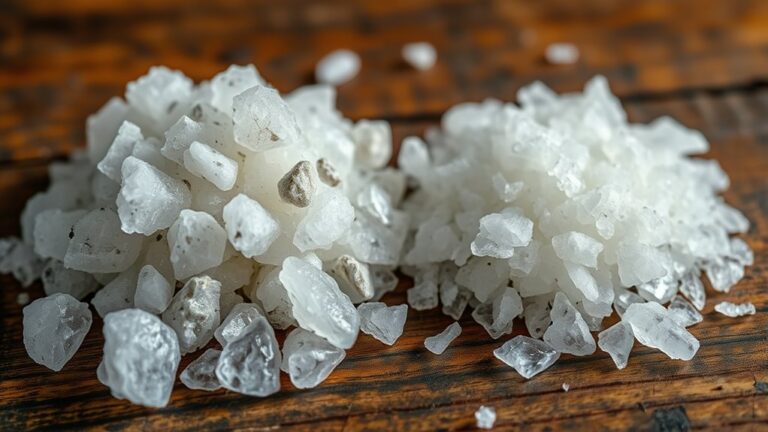
Rock salt is mainly sodium chloride in large crystals, while ice melt is a mix of salts and chemicals designed to melt ice faster at colder temperatures.
Rock salt is sodium chloride crystals; ice melt combines salts and chemicals for quicker, colder-weather melting.
Rock salt works best above about 15°F, so it’s less effective when it’s really cold. Ice melt, on the other hand, has additives like calcium chloride or magnesium chloride that lower the melting temperature.
This allows it to work at temperatures as low as -25°F. These additives help the ice melt perform quicker and in colder conditions.
While rock salt is usually cheaper, it can damage surfaces and harm the environment.
Ice melt products are often safer for pets, plants, and surfaces, making them a better choice in sensitive areas.
How Do Rock Salt and Ice Melt Perform at Different Temperatures?
Understanding how rock salt and ice melt perform at different temperatures helps you choose the right product for winter conditions.
Rock salt works well for melting ice above about 15°F (-9°C), but its effectiveness drops quickly below that. It starts to lose its melting power around 20°F (-6°C) and stops working below 5°F (-15°C).
Ice melt products, especially those with calcium chloride or magnesium chloride, perform at much colder temperatures—down to -25°F (-32°C). Blended ice melts with calcium chloride can even start melting at 0°F (-18°C), giving faster results in colder weather.
As temperatures get colder, the difference in performance becomes clearer. Ice melt keeps working efficiently, while rock salt’s effectiveness diminishes significantly.
What Are the Pros and Cons of Using Rock Salt and Ice Melt?
Choosing between rock salt and ice melt is all about weighing their pros and cons. Rock salt is cheap and easy to find, but it can damage concrete, asphalt, and even your car over time. Ice melt melts ice faster and works at lower temperatures, sometimes down to -25°F, but it costs more.
While rock salt is mainly effective above 15°F, ice melt formulas are better for colder weather. Both help improve traction and melt ice, but ice melt is generally safer for lawns, plants, and pets, reducing environmental harm.
But be careful—overusing either product can cause corrosion, damage surfaces, and harm the environment.
Are Rock Salt and Ice Melt Safe for the Environment and Pets?
While both rock salt and ice melt are good at melting ice, their safety for the environment and pets varies a lot. Rock salt has a lot of sodium chloride, which can harm plants, soil, and aquatic life if used too much.
Many ice melts have additives like calcium or magnesium chloride, which are usually less harmful and better for pets. Still, both can irritate pet paws and pose risks if pets swallow them.
Eco-friendly options often include organic dyes or less corrosive ingredients, making them safer for the environment. Use only small amounts and avoid overapplying to reduce risks to pets and nature.
When and How Should You Use Rock Salt vs. Ice Melt?
You should use rock salt when temperatures are above 5°F and you need quick traction, especially on existing ice or snow.
For colder conditions below 15°F, ice melt works faster and more effectively at melting ice.
Always shovel first to reduce the amount of de-icer needed and avoid damaging surfaces or vegetation.
Temperature Suitability Differences
Temperature plays a crucial role in determining whether rock salt or ice melt products will effectively clear ice from surfaces. Rock salt works best above 15°F but loses effectiveness below that, risking ineffective melting and surface damage. Ice melt products containing calcium chloride can function at temperatures as low as 0°F, making them ideal for colder conditions.
To maximize safety and efficiency, use rock salt when temperatures stay above 15°F. Apply ice melt before freezing temperatures or when it drops below 15°F. Choose calcium chloride-based ice melt in extremely cold weather. Combining both methods can provide continuous melting effectiveness.
Always match the product to the current temperature for the best results. Knowing this temperature suitability helps you select the right product at the right time, ensuring safer and more effective ice removal.
Application Timing Strategies
Timing is key when applying rock salt or ice melt to get the best results and stay safe. Make sure to consider recent snowfall and weather conditions to improve melting and snow removal.
Apply rock salt after snow has fallen and been cleared, focusing on ice surfaces for the best outcome. Use ice melt as a pre-treatment before a storm or when temperatures drop to stop ice from forming, especially in colder weather.
Reapply salt or ice melt as needed, based on weather forecasts and how much ice has built up, to keep surfaces safe. Shoveling snow and slush beforehand helps reduce the amount of de-icing product you need and makes it work better.
Surface Damage Risks
Applying rock salt and ice melt requires careful consideration of surface safety to prevent damage. Excessive salt application or using it at high temperatures can harm concrete and asphalt.
Ice melt products with calcium chloride are generally safer but still pose erosion or discoloration risks if overused. Using salt when temperatures are below 15°F increases the chance of surface damage due to limited effectiveness.
Ice melt with additives like magnesium chloride helps reduce damage, especially on delicate surfaces. Proper application, like shoveling before spreading, helps minimize risks.
Spread ice melt evenly to prevent concentrated damage, and avoid applying salt during extremely low temperatures unless necessary. Limiting salt use and choosing the right product can protect your surfaces better.
Which De-Icer Is Best for Your Budget and Climate?
Choosing the right de-icer depends on your budget and climate.
Rock salt is cheaper and works well in milder temperatures. Ice melt costs more but performs better in extreme cold.
Think about your area’s typical winter temperatures and your budget to find the most effective option.
Cost Effectiveness
When evaluating cost effectiveness, it’s important to consider both your budget and the climate conditions where you’ll be using the de-icer. Rock salt is usually more affordable, costing around $4.50–$9.50 per 50-pound bag, making it a good choice for large areas in moderate climates.
Ice melt products cost between $6–$12 per 50-pound bag, but they work better at lower temperatures, which justifies the higher price. In warmer climates or when temperatures stay above 15°F, rock salt provides enough de-icing at a lower cost.
In colder temperatures, you’ll need more ice melt, which can increase your overall expenses. To decide what’s best, balance your budget with climate needs, knowing that ice melt offers better value in freezing conditions despite its higher initial cost.
- Lower cost for larger areas in mild weather
- Better efficiency at low temperatures
- Higher initial cost may save money long-term
- More ice melt needed in extreme cold
- Affordability depends on climate and temperature
Temperature Suitability
Considering your climate is key when choosing a de-icer, since temperature really affects how well it works. Rock salt is effective down to about 15°F (-9°C), but its performance drops off at colder temperatures.
On the other hand, ice melt products with calcium chloride can work at temperatures as low as -25°F (-32°C). So, they’re better for colder climates. If temps often dip below 15°F, ice melt is usually the smarter choice, even if it costs more.
For milder winters, rock salt might do the trick and save you some money. Just keep in mind you might need to apply it more often.
| Temperature Range | Best De-Icer Choice | Effectiveness |
|---|---|---|
| Above 15°F (-9°C) | Rock Salt | Good |
| 15°F to -25°F (-9°C to -32°C) | Ice Melt (Calcium Chloride) | Very Good |
| Below -25°F (-32°C) | Ice Melt (Calcium Chloride) | Excellent |
Surface Compatibility
Are you worried about potential surface damage when choosing a de-icer? Surface compatibility is key to finding the right product. Rock salt can harm concrete, asphalt, and vehicles over time because it’s corrosive. That makes it less suitable for delicate surfaces.
Ice melt products made with calcium or magnesium chloride are usually safer. They help reduce the risk of surface deterioration and are more compatible with lawns and landscaping. This way, you can avoid costly repairs.
- Rock salt might damage surfaces but is cost-effective for large areas.
- Ice melt with calcium or magnesium chloride is gentler on surfaces.
- Lower temperatures make calcium chloride blends a better choice without harming surfaces.
- The sensitivity of your surface should guide your de-icer choice.
- Using the right product prevents damage and helps extend the lifespan of your surfaces.
Frequently Asked Questions
Does Ice Melt Work as Good as Rock Salt?
Ice melt generally works better than rock salt, especially in colder temperatures. You’ll find it melts ice faster and at lower temperatures because it contains chemicals like calcium chloride that generate heat during melting.
While rock salt is cheaper and effective above 15°F, ice melt performs well down to -25°F. So, if you’re dealing with extreme cold, ice melt will give you quicker, longer-lasting results.
What Type of Salt Is Best for Driveways?
For your driveway, calcium chloride ice melt is the best choice because it melts ice quickly even at very low temperatures. It’s also gentler on concrete and reduces surface damage.
If you’re looking for cost efficiency and temperatures above 15°F, rock salt works well.
For colder conditions and better safety, a blend of calcium chloride and rock salt offers effective melting and traction.
Will Pool Salt Do the Same Thing as Ice Melt?
Think of pool salt as a hopeful whisper, trying to do the job of ice melt but lacking the strength to truly clear your path. It will lower the freezing point temporarily, but it’s not designed for de-icing.
You might see some melting, yet it won’t work as effectively or quickly as real ice melt. Plus, it could damage surfaces, making your winter struggle even harder.
Can You Use Ice Melt Instead of Rock Salt to Make Ice Cream?
You should not use ice melt instead of rock salt to make ice cream. Ice melt products often contain chemicals like calcium chloride or magnesium chloride, which are unsafe for consumption.
Rock salt is food-grade and safe for this purpose. Using ice melt can introduce harmful chemicals into your ice cream, making it unsafe to eat.
Stick with pure rock salt for a safe and effective ice cream-making process.
Conclusion
Are Rock Salt and Ice Melt the Same?
Choosing between rock salt and ice melt is like picking the right tool for the job. You want to match it to your winter landscape and specific needs.
Consider your budget, temperature requirements, and safety concerns to make an informed decision. Both options have their place, but the best choice depends on your situation.
With the right de-icer, you’ll navigate icy paths with confidence. Turning winter’s icy grip into just a fleeting frost on the windowpane makes all the difference.