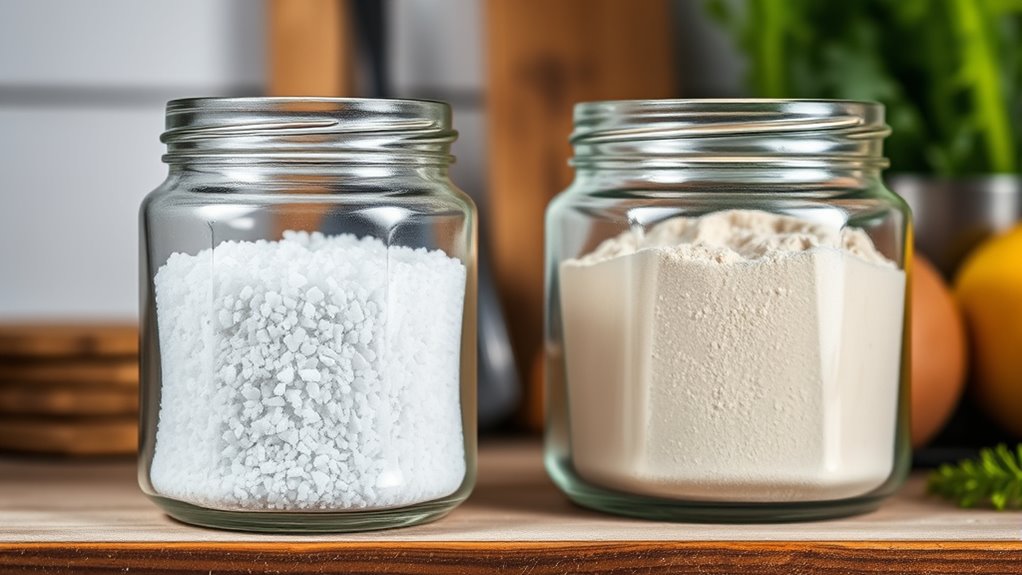
Is Pickling Lime the Same as Pickling Salt?
Many people love the idea of making their own pickled vegetables at home, but figuring out the right ingredients can be confusing. You’re not alone—understanding the differences between pickling lime and pickling salt is a common hurdle. Getting these details right is key to ensuring your canned goods turn out safe, crisp, and flavorful.
No, pickling lime isn’t the same as pickling salt. Pickling lime is calcium hydroxide used to improve vegetable firmness by reinforcing cell walls.
Pickling salt is pure sodium chloride that boosts flavor and clarity in brine. Each has a unique role and must be used correctly.
If you want to guarantee safe, crisp, and flavorful canned goods, understanding how these ingredients differ and when to use them is essential—keep going to learn more.
Key Takeaways
- Pickling lime is calcium hydroxide, which is used to firm vegetables. Pickling salt, on the other hand, is sodium chloride, mainly used for flavor and preservation.
- They have different roles in the canning process. Lime helps improve the texture of vegetables, while salt is used to create a brine and preserve flavors.
- Pickling lime is not interchangeable with salt because of their distinct chemical properties and functions. Using one in place of the other can cause problems.
- Swapping lime for salt can change the taste, safety, and texture of your canned foods. It’s important to follow the recipe and use the ingredients as intended.
- Always use the specified ingredient for its specific purpose. This ensures your canned foods are safe and of good quality.
What Are Pickling Lime and Salt, and How Do They Differ?
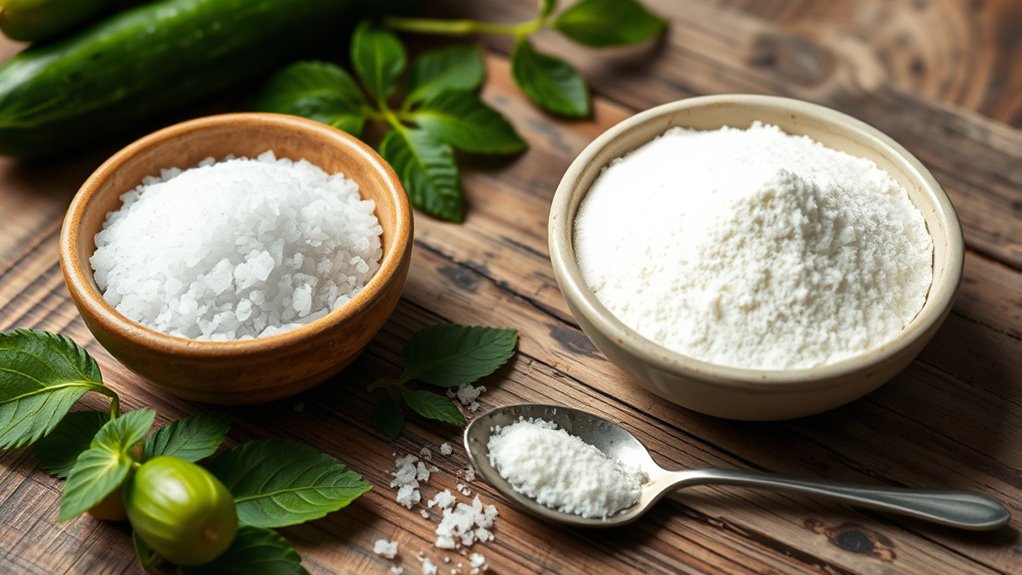
Pickling lime and pickling salt are two ingredients often used in preserving foods, but they serve very different roles.
Pickling lime, or food-grade lime, is calcium hydroxide (Ca(OH)₂). It’s used to improve the texture of vegetables by making them firmer during preservation. It’s an alkaline substance that affects pH levels, helping keep things crisp.
On the other hand, pickling salt is pure sodium chloride (NaCl). It’s designed to make clear, preservative brines and mostly influences the flavor and shelf life of your pickles.
These ingredients aren’t interchangeable. Lime strengthens the texture, while salt impacts taste and how well your food lasts. Knowing their unique functions helps ensure your pickling turns out successful.
Why Is Pickling Salt Better for Clear, Crisp Brines?
Pickling salt’s purity means it dissolves completely without clouding your brine, keeping it clear and appealing. Its fine grains dissolve quickly and evenly, ensuring a consistent, crisp texture in your pickles.
Plus, with no additives or anti-caking agents, your brine stays pure and free from unwanted contaminants. This makes pickling salt the best choice for a clean, crisp, and beautiful brine.
Purity Ensures Clarity
Because purity directly impacts the clarity of your brine, choosing high-quality pickling salt is essential for a crisp, transparent finish. Food-grade pickling salt contains no additives or anti-caking agents, which can cloud the brine and affect clarity.
Its purity guarantees that no mineral deposits or sediment build up, maintaining brine transparency and preventing cloudiness. Unlike regular table salt, pickling salt is 100% sodium chloride, giving you a clear, crisp brine without unwanted particles.
The fine grain size dissolves quickly, supporting clarity by avoiding sediment. Using pure pickling salt preserves the attractive appearance of your pickles and guarantees a clean, crisp texture.
Ultimately, purity is key to producing a visually appealing, transparent brine that highlights the freshness of your preserved vegetables.
Fine Grain Dissolves Quickly
The fine grain size of pickling salt allows it to dissolve quickly in brine, preventing cloudiness and sediment. This rapid dissolution keeps the brine clear and free of undissolved particles that can cause murkiness.
Because pickling salt dissolves fast, it helps maintain a consistent salt concentration. This is crucial for getting crisp, evenly flavored pickles.
Larger or coarser grains of regular salt take longer to dissolve. That can increase the chance of sediment and uneven flavor in your brine.
With pickling salt’s fine grain, everything dissolves evenly. This results in a smooth, clear brine that makes your pickles look appealing and stay crisp.
Its quick dissolving process makes pickling salt a better choice if you want clarity and good texture in your project.
No Additives Contaminate
While the fine grain of pickling salt helps it dissolve quickly and evenly, its purity also makes a big difference in the final appearance of your brine. Using pickling salt, which contains only pure sodium chloride, guarantees no additives like anti-caking agents or iodine contaminate your brine.
These additives can cause cloudiness and discoloration, affecting food safety and visual appeal. Plus, they may react with ingredients, changing flavor and texture. To keep your brine clear and crisp, consider these points:
- Pickling salt dissolves cleanly without introducing contaminants.
- Additives in regular salt can cause cloudiness and discoloration.
- Pure sodium chloride maintains the natural color of your food.
- A clear brine highlights the food’s appearance and preserves quality.
Choose pickling salt for a safe, beautiful, and flavorful outcome.
How Does Pickling Lime Improve Food Firmness and Texture?
Pickling lime strengthens the cell walls of vegetables by allowing calcium ions to penetrate and reinforce their structure. This helps the vegetables stay firm and hold their shape better.
It also increases the pectin content, which makes your pickles firmer and crunchier. When used properly, lime helps keep that crisp texture during storage.
But be careful—overusing lime can make the vegetables too hard and unpleasant to eat.
Strengthening Cell Walls
Pickling lime improves food firmness mainly by providing calcium ions that bond with pectin molecules inside plant cell walls.
This calcium from lime makes the cell walls stronger, so vegetables become more rigid and resilient.
Here’s how it works:
- Calcium ions from pickling lime cross-link with pectin molecules.
- These bonds boost the structural integrity of the cell walls.
- The added rigidity helps vegetables stay firm during processing.
Just make sure to soak and rinse properly to get the benefits of calcium without over-accumulating, which can cause grit.
Enhancing Pectin Content
Enhancing pectin content is a key way pickling lime improves food firmness and texture. When you use pickling lime, the calcium from food-grade calcium hydroxide interacts with pectin molecules, creating cross-links that strengthen cell walls. This process boosts vegetable firmness and crispness, making your pickled products more durable during preservation.
Proper rinsing removes excess calcium, preventing gritty textures while maintaining structural integrity. Here’s how calcium interacts with pectin:
| Calcium Source | Effect on Pectin | Result |
|---|---|---|
| Pickling Lime | Cross-linking | Increased firmness, crispness |
| Calcium Ions | Strengthen cell walls | Better vegetable texture |
| Food-grade Calcium Hydroxide | Supports preservation | Longer-lasting crunch |
What Are the Safety Risks of Using Pickling Lime in Canning?
Using pickling lime in home canning can pose serious safety risks because residual lime can neutralize vinegar’s acidity, which is essential for preventing bacterial growth. If you don’t rinse thoroughly, lime-treated vegetables may leave calcium residues that lower acidity, increasing the risk of foodborne illnesses like botulism.
To stay safe, consider these points: Residual lime can interfere with maintaining safe pH levels during canning. Inadequate rinsing leaves calcium residues that compromise food safety. The FDA no longer recommends using pickling lime in home canning due to potential health hazards.
Consuming un-rinsed lime residues can lead to toxicity and bacterial growth, putting your safety at risk. Always prioritize proper rinsing and avoid using pickling lime to ensure safe, successful canning.
Can You Substitute Pickling Salt for Lime? Why Not?
Although pickling salt and pickling lime are both used in preserving vegetables, they are chemically different and serve different purposes. You can’t swap pickling salt for lime because salt (sodium chloride) doesn’t provide the alkalinity or firmness boost that lime (calcium hydroxide) offers.
Using salt instead of lime won’t keep the same level of preservation or texture, especially in processes like water glassing eggs. Substituting salt for lime could make the process unsafe and result in softer, less crunchy vegetables.
Here’s a quick comparison:
| Ingredient | Function | Effect on Firmness |
|---|---|---|
| Pickling salt | Flavor, preservation | No impact on firmness |
| Pickling lime | Strengthens cell walls | Improves crunchiness |
| Substitute? | Not recommended | Could be unsafe or ineffective |
| Chemical | Sodium chloride | Calcium hydroxide |
| Role in preservation | Preserves texture | Enhances safety and firmness |
When Should You Use Lime or Salt in Your Canning Process?
Choosing the right ingredient at the right stage of your canning process is key for safety and quality. Use pickling lime when you want to boost vegetable texture before pickling. It’s usually added early in water glassing eggs or vegetables and then thoroughly rinsed.
Use pickling salt during the brining stage to create a flavorful, clear brine that helps with preservation and moisture control. Always follow food-grade standards when selecting ingredients to ensure safety.
Use lime only when specified in recipes and make sure to rinse thoroughly afterward. Following these guidelines helps keep your canned goods safe, tasty, and well-textured.
Common Mistakes When Handling Pickling Lime and Salt
Handling pickling lime and salt improperly can affect both the safety and quality of your canned goods. One common mistake is not rinsing pickling lime thoroughly, which leaves residual alkalinity that can neutralize acidity and help bacteria grow.
Proper rinsing of pickling lime is essential to prevent bacterial growth and ensure safe canned goods.
Using non-food grade lime or agricultural lime is another mistake. These can introduce contamination and pose health risks. Always make sure you’re using food-grade lime.
Overusing pickling lime can cause a gritty texture and change the flavor. It’s important to follow proper measurements to avoid this. Similarly, improper salt measurements can weaken preservation or make foods too salty and soft.
Always double-check your measurements and ensure you’re using the right, food-grade products for safe and tasty results.
How to Handle and Store Pickling Lime and Salt Safely
Proper storage and handling of pickling lime and salt are essential for keeping them safe and effective. To ensure they stay in good condition, follow these simple steps:
Store pickling lime in airtight, food-grade containers away from moisture and sunlight. This helps prevent clumping and keeps it fresh.
Keep pickling salt in a cool, dry place in sealed containers. This maintains its purity and prevents caking caused by humidity.
Always use clean, dry utensils when measuring and handling both lime and salt. This avoids contamination and keeps everything safe.
Store both products separately from chemicals or non-food items, and clearly label their containers. Keep them out of children’s reach to prevent accidental ingestion.
Following these guidelines will help preserve the quality and safety of your pickling ingredients.
Frequently Asked Questions
What Can I Substitute for Pickling Lime?
You can’t really substitute pickling lime in processes like water glassing eggs because it’s calcium hydroxide, which is essential for keeping the eggs firm and adjusting the pH.
Calcium chloride, like Pickle Crisp, can help make the eggs crisper, but it doesn’t replace lime’s role in pH adjustment.
Pickling salt only adds flavor and helps with preservation, so it’s not a good substitute for lime either.
Always use food-grade pickling lime for safety and the best results in your pickling projects.
Can I Use Pickling Lime Instead of Pickling Salt?
No, you can’t use pickling lime instead of pickling salt. Pickling lime is calcium hydroxide, used to firm vegetables or water glass eggs. Pickling salt is sodium chloride, which is essential for preserving and flavor.
Using lime in place of salt won’t preserve your food properly and could affect the texture. It may also pose safety risks. Always stick to the correct ingredient to guarantee your pickles turn out safe and tasty.
What Is Another Name for Pickling Lime?
You’re probably amazed to learn that another name for pickling lime is calcium hydroxide or hydrated lime! This food-grade lime is the hero in your canning adventures, safely preserving your favorite vegetables.
But beware—agricultural lime isn’t safe for food. When you hear “slaked lime,” it’s just the quicklime mixed with water, specially processed to keep your food safe and delicious.
What Is the Best Substitute for Pickling Salt?
The best substitute for pickling salt is pure sodium chloride without anti-caking agents or additives. You can use kosher or sea salt if they are free of iodine and anti-caking agents, but you’ll need to adjust your measurements.
Avoid using table salt because it often contains additives that can cloud your brine or alter the flavor. Always make sure your substitute is food-grade and suitable for canning to keep your preserves safe and tasty.
Conclusion
Now that you know the key differences between pickling lime and pickling salt, the question is: which one will you choose for your next batch? Using the wrong ingredient could change your results or even pose safety risks.
Are you ready to master the art of safe, crisp, and delicious pickling? Stay tuned because the right choice can transform your canning experience and reveal flavors you never knew were possible.
And here’s a quick tip: pickling lime is not the same as pickling salt. Knowing the difference is essential for successful and safe pickling. The secret’s in your hands.