Are Dead Sea Salt and Epsom Salt the Same?
Many people struggle with finding the right way to relax or care for their skin without feeling overwhelmed by options. You’re not alone. Choosing between different types of salts can be confusing, especially when they promise similar benefits.
Dead Sea salt and Epsom salt are not the same. Dead Sea salt contains up to 21 minerals like magnesium, calcium, and bromide, offering benefits for skin hydration, detoxing, and skin health.
Epsom salt is mainly magnesium sulfate, known for muscle relaxation and soreness relief.
Their different compositions make them suitable for different wellness routines. Want to learn how to choose the right one for your needs? Keep exploring for more insights.
Key Takeaways
- Dead Sea salt contains a wide variety of minerals like magnesium, calcium, and bromide. In contrast, Epsom salt is mainly just magnesium sulfate.
- Dead Sea salt has a coarse texture that dissolves slowly in water. Epsom salt, on the other hand, dissolves quickly.
- People often use Dead Sea salt for skin health and hydration. Epsom salt is more popular for relaxing muscles and relieving soreness.
- Their mineral makeup and textures are quite different. These differences give each salt unique health and wellness benefits.
- They are not the same. Each one serves different purposes based on what they’re made of and how you use them.
Dead Sea Salt vs. Epsom Salt: What’s the Difference?
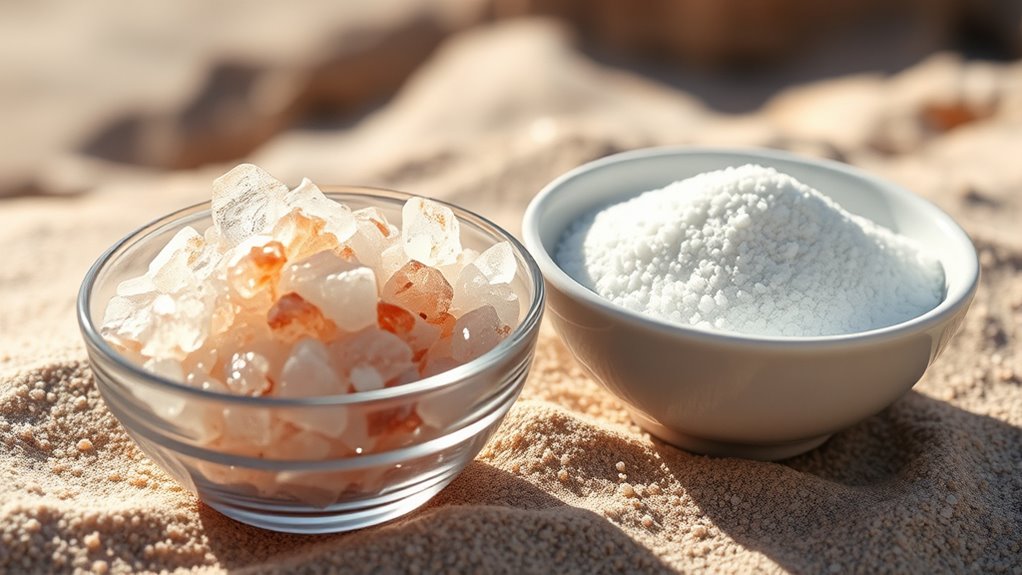
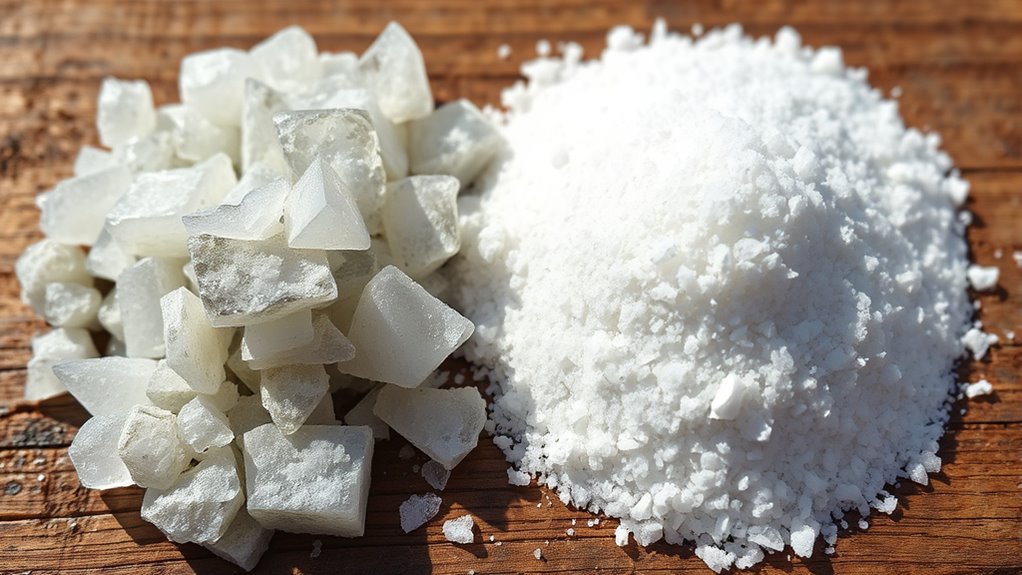
Are Dead Sea salt and Epsom salt really the same? Not quite. Dead Sea salt is a natural mineral-rich sea salt harvested from the Dead Sea, containing up to 21 minerals like magnesium, calcium, and bromide.
Its mineral content benefits skin health, improves hydration, and helps treat skin conditions such as psoriasis. It has a coarser texture and dissolves slowly, making it perfect for therapeutic baths and skin treatments.
In contrast, Epsom salt is a synthetic compound, primarily magnesium sulfate, with a simpler mineral composition. It dissolves quickly and is mainly used for muscle relaxation, stress relief, and exfoliation.
While both support health routines, Dead Sea salt emphasizes skin benefits, whereas Epsom salt focuses on muscle recovery and relaxation.
How Do Their Mineral Contents Differ and Why Does It Matter?
The mineral contents of Dead Sea salt and Epsom salt are quite different, and that really affects what benefits they offer for skin and health. Dead Sea salt has around 21 minerals, including magnesium, calcium, potassium, and bromide.
This variety of minerals helps improve skin hydration, elasticity, and can even help conditions like psoriasis. On the other hand, Epsom salt mainly contains magnesium sulfate, which is great for relaxing muscles and reducing stress.
The minerals in Dead Sea salt, like bromide and calcium, give it unique skin-calming and anti-inflammatory properties that Epsom salt doesn’t have. These differences in mineral content shape how each salt is typically used—Dead Sea salt for skin health and overall wellness, and Epsom salt for muscle recovery and relaxation.
What Are the Main Uses of Dead Sea Salt and Epsom Salt?
Both Dead Sea salt and Epsom salt are valued for their therapeutic properties, but their main uses differ because of their mineral content.
Dead Sea salt is mainly used to improve skin health, especially for conditions like psoriasis and eczema, and to promote overall hydration. It’s also popular in mineral baths to help with joint and inflammatory issues.
Epsom salt is primarily used for relaxing muscles, reducing soreness, and easing stress through bath soaks. Its high magnesium content helps calm the nervous system.
Both salts are used in exfoliation—Dead Sea salt for texture and Epsom salt for gentle scrubs. Epsom salt is also taken internally as a laxative, but only under medical supervision.
Their different uses come from their unique mineral compositions and the health benefits they provide.
How Do Their Skin and Health Benefits Vary?
While Dead Sea salt and Epsom salt share some therapeutic benefits, their skin and health advantages differ a lot because of their unique minerals. Dead Sea salt is packed with magnesium, calcium, and bromide, which help improve skin texture, elasticity, and support detoxing. It’s especially good for skin conditions like psoriasis and eczema thanks to its anti-inflammatory properties.
On the other hand, Epsom salt mainly contains magnesium sulfate. It’s great for relaxing muscles and reducing stress, but doesn’t offer as many skin benefits. Its main strength is helping muscles recover quickly and easing tension.
Dead Sea salt boosts skin hydration and reduces inflammation. Epsom salt mainly targets muscle relaxation and calming the mind. Dead Sea salt improves skin texture and elasticity, while Epsom salt provides a soothing effect for muscles and stress.
Can You Use Dead Sea and Epsom Salts Together?
Combining Dead Sea salts and Epsom salts can give you a well-rounded wellness treatment by using their unique benefits together. Dead Sea salts provide skin-nourishing minerals that can improve your skin health, while Epsom salts help relax muscles and relieve stress.
Mixing the salts can target both skin issues and muscle tension at the same time, boosting your overall wellness. Just remember to adjust the amounts, especially if you have sensitive skin.
For the best therapeutic results, you might want to use the salts separately or layer them in different treatments rather than mixing everything together.
| Salt Type | Mineral Benefits | Therapeutic Properties |
|---|---|---|
| Dead Sea salts | Skin nourishment, skin health | Skin condition improvement |
| Epsom salts | Muscle relaxation, stress relief | Tension relief, detoxification |
What Are Safety Tips for Using These Salts Regularly?
To enjoy the benefits of Dead Sea and Epsom salts safely, it’s important to follow recommended usage guidelines and avoid overdoing it. This helps prevent skin irritation, dehydration, and other health concerns.
Always do a patch test first to check for allergic reactions or skin sensitivity before using the salts extensively. Use the right amount—usually one to two cups per bath—and limit your soak time to 15-20 minutes.
Always perform a patch test first and limit your soak to 15-20 minutes for safe use.
Make sure to rinse thoroughly after your bath to wash away any residual salt, which can help reduce dryness and irritation. If you have skin conditions or health concerns, it’s a good idea to consult a healthcare professional before regular use.
Following these safety tips can help minimize the risk of overuse and skin irritation, so you can enjoy the soothing benefits safely.
How to Store and Prepare Dead Sea and Epsom Salts for Best Results
To get the best results, store both Dead Sea and Epsom salts properly in airtight containers away from moisture and sunlight. Keeping them sealed helps preserve their quality and potency.
Always use clean, dry utensils when handling the salts. This keeps their purity intact and prevents contamination.
Proper preparation includes rinsing after use. This helps maximize their benefits and prevents skin dryness, making your experience more effective and comfortable.
Proper Storage Techniques
Proper storage is essential to keep your Dead Sea and Epsom salts effective and easy to use. Store them in an airtight container in a dry place to prevent moisture absorption, which can cause clumping.
Keep Epsom salts in a sealed container at room temperature, away from humidity, to maintain their dryness and efficacy. For Dead Sea salts, avoid direct sunlight or high-humidity environments to preserve mineral integrity.
Always rinse and thoroughly dry containers before refilling to prevent contamination and moisture buildup. When preparing baths, use clean, dry measuring tools or scoops to avoid introducing excess moisture into the salts.
Proper storage techniques guarantee your salts stay fresh, free-flowing, and effective for the best results.
Optimal Preparation Methods
Ensuring your salts are prepared correctly starts with proper storage and handling. Store Dead Sea salt in an airtight, moisture-proof container in a cool, dry place to prevent clumping and keep its minerals intact. Keep Epsom salt in a sealed container at room temperature for lasting quality.
Before using, gently rinse or brush off any residual minerals from Dead Sea salt to keep it pure. When preparing a bath, dissolve the salts in warm water, stirring well to ensure even distribution and full dissolution.
Avoid exposing both salts to excessive humidity or direct sunlight, as this can damage their texture and effectiveness. Using the right preparation method ensures you get the most benefits while maintaining their quality and mineral content.
Which Salt Is Better for Your Skin or Wellness Routine?
If you’re focusing on improving your skin, Dead Sea salt’s rich minerals can help hydrate and strengthen your skin barrier.
For muscle relaxation and stress relief, Epsom salt’s magnesium sulfate is more effective.
Your choice depends on whether your main goal is skin health or overall relaxation and tension relief.
Skin Benefits Comparison
When choosing between Dead Sea salt and Epsom salt for your skincare routine, Dead Sea salt generally offers more all-encompassing skin benefits because of its rich mineral content. Its diverse minerals, like magnesium, calcium, potassium, and bromide, help keep skin hydrated, elastic, and can even aid in treating conditions like psoriasis and eczema.
On the other hand, Epsom salt mainly provides magnesium sulfate, which relaxes muscles and reduces inflammation, but it has fewer minerals for skin nourishment.
You’ll find that Dead Sea salt:
- Boosts skin hydration and health
- Nourishes and soothes irritated or sensitive skin
- Supports long-term skin condition management
- Improves overall skin elasticity and resilience
Wellness and Relaxation
Choosing between Dead Sea salt and Epsom salt for wellness routines depends on your specific goals. Dead Sea salt, with its rich mineral content, offers benefits like skin hydration and healing. It’s great for skin conditions and overall skin wellness, providing a therapeutic bath that nourishes your skin and helps you relax.
Epsom salt, mainly magnesium sulfate, is excellent for muscle relaxation and stress relief. It’s perfect for soothing sore muscles and calming your mind. It dissolves quickly and is very effective in reducing tension.
If your main focus is skin rejuvenation and hydration, Dead Sea salt is the way to go. For easing muscle soreness and lowering stress, Epsom salt provides targeted benefits. Both can enhance your wellness routines, depending on what relaxation feels right for you.
Frequently Asked Questions
Which Is Better, Epsom Salts or Dead Sea Salt?
Epsom salts are better for muscle relaxation and quick relief from tension because of their high magnesium sulfate content.
However, if you’re after all-around skin benefits, hydration, and a wider range of minerals, Dead Sea salt is the way to go.
It’s especially effective for skin conditions like psoriasis and eczema.
Your choice depends on whether you’re focusing on muscle recovery or skin and mineral health.
Can Epsom Salt Bath Lower Cortisol?
Yes, an Epsom salt bath can help lower cortisol levels. Studies suggest soaking in Epsom salts increases magnesium absorption, which reduces cortisol, the stress hormone.
About 60% of adults are magnesium deficient, so a bath can boost your magnesium levels naturally. This promotes relaxation, calms your nervous system, and helps manage stress better.
Regular Epsom salt baths may support your body’s ability to regulate cortisol during stressful times.
Does Dead Sea Salt Heal Eczema?
Yes, Dead Sea salt can help improve eczema symptoms. When you soak in a bath with Dead Sea salt, the high mineral content like magnesium and calcium soothes irritated skin, reduces inflammation, and boosts hydration.
Regular use can lessen redness, itching, and flare-ups over time. While it doesn’t cure eczema completely, adding Dead Sea salt baths into your routine can provide real relief and support healthier skin.
Can Epsom Salt Reduce Swelling?
Yes, Epsom salt can help reduce swelling. When you soak in an Epsom salt bath, the magnesium sulfate helps relax muscles and decrease inflammation.
It also improves circulation, which promotes fluid regulation in tissues. This can lessen swelling and soothe sore joints or muscles.
Regular baths with Epsom salt may be especially helpful after minor injuries or overexertion, giving you relief and faster recovery.
Conclusion
Choosing between Dead Sea salt and Epsom salt is like picking a guiding star for your wellness journey. Each offers unique benefits, much like different constellations illuminating your path to healthier skin and relaxation.
By understanding their differences, you can harness their power to nurture your body and soul. Ultimately, your choice reflects your personal constellation of needs, helping you find your way to wellness with a soothing soak.
When it comes to Dead Sea salt versus Epsom salt, knowing what sets them apart can make all the difference. Whether you’re aiming to relax, detox, or improve your skin, selecting the right salt is key.
So, if you’re looking for the best way to enhance your self-care routine, understanding these differences will help you choose the perfect salt for your wellness constellation.