How to Make Scrambled Eggs Without Milk in 7 Simple Steps
Are you tired of missing out on fluffy scrambled eggs because of dairy restrictions or simply avoiding milk? You’re not alone—many people struggle to find tasty, dairy-free options that don’t compromise on texture.
To make fluffy scrambled eggs without milk, start by whisking your eggs vigorously until smooth and airy. Add a small splash of dairy-free water or plant-based milk to boost fluffiness, then let the mixture rest briefly.
Cook over low to medium-low heat, stirring constantly to prevent dryness. Remove from heat slightly before fully cooked for extra moisture.
For more tips and customizations, keep exploring how to perfect your dairy-free scrambled eggs.
Key Takeaways
- Vigorously whisk eggs until smooth and airy to incorporate air for fluffiness.
- Add a small splash of water or a dairy-free milk alternative during whisking to boost moisture.
- Use low to medium-low heat and stir constantly to get tender, creamy eggs.
- Pull the eggs off the heat a little before they’re fully cooked. This helps keep them moist and prevents overcooking.
- Feel free to customize with herbs, vegetables, or protein for more flavor and texture.
Why Skip Milk? Benefits of Dairy-Free Scrambled Eggs
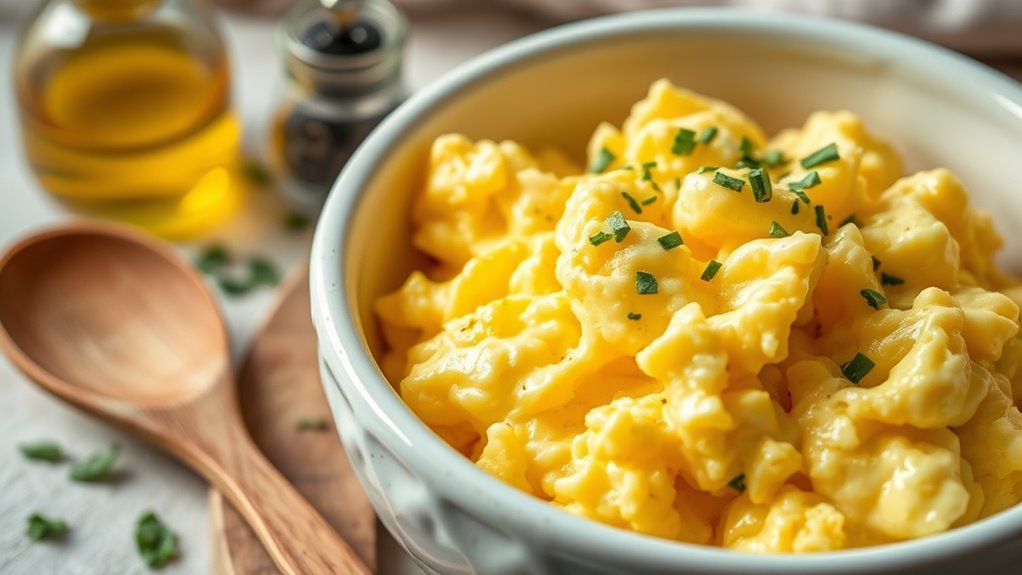
Skipping milk in scrambled eggs offers several benefits, starting with making the dish lighter and more suitable for low-fat diets. Dairy-free options help reduce fat and calorie content, supporting weight management and overall health benefits.
If you’re lactose intolerant or have a dairy allergy, avoiding milk makes your scrambled eggs allergy-friendly and accessible. Without milk, your eggs keep their pure egg flavor, highlighting their natural taste.
Dairy-free scrambled eggs often rely on water or butter for moisture, which can improve creaminess without curdling or discoloration caused by high heat. This method also prevents potential issues with dairy reactions and keeps the texture cleaner and more consistent.
Must-Have Ingredients and Tools for Fluffy Dairy-Free Eggs
To get perfectly fluffy dairy-free scrambled eggs, you’ll want a few key tools and ingredients that help everything cook evenly and stay tender.
Start with a non-stick skillet to prevent sticking and make cleanup a breeze. Then, grab a silicone spatula for gentle stirring and precise control during cooking.
Use a non-stick skillet and silicone spatula for easy, gentle, and perfectly cooked dairy-free scrambled eggs.
Whisk your eggs vigorously for about 40 seconds to introduce air, which is essential for fluffiness. Add a small splash of dairy-free milk, like almond or oat milk, to help create airy eggs.
Use low to medium-low heat when cooking, so you can slowly cook the eggs without overdoing it. Fresh eggs and the right tools are the secrets to moist, tender, and irresistibly fluffy eggs.
How to Make Fluffy, Dairy-Free Scrambled Eggs Step-by-Step
Start by whisking your eggs vigorously until air bubbles form, making them fluffy. Cook over low to medium-low heat, stirring constantly to keep the eggs creamy and moist.
Remove from heat just before they’re fully set to let residual heat finish the cooking perfectly.
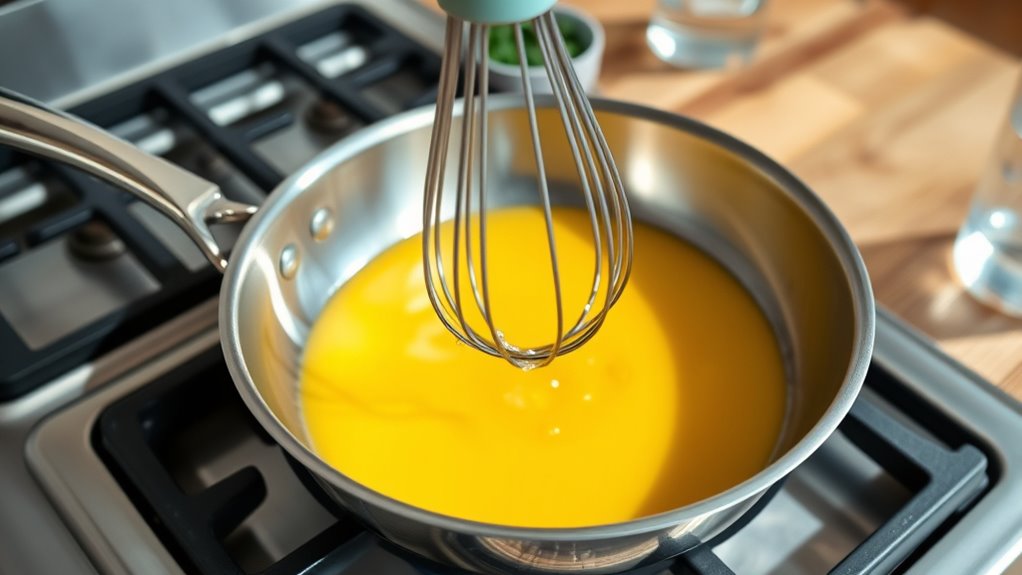
Whisk Eggs Thoroughly
Vigorous whisking is key for fluffy, dairy-free scrambled eggs because it adds air and makes the mixture smooth and even. Proper technique ensures your eggs are uniform in color and full of tiny bubbles, which help with fluffiness.
Use a fork or whisk to beat the eggs well, mixing whites and yolks completely. Adding a small splash of water or dairy-free milk while whisking helps keep the eggs moist.
Keep whisking until the mixture is smooth and you see plenty of air bubbles. Afterward, let the eggs rest briefly to stabilize those bubbles, which boosts the fluffiness.
This thorough mixing and aeration are what give your scrambled eggs that light, fluffy texture you’re aiming for.
Cook Low and Slow
Once your eggs are thoroughly whisked and aerated, it’s time to cook them gently over medium-low heat. This low and slow approach helps prevent overcooking and keeps your eggs moist and tender.
Use residual heat to finish cooking—remove the eggs just before they’re fully set, as the warmth will do the rest. Gently stir and fold constantly to form creamy curds without rushing the process, preserving their delicate texture.
Low-temperature cooking gives you more control, helping you avoid dry, rubbery eggs. Patience is key—careful folding and gentle stirring create tender eggs with a silky consistency.
Tips for Achieving Perfect, Moist Dairy-Free Scrambled Eggs
Achieving perfectly moist dairy-free scrambled eggs depends on a few simple techniques. First, whisk your eggs vigorously until air bubbles form, making them fluffy and moist.
Second, cook on low to medium-low heat, stirring constantly to prevent dryness and overcooking. Third, add a generous amount of dairy-free butter or oil to keep the eggs tender and moist.
Fourth, incorporate a splash of water during whisking. This helps improve moisture without sacrificing fluffiness.
Moreover, remove the eggs from heat slightly before they’re fully set; the residual heat will finish the cooking process and keep them moist.
Avoid These Mistakes for Better Dairy-Free Scrambled Eggs
To make your dairy-free scrambled eggs turn out better, avoid common mistakes that can hurt their texture and flavor. Use low to medium-low heat to prevent overcooking, which can cause gray, rubbery egg curds.
Stir gently and frequently, or fold the eggs carefully, to get even cooking and a creamy texture. Over-whisking adds too much air, making the eggs fragile and easy to break apart.
Be mindful of the liquid ratio—adding too much plant-based milk or water can make your eggs watery and hard to set properly. Remove the eggs from the heat at the right moment to avoid overcooking or undercooking.
Using a nonstick skillet and timing your cooking just right helps keep the eggs moist and silky. This way, you’ll get tender, dairy-free scrambled eggs without overdoing it.
Customize Your Dairy-Free Scrambled Eggs With Add-Ins
You can elevate your dairy-free scrambled eggs by adding flavor boosters like herbs, spices, or nutritional yeast.
Try mixing in cooked vegetables or plant-based meats to boost both texture and nutrition.
Experimenting with these mix-ins lets you customize the dish to match your taste and dietary preferences.
Flavor Boosters and Seasonings
Adding flavorful herbs and seasonings is an easy way to boost your dairy-free scrambled eggs. To enhance the taste, consider these flavor boosters:
- Incorporate fresh herbs like chives, parsley, or dill for a vibrant, aromatic touch.
- Use seasonings such as paprika, garlic powder, or turmeric to add depth and a savory boost.
- Mix in nutritional yeast for a cheesy, umami flavor that complements the eggs.
- For a spicy kick, stir in hot sauce, chili flakes, or diced jalapeños, adjusting heat to your preference.
Diced vegetables like bell peppers, mushrooms, or spinach can also add flavor, texture, and nutritional value. These additions make your eggs more flavorful, colorful, and satisfying.
Protein and Veggie Mix-Ins
Incorporating protein-rich and vegetable mix-ins makes your dairy-free scrambled eggs more satisfying and nutritious. Adding veggies like spinach, mushrooms, or bell peppers boosts both flavor and texture.
Plant-based proteins such as tofu crumbles or diced tempeh can increase the protein content while keeping the dish dairy-free. You can also fold in pre-cooked ingredients like sautéed onions, tomatoes, or roasted zucchini for extra richness.
Fresh herbs like chives, parsley, or cilantro add aromatic notes that enhance the savory flavors. With these mix-ins, you create a well-rounded, flavorful, and nutrient-dense dish that satisfies your taste buds and dietary goals.
Serving Ideas and Storage Tips for Dairy-Free Scrambled Eggs
Dairy-free scrambled eggs are versatile and can be enjoyed in many ways, even after cooking. To keep them fresh and flavorful, store leftovers in an airtight container in the fridge for up to 2 days.
When reheating, do so gently in the microwave or on low heat in a skillet. This helps maintain their creamy texture and prevents them from drying out.
For serving ideas, try topping your eggs with fresh herbs, salsa, or avocado to add flavor and a burst of freshness. Leftovers can also be chopped up and added to salads or breakfast bowls for extra nutrition.
Here are some tips:
- Use an airtight container for the best storage results.
- Reheat eggs just until warmed through to keep their texture.
- Enhance flavor with fresh herbs or toppings.
- Mix leftovers into salads or bowls for added variety.
Frequently Asked Questions
How to Make Simple Scrambled Eggs Without Milk?
To make simple scrambled eggs without milk, start by whisking your eggs vigorously to incorporate air, making them fluffy.
Cook on low to medium-low heat, adding a bit of dairy-free butter or oil for moisture.
You can add a splash of water or a dairy-free milk alternative for extra fluffiness, but it’s optional.
Remove the eggs from the heat slightly before they’re fully cooked to keep them moist and creamy.
How to Make Scrambled Eggs in 3 Steps?
To make scrambled eggs in three steps, first crack 2-4 eggs into a bowl, season, and whisk until frothy.
Next, heat a non-stick pan with vegan butter or oil over medium-low heat, pour in the eggs, and let them set briefly.
Finally, gently stir and fold the eggs with a spatula until they’re mostly cooked but still slightly runny. Remove from heat and serve immediately for fluffy, moist eggs.
How to Make Eggs in 5 Steps?
Think of making eggs in five steps as painting a delicious masterpiece. First, crack 2-4 eggs into a bowl and whisk until smooth.
Second, heat butter or oil in a skillet over low to medium-low heat. Third, pour in your eggs and let them set briefly.
Fourth, gently stir and fold, creating soft curds. Fifth, remove from heat when just cooked, letting residual heat finish the job for perfectly fluffy eggs.
What to Mix With Scrambled Eggs if You Don’t Have Milk?
If you don’t have milk, you can mix water for fluffiness or use plant-based milks like almond, oat, or soy for creaminess. Broth or vegetable stock adds flavor, giving your eggs a tasty boost.
A bit of olive oil or vegan butter helps keep the eggs moist and tender. For extra richness, stir in dairy-free yogurt or silken tofu to make them even more satisfying.
These options help create flavorful, tender scrambled eggs without milk, enhancing texture and taste.
Conclusion
Ready to enjoy fluffy, dairy-free scrambled eggs anytime? By skipping milk, you not only cater to your dietary needs but also open up new flavors and textures.
With these simple steps and tips, you can make perfect eggs every time. So, why settle for ordinary when you can elevate your breakfast effortlessly?
Give it a try and savor the delicious, dairy-free goodness—your taste buds will thank you!