How Long to Soak Corned Beef to Remove Salt
Many home cooks struggle with corned beef turning out too salty, which can be a real disappointment. If you’re looking for ways to tame that saltiness, you’re not alone — it’s a common challenge. The good news is, soaking your corned beef is an easy trick to help.
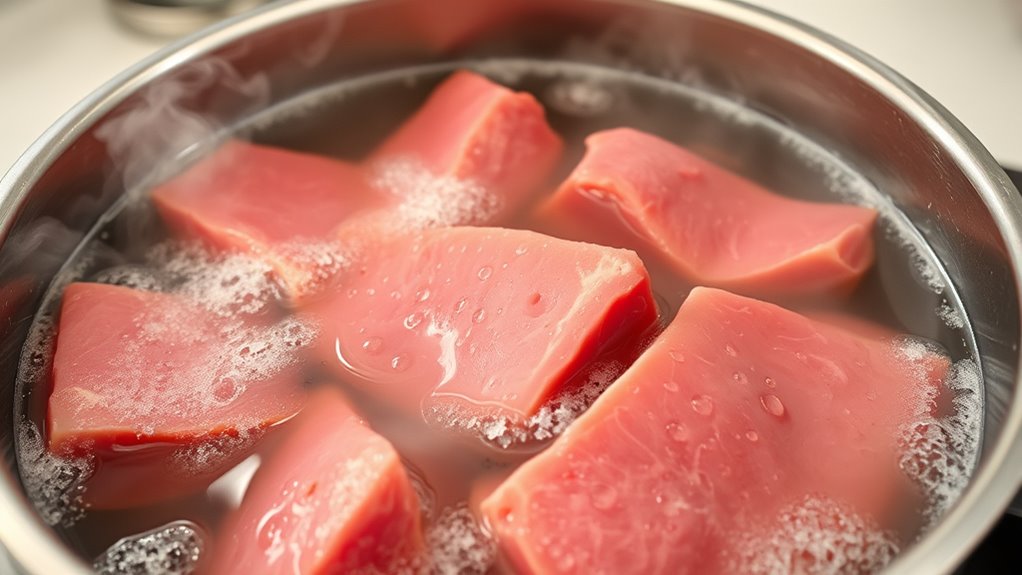
To remove excess salt from corned beef, soak it in cold water for about 3 to 4 hours, changing the water once or twice. If your meat is heavily cured or larger, you might need to soak longer—up to 12 hours or more—especially with frequent water changes.
Keep tasting small pieces to check if it’s less salty enough for your liking.
Want to find out tips for perfect results? Keep going to learn more.
Key Takeaways
- Soak corned beef for 3 to 4 hours if you want to reduce the salt a bit. If it’s heavily cured or a larger cut, you might need to soak it longer.
- Change the water every 1 to 2 hours during soaking. This helps speed up the salt removal process.
- If the meat is very salty, you can extend soaking up to 12 hours. Just remember to change the water frequently.
- Use cold or ice water for soaking. It helps draw out the salt gradually without speeding up the process too much.
- Taste the meat periodically to see if the saltiness is to your liking. Adjust the soaking time as needed.
Why Desalting Corned Beef Is Important for Better Flavor

Desalting corned beef is essential because it greatly improves the overall flavor of the dish. When you desalting properly, you reduce the excess salt that can overpower the natural beef taste.
This process makes the meat more enjoyable and adaptable for different recipes. Removing the extra salt through soaking helps balance the flavor without losing moisture or tenderness.
It also prevents the dish from being overly salty, which can ruin the harmony of flavors. Proper desalting means you won’t need to add extra seasoning during cooking, saving you time and effort.
In the end, desalting lets the natural richness of the beef shine through, making every bite more enjoyable and ensuring your dish isn’t overwhelmed by saltiness.
How Long Should You Soak Corned Beef to Reduce Salt?
To effectively reduce the saltiness of corned beef, soaking it in cold water for a specific period is key. Typically, you should soak the beef for 3 to 4 hours, changing the water once or twice to maximize salt removal.
Using ice water during the soak can help draw out excess salt gradually while keeping the meat cold. If your corned beef is nitrate- or nitrite-free, limit the soak to no more than 12 hours to prevent health risks like botulism.
Extending the soak beyond 4 hours generally offers minimal additional salt reduction and may harm flavor. Remember, the effectiveness of soaking varies depending on the brand and initial saltiness, so you might need to adjust the soaking time accordingly.
What Factors Affect How Long You Need to Soak Corned Beef?
Several factors influence how long you should soak corned beef to reduce its salt content. The curing process plays a big role; heavily cured or commercially processed corned beef often needs longer soaking, sometimes over 12 hours, to leach out excess salt. The level of curing determines how salty it initially is, which affects how long you should soak.
The size and thickness of the brisket also matter—thicker cuts take more time to desalinate. Changing the water frequently during soaking helps draw out more salt, especially for very salty products. Personal taste preferences are important too; if you prefer a milder flavor, you’ll want to soak it longer.
Ultimately, understanding how it was cured and these factors can help you adjust the soaking time for the perfect balance of saltiness.
How Do You Know When Your Corned Beef Is Properly Desalted?
To know when your corned beef is properly desalted, start by tasting a small piece to check the salt level. If it still tastes overly salty or metallic, keep soaking and change the water every few hours.
The meat is ready when the flavor is balanced, with saltiness that improves rather than overpowers. Just keep tasting along the way to make sure it’s perfect.
Taste Test for Saltiness
After soaking your corned beef, the best way to see if it’s properly desalted is by tasting a small piece. Use a rinsed and blotted sample to avoid water dilution.
A proper taste test will show a balanced flavor — not too salty or metallic. If it still tastes too salty, extend the soaking time or change the water.
Remember, saltiness can vary across different parts, so taste multiple slices for accuracy. The goal is a satisfying flavor without harsh saltiness.
Here’s a quick guide to your taste test:
| Saltiness Level | What It Means |
|---|---|
| Too salty | Need more soaking or water changes |
| Slightly salty | Just right; ready for cooking |
| Balanced flavor | Perfect, stop soaking |
| Metallic taste | Soaking too long; rinse or soak again |
| Bland | Not enough salt; adjust seasoning |
Check Salt Levels
Wondering how to accurately determine if your corned beef has been properly desalted? The easiest way is to taste a small piece after soaking—if the saltiness has decreased to your liking, you’re good to go.
Rinsing the meat thoroughly helps remove surface salt and improves flavor, but for more precise results, consider using a salt test strip or a calibrated salt meter on a small sample.
Typically, soaking for 3 to 4 hours with multiple water changes greatly reduces salt, but you might need to soak longer for very salty meat.
Periodically check the texture and flavor during soaking to avoid over-desalting.
Following these steps will help your corned beef reach the perfect balance of flavor and salt content before cooking.
Observe Water Changes
Keeping an eye on the water changes during soaking is key to knowing when your corned beef is properly desalted. As you soak your corned beef, regularly change the water every 1-2 hours to help leach out the excess salt.
Watch for a noticeable decrease in saltiness by tasting a small piece or testing the soaking water. When the water remains clear and no longer tastes salty or briny after multiple changes, your beef is likely sufficiently desalted.
Using cold or cool water helps maintain the meat’s texture during this process. Some people use salt test strips or taste the water periodically to confirm.
Typically, soaking for at least 3-4 hours is necessary, but longer soaking may be needed depending on the initial saltiness and how often you change the water.
What Are the Best Ways to Desalt Corned Beef Safely?
To desalt corned beef safely, soak it for 3 to 4 hours, changing the water every hour or two. This helps remove the excess salt effectively.
Using ice water helps control the temperature and promotes gradual salt leaching without cooking the meat.
Remember to taste-test periodically and rinse thoroughly afterward to make sure it’s properly desalinated before cooking.
Optimal Soaking Duration
The ideal soaking time for corned beef depends on balancing salt removal with food safety. Usually, soak it in cold water for 3 to 4 hours, changing the water every hour or two. Using ice water helps draw out more salt gradually without cooking the meat.
For nitrate or nitrite-free types, limit soaking to no more than 12 hours to reduce the risk of botulism. Extending beyond 12 hours doesn’t do much for salt reduction and increases the chance of bacterial growth if it’s not refrigerated.
Adding potatoes to the soak can also help absorb some of the salt. Keep in mind that soaking longer than 12 hours offers little benefit and could pose safety concerns.
Water Change Frequency
Changing the water frequently during the desalting process is essential for effectively reducing the salt in corned beef. The ideal water change frequency is every 1 to 2 hours, which helps draw out excess salt efficiently.
Using cold or ice water during each change improves salt removal while protecting the meat’s quality and safety. For very salty corned beef, aim for at least 3 to 4 water changes over 6 to 12 hours.
Avoid soaking the meat longer than 12 hours to prevent bacterial growth and spoilage. After the final water change, rinse the meat thoroughly to remove surface salt and residual curing brine.
Consistent water changes ensure safe, effective desalting without compromising the meat’s integrity.
Food Safety Precautions
Using proper food safety precautions during the desalting process helps keep the meat safe to eat. Always soak corned beef in cold, fresh water, changing it multiple times to reduce sodium safely.
Keep the meat refrigerated throughout to prevent bacterial growth, especially when soaking for up to 12 hours. Limit soaking time for nitrate or nitrite-free corned beef to avoid bacteria like botulism.
Use a large enough container to fully submerge the meat and make sure the salt is evenly removed. After soaking, rinse the meat thoroughly to remove any residual surface salt and spices.
How Often Should You Change the Water When Soaking?
To effectively reduce the saltiness of corned beef, it’s important to change the soaking water regularly throughout the process. This helps with salt removal and prevents the buildup of dissolved salt, which can slow down further leaching.
Here are key tips: Change the water at least once or twice during soaking to keep salt removal efficient. For longer soaking, swap out the water every 4 to 6 hours to maintain freshness.
During overnight soaks, change the water 2 to 3 times for better salt reduction. Always use cold, fresh water each time to maximize salt removal without reintroducing excess salt.
Regular water changes ensure the beef becomes less salty more quickly and evenly.
Can Using Ice Water Speed Up the Desalting Process?
Adding ice water to your soaking process might seem like a quick way to reduce saltiness, but it actually has the opposite effect. Cold water, including ice water, slows down salt diffusion into the meat because lower temperatures reduce the rate at which salt leaches out.
While it may help draw out salt more gradually and evenly, it doesn’t accelerate the desalting process. In fact, using ice water can prolong the soaking time needed to reduce saltiness effectively.
However, if you change the ice water frequently—every 30 minutes—you can improve salt removal without risking over-salting. Overall, ice water isn’t recommended for speeding desalting; it’s better suited for more controlled, even salt reduction.
How Do You Adjust Soaking Time Based on Meat Size and Saltiness?
The size of your corned beef and how salty it is to start with will influence how long you should soak it. Bigger or more heavily cured pieces will need more time and more water changes to cut down on the saltiness.
Keep tasting it along the way to find that perfect balance. Just be careful not to soak it so long that you start losing too much flavor.
Meat Size Considerations
When adjusting soaking times for corned beef, the size of the meat really matters. Larger cuts need more time in water to reduce the saltiness, often adding 1-2 hours per extra pound.
Thicker pieces may also need more frequent water changes and longer soaking periods. Sometimes, this can be up to 12-24 hours, depending on how salty the meat is.
For very salty corned beef over 3 pounds, soaking can go up to 72 hours. If the meat isn’t as salty, a shorter soak of 3-4 hours with multiple water changes might do the trick.
Keep tasting the meat as you go. That way, you can stop when it reaches your preferred salt level.
Here are some quick tips: Larger cuts need extra hours per pound, and thicker pieces require more water changes. Very salty meat can soak for up to 72 hours, while smaller or mildly salty meat might only need a few hours.
Saltiness Levels Adjustment
Adjusting soaking time based on saltiness levels requires careful taste testing and observation. You should sample slices periodically after initial hours of soaking to see if the saltiness has decreased to your preference.
For meats with higher initial salt content or larger cuts, expect to soak for 12 to 72 hours, with water changes every 1-2 hours to effectively reduce saltiness. If the corned beef is only moderately salty, 3-6 hours of soaking with regular water changes usually suffices.
For very salty meat, extend the soaking time and increase water changes, but avoid over-soaking to prevent safety issues. Using potatoes in the soaking water can help speed salt removal, especially with highly salty meats, allowing for shorter soaking periods.
What Mistakes Should You Avoid When Desalting Corned Beef?
Avoid soaking corned beef for too long, especially if it’s nitrate or nitrite-free, because this can increase the risk of botulism. Over-soaking can also make the meat dry and bland. To prevent common mistakes, keep these points in mind:
Avoid over-soaking nitrate-free corned beef to prevent dryness, blandness, and potential health risks.
- Don’t soak in hot water—use cold water instead, as it’s better for gradually removing excess salt.
- Avoid just one water change; doing multiple changes helps get rid of more salt.
- Don’t soak for more than 12 hours, especially if the beef doesn’t have nitrates or nitrites.
- Always rinse the meat well after soaking to remove leftover salt and spices, which improves flavor and texture.
Following these tips will help you avoid common pitfalls and enjoy perfectly desalinated corned beef.
Are There Other Ways to Reduce Salt in Corned Beef Besides Soaking?
Besides soaking, there are other effective ways to reduce salt in corned beef. Rinsing it thoroughly under cold water after cooking can help remove surface salt and residual curing agents.
You can also add a potato or apple to the soaking water; their natural absorbent properties draw out excess salt. Briefly boiling the corned beef and discarding the water is another method to lower the salt content before final cooking.
Applying a glaze or marinade with sugar or vinegar during cooking can help mask and balance the residual saltiness. If you want to avoid extensive salt removal, consider buying low-sodium or nitrate/nitrite-free corned beef from the start.
These options provide healthier alternatives without relying solely on soaking.
How to Prepare Your Corned Beef After Desalting for Cooking
Once you’ve finished desalting your corned beef, the next step is to prepare it properly for cooking. Doing this right ensures the meat tastes great and has a good texture.
First, rinse the corned beef thoroughly to wash away any leftover salt and spices from the desalting process. Then, pat it dry with paper towels to help it brown nicely and avoid steaming.
Rinse the corned beef thoroughly, then pat dry to ensure it browns well and avoids steaming.
Once the meat is chilled, slice it against the grain. This makes it more tender and easier to serve. Finally, reheat gently in a low-temperature oven or simmer to keep it moist and flavorful.
Following these simple steps after desalting will help you get a perfectly prepared corned beef, ready for a delicious meal. Proper prep really boosts both the taste and the texture, making cooking more enjoyable.
Tips for Perfectly Desalted Corned Beef Every Time
To guarantee your corned beef turns out perfectly desalted every time, paying attention to the soaking process is essential. Start by soaking the meat in cold water for at least 3 to 4 hours, changing the water once or twice to effectively reduce salt content.
For more thorough desalting, especially with nitrate or nitrite-free corned beef, soak for up to 12 hours. Just don’t go beyond that to avoid health risks. Adding sliced potatoes to the soaking water can help draw out excess salt and improve the process.
After soaking, rinse the meat thoroughly to remove residual salt and spices. Always taste a small piece afterward to check if the salt level is right before cooking, ensuring perfectly desalinated meat every time.
Frequently Asked Questions
How Do You Get the Salt Out of Corned Beef?
To get the salt out of corned beef, soak it in cold water for 3 to 4 hours, changing the water once or twice. Using ice water helps draw out the salt gradually.
After soaking, rinse the meat thoroughly to remove any residual surface salt and spices. Adding potatoes to the soaking water can also help absorb extra salt, making your corned beef less salty and more enjoyable.
Is Corned Beef Ok for Diabetics?
You might think corned beef isn’t ideal for diabetics, but with careful preparation, it can fit into your diet. If you soak and rinse it well, you reduce its salt content, making it a better choice.
Remember, moderation is key. Limit your intake and balance it with fresh vegetables and whole grains.
Always check with your healthcare provider to make sure it fits with your blood sugar management plan.
How Long Do You Soak a Corned Beef Brisket to Get the Salt Out?
You should soak your corned beef brisket for 3 to 4 hours, changing the water every hour or two to remove excess salt.
If it’s very salty, extend the soaking up to 12 hours with multiple water changes. Use cold water for better salt extraction, and taste as you go to find your desired salt level.
Avoid soaking longer than 12 hours to prevent safety risks.
Is Corned Beef Ok for IBS?
Corned beef can be okay for IBS if you soak it beforehand to reduce the salt, which might trigger symptoms. You should soak it in water for several hours or up to 12 hours, changing the water frequently.
However, everyone’s tolerance is different, so keep an eye on how your body reacts. It’s best to talk with your healthcare provider before adding corned beef to your diet to make sure it’s safe for you.
Conclusion
So, if you want your corned beef to taste like a symphony of flavors rather than a salty, overwhelming mess, soaking it just right is your secret weapon!
Don’t underestimate the power of patience. Desalting transforms a salty disaster into a melt-in-your-mouth masterpiece.
The key is soaking your corned beef for about 4 to 6 hours, changing the water once or twice.
This simple step can make all the difference, turning salty meat into a tender, flavorful dish.
With the right technique, you’ll turn a basic cut of meat into a flavor explosion, leaving your taste buds dancing.
And when it comes to removing salt from corned beef, proper soaking is the ultimate trick for a perfectly balanced meal.